
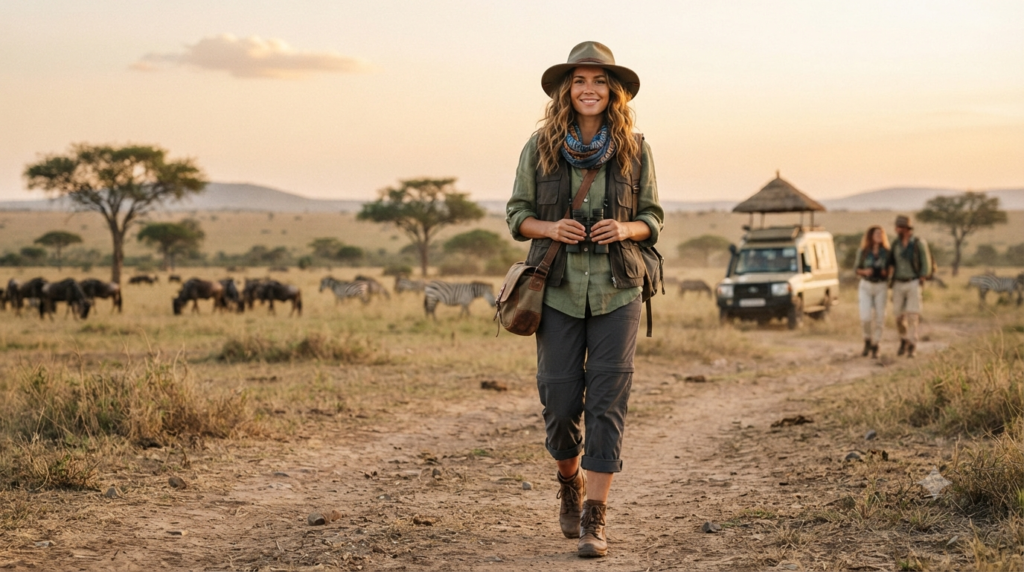
Tanzania is East Africa’s crown jewel — home to the Serengeti’s Great Migration, the otherworldly Ngorongoro Crater, Kilimanjaro (Africa’s highest peak), and the spice-scented alleys of Zanzibar. Packing correctly for Tanzania means preparing for three very different environments: game-viewing plains, mountain trekking, and tropical island beaches. This guide covers exactly what to wear in Tanzania for each.
Tanzania’s Climate
Tanzania’s climate varies dramatically by region. The Serengeti and inland safari areas are warm and dry (June–October), with cool mornings. The coast and Zanzibar are hot and humid year-round (27–35°C), with two rainy seasons (March–May and November). Kilimanjaro has its own weather system — expect every climate zone from tropical to arctic as you ascend. The best time for Serengeti safaris is June–October (dry season) and January–February (calving season).
What to Wear on a Tanzania Safari (Serengeti, Ngorongoro)
Tanzania safari dressing follows the same neutral-toned, layered approach as other East African destinations — with a few specifics worth knowing.
- Earth tones only: Khaki, sand, olive, and tan. The Serengeti’s colour palette of golden grass and red dust is your guide. Avoid black, blue, and all bright colours.
- Long-sleeved shirts: Protect from sun and the tsetse fly, which is attracted to dark and moving colours. Lightweight cotton or linen feels breathable but provides good protection.
- Convertible trousers: Zip-off leg trousers are the safari standard — long for cool mornings and evenings, shorts midday.
- Warm layer: Pre-dawn departures can be cold (10–12°C). A fleece jacket is non-negotiable for early game drives.
- Wide-brimmed sun hat: Six to eight hours in an open-roof vehicle demands serious sun protection.
- Comfortable, closed shoes: Dusty game reserve roads make open sandals a bad choice. Lightweight hiking shoes or boots protect feet.
- Dust gaiters or buff: Red Serengeti dust gets everywhere. A neck buff or bandana covers nose and mouth on bumpy drives.
💡 Book your Serengeti safari, Ngorongoro day trips, and hot air balloon rides through Viator’s Tanzania experiences.
What to Wear in Zanzibar
Zanzibar is a predominantly Muslim island with deeply conservative roots outside of its resort beach zones. Dressing appropriately shows respect for local culture and avoids unwanted attention — especially in Stone Town.
- In Stone Town: Cover your shoulders and knees. Lightweight linen trousers or a maxi skirt with a loose blouse is ideal. Men: long trousers and a collared shirt for visiting mosques and the market.
- On resort beaches (Nungwi, Kendwa, Paje): Swimwear is acceptable at your hotel beach and pool. Cover up with a sarong or kaftan when walking to the village or entering any establishment.
- Beach cover-ups: A long cotton sarong or a lightweight kaftan is the Zanzibar essential — it works as a beach cover-up, a light layer in air-conditioned restaurants, and a modesty wrap in town.
- Footwear: Flip-flops for the beach. Sandals or breathable flats for Stone Town’s cobblestone alleys. Remove shoes before entering mosques.
💡 Find your perfect Zanzibar resort or Stone Town guesthouse on Booking.com.
What to Wear Climbing Kilimanjaro
Kilimanjaro climbs take you through five climate zones — from tropical rainforest at the base to arctic summit conditions at Uhuru Peak (5,895m). You need to pack for all of them.
- Rainforest zone (1,800–2,800m): Lightweight moisture-wicking t-shirts and a light rain jacket. It’s warm and often wet through the forest.
- Moorland and heath zone (2,800–4,000m): Add a mid-layer fleece. Temperatures start dropping and wind picks up.
- Alpine desert zone (4,000–5,000m): Heavy insulating layer (down jacket), warm hat, gloves, and windproof trousers.
- Arctic summit zone (5,000–5,895m): Full winter layering: thermal base, fleece, down jacket, hardshell. Temperatures at the summit can be -20°C with wind chill. Balaclava and expedition-weight mittens essential.
- Boots: Waterproof, insulated, ankle-high trekking boots. Break them in before the climb.
- Gaiters: Prevent loose scree and ice from entering boots on the upper mountain.
- Trekking poles: Highly recommended — they reduce knee strain on descent significantly.
What to Wear in Dar es Salaam and Arusha
Tanzania’s mainland cities are hot and urban. Casual smart attire works well; very revealing clothing is inappropriate in these predominantly Muslim or mixed-religion cities.
- Lightweight cotton or linen clothes in neutral or light colours
- Trousers, midi skirts, or lightweight dresses that cover the knee
- Covered shoes or sandals rather than flip-flops in city centres
- A light scarf or shawl to cover up when visiting markets or places of worship
Tanzania Packing Essentials
- High-SPF sunscreen (50+) — intense equatorial sun
- DEET-based insect repellent — malaria is present in low-altitude areas
- Anti-malarial medication (consult your doctor)
- Lightweight packable rain jacket
- Polarized sunglasses
- Small soft-sided duffel bag — bush planes have 15kg soft-bag limits
- Buff or neck gaiter for dust
- Sarong (multi-purpose: beach cover, Zanzibar modesty, picnic blanket)
Also read: What to Wear in Zanzibar, What to Wear on an African Safari, and What to Wear in Kenya.
Frequently Asked Questions: What to Wear in Tanzania
Is there a dress code for Zanzibar?
Yes — particularly in Stone Town and any area away from beach resorts. Cover shoulders and knees as a sign of respect for the island’s Muslim majority. Swimwear is fine on private hotel beaches but should be covered up elsewhere.
What luggage is best for Tanzania safari?
A soft-sided duffel or duffel bag (not a hard-shell suitcase). Bush planes used for inter-park transfers have strict 15kg weight limits and require bags that can be compressed into small luggage holds.
Can I wear shorts on a Tanzania safari?
Yes, during the warmest part of the day (10am–3pm). But pack convertible trousers so you have long legs for early morning and evening drives when it’s cooler, and for bush walks where leg protection from thorns and insects is important.
Mafia Island and Off-the-Beaten-Path Tanzania
Mafia Island, a quieter alternative to Zanzibar known for whale shark diving, calls for the same lightweight, breathable beachwear as Zanzibar but with less need for dressier evening pieces — the island’s vibe stays low-key and casual throughout. Pack a proper swimsuit and quick-dry gear if snorkeling or diving is on the itinerary, since Mafia’s dive operators are more basic than Zanzibar’s larger resorts and won’t necessarily have gear rental in every size.
What colours are best for a Serengeti safari?
Khaki, tan, beige, olive, and brown. These earth tones blend with the landscape, don’t attract tsetse flies, and are practical for the red Serengeti dust that coats everything.
What should I wear on a Zanzibar spice tour?
Comfortable closed-toe shoes and lightweight, modest clothing — spice farm paths can be muddy or uneven, and covering shoulders and knees keeps you respectful of the same cultural norms that apply across Zanzibar outside the beach resorts. A hat helps too, since the farm tours involve time walking between shaded and open sections.
Is Ngorongoro Crater colder than the Serengeti?
Yes — the crater rim sits at higher altitude and mornings there are noticeably colder than on the Serengeti plains. A warm layer for early morning game drives is worth packing specifically for Ngorongoro, even if the rest of your safari wardrobe stays warm-weather.
📌 Related: Tanzania game drives require specific attire — for the full breakdown, see our African safari outfit and packing guide.
Pingback: Tanzania Packing List: Safari, Zanzibar & Kilimanjaro Essentials - Vacation Style Guide