
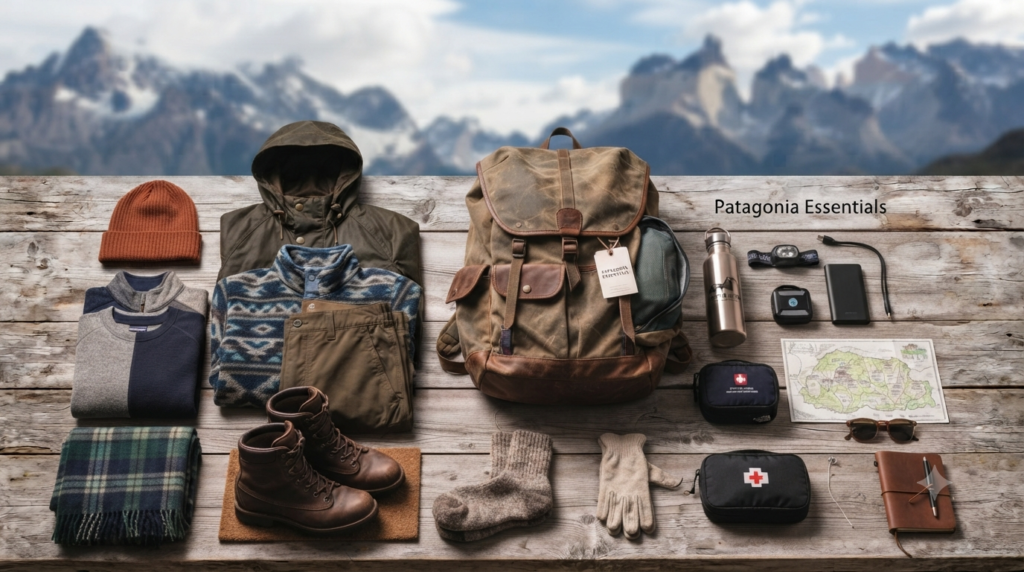
Patagonia straddles the southern tip of South America across Chile and Argentina — a vast wilderness of glaciers, jagged peaks, wind-whipped grasslands, and pristine lakes that tests even experienced travelers. What you wear in Patagonia can be the difference between a magical adventure and a miserable one. This is not a destination for casual resort packing — Patagonia demands functional, layered, weather-ready clothing.
Understanding Patagonia’s Extreme Weather
Patagonia’s weather is famously unpredictable — locals say you can experience all four seasons in a single day. The wind is the defining element: sustained 80–100 km/h gusts are common on the Torres del Paine plateau, and sudden storms can materialize within minutes from clear skies. Temperature ranges from 0°C to 20°C (32–68°F) in summer (November–March), and well below freezing in winter. Rain and horizontal sleet can arrive at any moment.
The golden rule of Patagonia packing: layer, layer, layer. No single piece of clothing will handle the full range of conditions — instead, a well-designed layering system gives you flexibility for every situation.
The Patagonia Layering System: What to Wear
Base Layer
Your base layer sits directly against your skin and its job is moisture management — keeping sweat away from your skin to maintain warmth.
- Merino wool base layers are the gold standard for Patagonia: naturally odor-resistant, moisture-wicking, and temperature-regulating. A long-sleeve merino top and merino leggings are ideal.
- Synthetic base layers (polyester blends) dry faster than merino and are a good budget alternative.
- Bring 2 sets — one to wear, one to dry — as you’ll sweat significantly on hikes.
Mid Layer (Insulation)
The mid layer provides warmth and is typically removed or added as temperatures change throughout the day.
- Fleece jacket or pullover: A heavyweight fleece (300g) is ideal for Patagonia’s cold. It provides excellent warmth-to-weight ratio and dries quickly.
- Down or synthetic puffer jacket: For rest stops, camp, or colder days, a packable down jacket adds significant warmth. Pack it in its stuff sack as a pillow on hikes.
- Women often bring both a fleece and a light down jacket; the combination covers the full temperature range.
Outer Layer (Shell)
This is the most critical piece for Patagonia. Your outer layer must block Patagonia’s extreme wind and rain.
- Waterproof, windproof hardshell jacket: This is non-negotiable. Look for a jacket with at least 20,000mm waterproof rating and full waterproof seam sealing. Gore-Tex or equivalent. A hood that cinches down is essential — the wind will tear an unsecured hood off your head.
- Waterproof trousers / rain pants: Many hikers skip these and regret it. Pack a lightweight pair that fits over your hiking trousers.
Hiking Gear: What to Wear on the Trail
- Hiking trousers: Lightweight, quick-dry trekking trousers. Avoid jeans — cotton holds moisture and becomes dangerously cold when wet. Convertible zip-off trousers are versatile for warmer sections.
- Hiking boots: Waterproof, ankle-supporting hiking boots are essential for Torres del Paine’s W Trek or Fitz Roy circuit. Break them in before you arrive — blisters in the wilderness are a serious problem.
- Gaiters: Useful for muddy trail sections, particularly on the Fitz Roy trails near El Chaltén.
- Wool hiking socks: Merino wool hiking socks prevent blisters and regulate temperature. Bring 3–4 pairs.
- Trekking poles: Not clothing, but essential equipment for Patagonia’s steep, wind-exposed passes.
Head, Hands & Face Protection
Patagonia’s wind and UV at altitude make head protection critical:
- Warm hat / beanie: A merino wool or fleece hat that covers your ears — wind chill makes temperatures feel far colder than they are.
- Balaclava or neck gaiter: For exposed passes and glacier crossings where wind is extreme.
- Waterproof gloves: Lightweight waterproof gloves or mittens for wet, windy conditions. Also bring a lighter liner glove for milder days.
- Buff / neck tube: Incredibly versatile — neck warmth, face protection from wind, impromptu hat.
- Sunglasses: UV is intense at altitude and reflected off glaciers and lakes. Polarized lenses with UV400 protection are essential.
- Sun hat: On warmer days with less wind, the sun at Patagonian latitudes is surprisingly strong. Pack a lightweight sun hat.
What to Wear in Patagonian Towns
Puerto Natales (Chile), El Chaltén (Argentina), and Puerto Madryn are relatively informal gateway towns — outdoor wear is entirely normal in restaurants, hostels, and cafés. You don’t need separate “town clothes” — clean hiking layers are perfectly acceptable. A slightly nicer top or shirt for evenings is a nice change, but no one in El Chaltén is dressing for dinner.
Complete Patagonia Packing List
- 2 × merino wool base layer tops (long sleeve)
- 2 × merino wool base layer bottoms / leggings
- Heavyweight fleece jacket
- Packable down or synthetic puffer jacket
- Waterproof hardshell jacket (Gore-Tex or equivalent)
- Waterproof rain trousers
- 2 × lightweight quick-dry hiking trousers
- Waterproof hiking boots (broken in)
- Camp shoes / trail runners (for rest days)
- 4 × merino wool hiking socks
- Warm beanie
- Balaclava or neck gaiter
- Waterproof gloves + liner gloves
- Buff / neck tube
- Polarized sunglasses
- Lightweight sun hat
- High-SPF sunscreen
What NOT to Wear in Patagonia
- Cotton — cotton kills in Patagonia. When wet, it holds moisture against your skin and causes dangerous heat loss. No cotton base layers, no denim on trail.
- Fashion sneakers or trail runners without ankle support — for the main multi-day treks, proper waterproof hiking boots are necessary.
- Non-waterproof down jackets — regular down loses all insulating properties when wet. Use water-resistant treated down (DWR coated) or synthetic insulation.
- Ponchos — Patagonia’s horizontal wind makes ponchos useless. A fitted, cinched-down hardshell is what you need.
For more adventure destination packing guides, explore our complete collection of destination style guides covering 100+ destinations worldwide.
Patagonia Packing List
Patagonia demands the most technical packing of any destination on earth. Four seasons in one day, sustained 100 km/h winds, and remote trails far from any shop mean your gear list has to be right before you leave. This complete Patagonia packing list covers every layer, every piece of footwear, and every essential for the Torres del Paine W Trek, Fitz Roy circuit, and beyond.
Base Layers
- Merino wool long-sleeve tops (2): Gold standard for Patagonia — moisture-wicking, odor-resistant, temperature-regulating. One to wear, one to dry.
- Merino wool leggings or base layer bottoms (2): Same logic — always have a dry set.
- Merino wool underwear (3–4 pairs): Quick-drying and odor-resistant for multi-day treks.
Mid Layers
- Heavyweight fleece jacket (300g): Excellent warmth-to-weight ratio, dries quickly.
- Packable down or synthetic puffer: For rest stops and camp. Water-resistant DWR-treated down or synthetic insulation (regular down is useless when wet).
Outer Shell
- Waterproof windproof hardshell jacket (Gore-Tex or equivalent): Non-negotiable. Minimum 20,000mm waterproof rating, fully seam-sealed, hood that cinches tight.
- Waterproof rain trousers: Lightweight pair that fits over hiking trousers. Essential — don’t skip these.
Hiking Clothing
- Quick-dry hiking trousers (2 pairs): No cotton — it holds moisture and causes dangerous heat loss when wet.
- Moisture-wicking hiking shirts (2–3): Lightweight, breathable, UPF-rated.
Footwear
- Waterproof ankle-supporting hiking boots (broken in before arrival)
- Merino wool hiking socks (4 pairs)
- Camp shoes or trail runners (for rest days and hut evenings)
- Gaiters (for muddy sections on Fitz Roy trails)
Head & Hands
- Merino wool beanie (covers ears)
- Balaclava or neck gaiter (for exposed passes)
- Waterproof gloves + liner gloves
- Buff / neck tube (most versatile piece in the pack)
Sun Protection
- Polarized UV400 sunglasses (UV is intense at altitude and reflected off glaciers)
- Lightweight sun hat (for warmer, calmer days)
- High-SPF sunscreen + lip balm with SPF
What NOT to Pack for Patagonia
- Cotton anything — cotton kills in Patagonia; it holds moisture and causes dangerous heat loss
- Fashion sneakers or non-waterproof shoes — for main treks, waterproof hiking boots are a safety necessity
- Regular (non-treated) down — loses all insulation when wet; use DWR-treated or synthetic
- Ponchos — Patagonia’s horizontal wind makes ponchos useless; a fitted hardshell is what you need
See our complete Patagonia style and layering guide for detailed advice by activity. Explore more adventure destination packing lists.
Layering for Patagonia’s Extreme Weather Swings
Patagonia is notorious for “four seasons in one day” — strong wind, sudden rain, and big temperature swings between sun and shade are the norm, even in summer (December–February). A true three-layer system (moisture-wicking base, insulating fleece, windproof/waterproof shell) matters more here than almost anywhere else on this site.
Torres del Paine & El Chaltén Trekking
If your trip includes multi-day trekking in Torres del Paine or around El Chaltén, broken-in hiking boots are non-negotiable — the terrain is rocky and often wet, and blisters from new boots can derail a trek. Pack trekking poles if you have knee concerns; the terrain has serious elevation changes.
Packing FAQ
How windy is “windy” in Patagonia? Genuinely extreme — sustained winds of 30–50 mph are common in summer, strong enough to affect balance on exposed ridgelines. Do I need sunglasses even in cold weather? Yes — UV exposure at southern latitudes and near glaciers is intense regardless of temperature.
Pingback: Patagonia Packing List: Complete Gear Guide for Torres del Paine & Beyond