
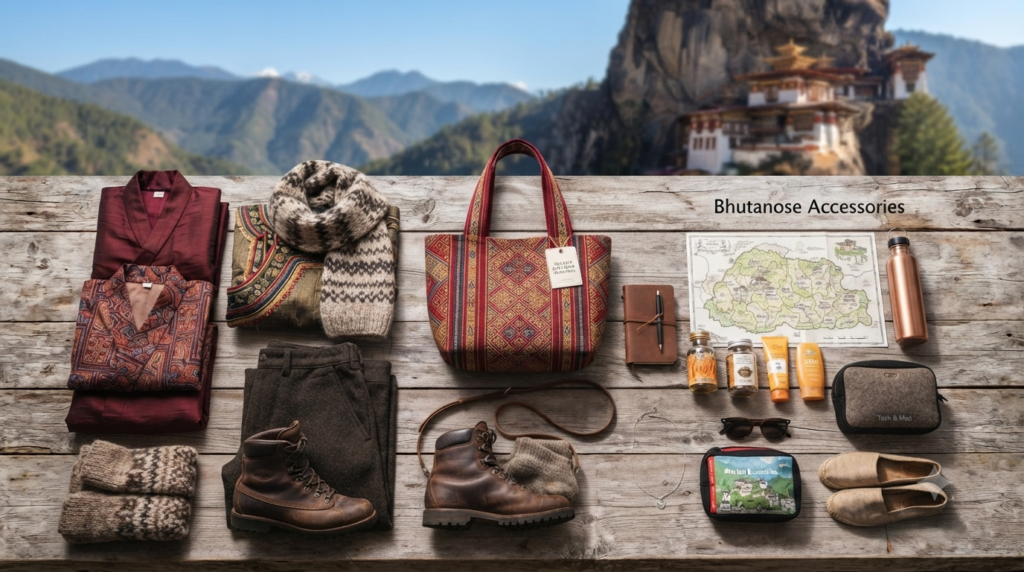
Bhutan is one of the world’s most unique travel destinations — a Buddhist kingdom perched in the Himalayas that measures national success in Gross National Happiness rather than GDP, and carefully controls tourism to preserve its pristine culture and environment. Visitors pay a daily “Sustainable Development Fee” and must travel with a licensed guide. What you wear in Bhutan matters deeply: the Bhutanese take their cultural dress codes very seriously, and showing respect through your clothing will genuinely enhance how you’re received throughout the kingdom.
Bhutan Dress Code Basics: What You Need to Know
Bhutan has strict dress codes for visiting dzongs (fortress-monasteries), temples, and government buildings — the most important cultural sites in the country. The Bhutanese themselves wear their traditional dress (gho for men, kira for women) to these places, and while visitors aren’t expected to wear traditional dress, you must be modestly and respectfully dressed. Specific rules include:
- Shoulders must be covered at all dzongs, temples, and government buildings.
- Legs must be covered — trousers or skirts below the knee are required. Shorts are not acceptable at cultural sites.
- Footwear must be removed before entering most temples and monasteries. Shoes that slip on and off easily are practical.
- Neat, clean, and respectful clothing is expected. Torn, faded, or very casual clothing (like ripped jeans) is considered disrespectful at sacred sites.
What to Wear at Dzongs and Monasteries
The dzongs of Punakha, Paro, Trongsa, and Wangdue Phodrang are Bhutan’s architectural masterpieces and active centers of Buddhist administration and monastic life. Tiger’s Nest Monastery (Paro Taktsang) is the single most iconic site in the country. All require respectful dress.
- Women: Long trousers or a skirt/dress below the knee, with shoulders covered. A light scarf or shawl is useful for adding coverage quickly. Modest, unfussy clothing works best — avoid anything that could be seen as flashy or attention-seeking in a sacred space.
- Men: Long trousers (no shorts) and a collared shirt or at minimum a neat t-shirt. Many dzongs also require men to remove hats.
- Footwear: Choose shoes that are easy to slip off repeatedly throughout the day. Loafers, slip-on shoes, or buckle sandals are more practical than laced hiking boots for temple visits.
What to Wear for Trekking in Bhutan
Bhutan has some of the world’s most spectacular trekking, from the relatively accessible Druk Path Trek (5 days, crossing 4 mountain passes) to the demanding Snowman Trek (25 days, one of the hardest treks on earth). The Tiger’s Nest hike — a 2–3 hour uphill climb to the cliffside monastery — is the most popular single-day hike and requires proper footwear and layers.
- Layering system: Bhutan’s altitude (Thimphu sits at 2,334m; passes on multi-day treks reach 5,000m+) means temperature swings are dramatic. Base layer, mid-layer fleece, and a waterproof outer shell are essential.
- Hiking trousers: Quick-dry, lightweight trekking trousers. Convertible zip-off styles are useful for variable temperatures.
- Hiking boots: Waterproof, ankle-supporting boots are required for any serious trekking. The Tiger’s Nest trail is steep and uneven — sturdy footwear makes a real difference.
- Warm hat and gloves: Even in summer, high passes are cold and windy.
- Rain gear: Bhutan’s monsoon season (June–September) brings heavy rains in the valleys. A waterproof jacket is essential year-round at altitude.
What to Wear for Everyday Sightseeing in Bhutan
Outside of sacred sites, the dress code relaxes considerably. Thimphu’s cafés, market areas, and the Folk Heritage Museum are casual settings where comfortable travel clothes are perfectly appropriate. However, modest dress is still culturally appreciated throughout Bhutan — very short shorts, revealing tops, or beach-style clothing would feel very out of place in any Bhutanese town.
- Comfortable trousers: Linen or cotton travel trousers, chinos, or smart casual trousers work for towns and general sightseeing.
- Layering top: A long-sleeve t-shirt or light sweater — temperatures in the valleys are mild (15–25°C in spring and autumn) but can drop quickly with cloud cover.
- Comfortable walking shoes: You’ll do a lot of walking on uneven surfaces. Sturdy flat shoes or walking sandals are more practical than fashion footwear.
Bhutan Packing List Essentials
- 3–4 pairs of long trousers (no shorts for cultural sites)
- 2–3 modest, covered-shoulder tops or shirts
- 1–2 light layers (fleece or knit sweater)
- Waterproof outer shell / rain jacket
- Waterproof hiking boots
- Easy-on slip-off shoes for temple visits
- Warm hat and gloves (for altitude and cooler days)
- Lightweight scarf or shawl (for women: adds modesty coverage quickly)
- Merino wool base layers for trekking
- Sunglasses + high-SPF sunscreen
- Warm mid-layer (fleece or down jacket)
Bhutan by Season: What to Wear
March–May (Spring): The best time for trekking and wildflower viewing. Warm days, cool nights. Layer mid-weight clothing with a waterproof shell for occasional rain. Rhododendrons are in full bloom — the valleys are spectacular.
June–August (Monsoon): Heavy rain in valleys; leeches on forest trails. Pack waterproof gear for everything. Higher altitude treks above the rain line are actually beautiful in monsoon season with clear mountain views.
September–November (Autumn — Peak Season): Crisp, clear, and ideal conditions. The best mountain views and the most vibrant festival season (tshechus). Pack layers as nights get cold — October evenings in Thimphu can drop to single digits.
December–February (Winter): Cold in valleys (near freezing at night), very cold at altitude. Pack serious winter clothing — thermal base layers, a heavy down jacket, and waterproof everything. The trade-off: fewer tourists, incredible Himalayan views, and a peaceful, contemplative Bhutan.
What NOT to Wear in Bhutan
- Shorts at any cultural site — this applies to men and women equally at dzongs, temples, and monasteries.
- Sleeveless tops without a cover layer — carry a scarf or cardigan at all times for adding coverage when needed.
- Revealing, tight, or beach-style clothing — Bhutanese culture is conservative, and dressing modestly shows respect for the local community.
- Camouflage clothing — this is prohibited in Bhutan.
Photography and Temple Etiquette in Bhutan
Photography is often restricted or banned entirely inside dzong and monastery interiors, though the courtyards and exteriors are usually fine to photograph — a guide will typically flag which areas allow cameras. Dressing modestly matters here too: even when just taking photos from a courtyard, shorts or sleeveless tops draw attention and are best avoided on any cultural site visit, camera in hand or not.
Hats and sunglasses are generally expected to come off before entering a temple’s inner sanctum out of respect, even though outerwear like jackets typically doesn’t need to be removed unless a guide specifically asks.
Frequently Asked Questions
Can I take photos inside Bhutan’s dzongs and monasteries? Often not inside the main halls — many restrict photography entirely indoors, though courtyards and exteriors are usually fine. Your guide will confirm what’s allowed at each specific site.
Do I need to remove my hat before entering a temple? Yes — hats and sunglasses typically come off before entering a temple’s inner sanctum, even though jackets and other outerwear usually don’t need to be removed.
Is hiking gear needed for the Tiger’s Nest hike specifically? Sturdy trail shoes and layers work better than full mountaineering gear — the hike is steep but doesn’t require technical equipment, and temperatures shift noticeably between the base and the monastery itself.
Does Bhutan’s guided-tour requirement affect what I should pack? Not directly, but since nearly all sightseeing is guided, it’s worth asking your guide in advance about any site-specific dress requirements for the exact dzongs and monasteries on your itinerary, since a few have stricter rules than the general guidelines here.
For more Himalayan and Asian destination packing guides, see our Nepal packing guide and complete destination style guide collection.
Pingback: Bhutan Packing List: What to Pack for the Last Shangri-La - Vacation Style Guide