
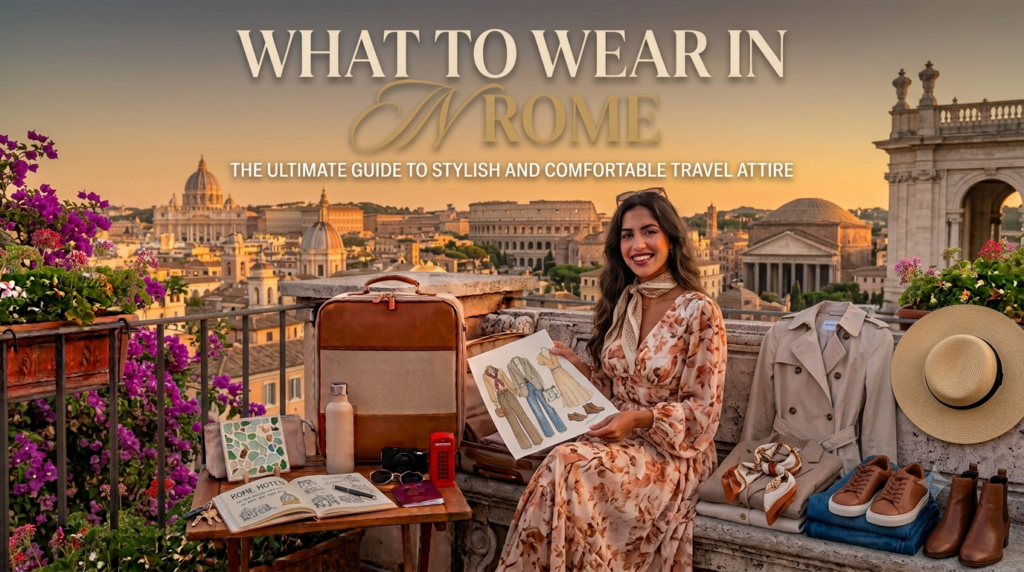
Planning a trip to Rome and wondering what to wear in Rome? The Eternal City demands a careful balance between style and practicality — elegant enough for its world-class restaurants, comfortable enough for hours of cobblestone walking, and modest enough for its sacred churches and the Vatican.
Rome is a fashion-conscious city, so looking put-together matters. The good news? Roman style is effortlessly chic — think flowy sundresses, linen trousers, and quality leather sandals rather than athletic wear or beachwear.
Rome Dress Code Essentials: What You Must Know
Before packing for Rome, there are two critical dress code rules every traveler must know:
- Vatican & Churches: Shoulders and knees must be covered. Sleeveless tops and shorts or short skirts are not allowed inside the Vatican, Pantheon (after it became a church), and most other Roman churches. Carry a scarf to drape over your shoulders.
- Fountains & Monuments: Rome has strict rules against sitting or swimming in fountains like the Trevi. Stay dressed and camera-ready.
What to Wear Sightseeing in Rome
Rome’s cobblestone streets are beautiful but tough on feet. Your sightseeing outfit should combine style with walkability:
Summer (June–August): A flowy midi dress or wide-leg linen trousers with a tucked-in blouse. Choose breathable fabrics like linen and cotton. Pair with leather sandals (not flip-flops — Romans consider them too casual for city streets). Always carry a lightweight cardigan or large scarf for church visits.
Spring & Fall (March–May, September–November): Layering is key. A midi skirt with a fitted top and a light jacket works perfectly. Or try tailored ankle trousers with a blouse and a denim jacket. Ankle boots or comfortable sneakers (white leather sneakers are very Roman) are ideal.
Winter (December–February): Rome winters are mild but damp. A wool coat over a sweater and tailored trousers is the Roman standard. Add a scarf and boots — you’ll be well-dressed for both the Colosseum and a cozy trattoria.
What to Wear to the Vatican
The Vatican has the strictest dress code of any Rome attraction. Guards will turn you away if you’re not appropriately covered — and there are no exceptions, even in summer heat.
- Shoulders must be covered (bring a scarf or cardigan)
- Knees must be covered (midi skirts, trousers, or capri length minimum)
- No sleeveless tops, shorts, or mini-skirts
- Hats should be removed inside the churches
Best Vatican outfit: A knee-length wrap dress with a light cardigan, or wide-leg linen trousers with a short-sleeve blouse. Pack a light scarf in your bag — it doubles as a church cover-up and a stylish accessory for the rest of the day.
What to Wear for Dinner in Rome
Romans take dinner seriously. While there’s no strict dress code at most restaurants, looking polished is expected — especially in the Trastevere or Prati neighborhoods.
Smart casual to elegant: A floral midi dress with block heels, or tailored trousers with a silk blouse. Men: a collared shirt with chinos. Avoid sportswear, athletic shoes, or overly casual beach looks for evening dining.
Rome Outfit Ideas by Season
Summer Rome Outfits (June–August)
- Flowy linen midi dress + leather sandals + wide-brim hat + crossbody bag
- Linen wide-leg trousers + tucked-in white blouse + espadrilles
- Cotton wrap skirt + lightweight blouse + block-heeled sandals
Spring/Fall Rome Outfits
- Midi skirt + fitted turtleneck + ankle boots + tailored blazer
- Dark jeans + silk blouse + white leather sneakers + trench coat
- Wrap dress + denim jacket + low block-heel ankle boots
Winter Rome Outfits
- Tailored wool trousers + cashmere sweater + long wool coat + ankle boots
- Knit midi dress + opaque tights + leather boots + structured coat
- Dark-wash jeans + fitted turtleneck + leather jacket + scarf
What to Wear for Rome’s Top Experiences
The Colosseum & Roman Forum
The Colosseum — the Flavian Amphitheatre, completed in 80 AD, with a capacity of 50,000–80,000 spectators — is Rome’s most iconic monument and the world’s most visited ancient structure. The combined Colosseum + Roman Forum + Palatine Hill ticket must be pre-booked online; same-day tickets are often unavailable in peak season. The Forum and Palatine Hill involve extensive walking on ancient stone and rubble — supportive shoes are essential. Visit early morning (the complex opens at 9am) or in the late afternoon (4–6pm) to avoid the worst midday heat and crowds. The area is entirely exposed to sun; hat, sunscreen, and water are non-negotiable in summer.
Trastevere: Aperitivo & Evening Rome
Trastevere — the neighbourhood of medieval alleyways, ivy-covered walls, and vibrant piazzas on the west bank of the Tiber — is Rome’s most atmospheric evening destination. The golden-mosaiced Basilica di Santa Maria in Trastevere is among Rome’s most beautiful churches (no queue, no ticket, and full of local Trastevere residents). The neighbourhood’s bars and trattorias fill from 7pm for aperitivo (Campari Spritz, Aperol, Negroni) and dinner. Cobblestones throughout — flat sandals are the right call. Smart casual dressing fits perfectly with Trastevere’s mix of sophisticated locals and younger international visitors.
Borghese Gallery
The Borghese Gallery, set in a park on the Pincian Hill above the Piazza del Popolo, houses one of Rome’s most concentrated collections of Baroque masterpieces — Bernini’s Apollo and Daphne, Caravaggio’s entire Roman period output, Raphael, Titian, and Canova. Critically: the gallery admits only 360 visitors per 2-hour session, and all tickets must be pre-booked at borghesegallery.it — typically selling out 2–4 weeks in advance in peak season. The Borghese gardens surrounding the gallery are a beautiful free outdoor space for a post-gallery walk.
Pingback: Rome Packing List for Women: What to Pack for Italy's Eternal City - Vacation Style Guide
Pingback: What to Wear in Sicily: Italian Island Style Guide for Every Occasion