
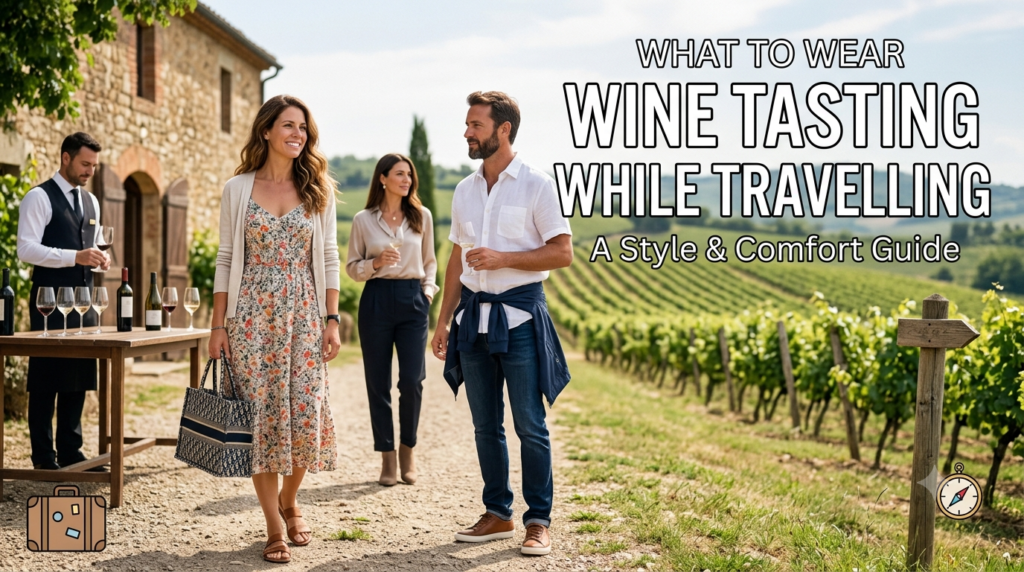
Wine tasting as part of a travel itinerary is one of life’s great pleasures — a Burgundy cellar tasting, a Tuscany vineyard lunch, a Douro Valley quinta tour, a Napa barrel room visit. But what to wear for wine tasting travel involves some genuinely practical considerations that most people overlook until they are standing in a stone wine cave in October wondering why they wore open-toed sandals. This guide covers the complete outfit approach for wine tasting across the world’s major wine regions.
The Core Challenge: Smart-Casual in Agricultural Environments
Wine tourism operates at the intersection of rural agricultural work and sophisticated hospitality. The vineyard itself is often muddy, uneven, and outdoor; the tasting room may be a beautifully restored centuries-old cellar or a sleek modern architectural statement; the lunch that follows is often excellent and deserves appropriate dressing. Your outfit needs to navigate all three. The formula that works across virtually all wine regions: smart casual clothing that is neither so dressy as to be impractical outdoors, nor so casual as to disrespect the cultural and culinary seriousness of the experience.
Footwear: The Most Important Decision
This is not negotiable: comfortable, closed shoes are essential for vineyard visits. Vineyards involve walking on loose gravel, uneven earth paths, muddy harvest areas (if visiting in autumn), and cellar stone floors. High heels are genuinely dangerous on cellar stairs and vineyard rows — many prominent wineries politely decline entry to guests in heels for this reason. The ideal wine tasting shoe: a smart flat or low-heeled boot, a quality leather loafer, a supportive ballet flat, or clean leather trainers. For summer visits to dry regions (Provence, Napa, Rioja), clean flat sandals with ankle straps may work for the tasting room but are impractical for actual vineyard walking.
Clothing for Cellar Visits
Wine cellars are cool year-round — typically 12–15°C — regardless of outdoor temperature. Even in Tuscany in August, the moment you descend into a cellar you will wish you had a light layer. Always bring a cardigan, light jacket, or linen blazer that can be added and removed quickly. For women: a midi dress with a cardigan layers beautifully; smart jeans with a silk or linen blouse is another excellent option. For men: chinos or smart jeans with a collared shirt and a light jacket handles the temperature transition from summer heat to cellar cool effectively.
Vineyard Lunch Dressing
Many premium wine tourism experiences include lunch at the winery. The formula that works: smart casual clothing that works both outdoors and indoors. For prestigious domaines in Burgundy or Bordeaux: add a blazer or structured cardigan. For New World wineries: smart casual with a linen shirt or sundress works perfectly.
Red Wine and White Clothing
Red wine spills even for careful tasters. Avoid wearing white or very pale pastels on red-wine-focused tasting days. Deep navy, forest green, burgundy, or patterned fabrics are both stylish and practical.
Old World vs. New World Tasting Rooms
European tasting rooms (Bordeaux, Tuscany, Rioja) tend to run more formal and heritage-driven — smart casual with a considered edge fits best. New World regions (Napa, Barossa, Marlborough) skew more relaxed and experience-focused, so quality basics without the extra polish work just as well, though upscale reserve tastings anywhere reward dressing a notch up.
What Not to Wear Wine Tasting
Strong perfume or cologne is the biggest miss — it interferes with your own ability to smell the wine and everyone else’s. Bright white or pale clothing you’re precious about is a close second, given how easily red wine finds a way onto sleeves and laps. Overly casual gym wear reads as underdressed at most reputable estates.
Harvest Season vs. Off-Season Tasting
Harvest season (typically late summer through mid-autumn depending on the region) brings the most activity to wine estates — and the most mud, dust, and working vineyards to navigate. Closed shoes with real tread matter more during harvest than at any other time of year, since tasting rooms often sit right beside active picking and crushing operations. Off-season visits (winter and early spring in most regions) are quieter and dressier by comparison, with more of the visit spent indoors in the cellar or tasting room, so a smart layer matters more than practical footwear.
Wine Tasting in Hot Climate Regions
Regions like the Mediterranean, South Africa’s Western Cape, and parts of Australia combine wine tasting with genuine heat, which changes the calculus slightly from cooler regions like Burgundy or Oregon. Breathable linen in the same smart-casual silhouette works better than the heavier fabrics often pictured in wine-country style guides, and a wide-brim hat for the walk between tasting rooms and vineyard rows earns its space even on a dressed-up day. Cellars in hot-climate regions are still kept cool for the wine’s sake, so the light layer for temperature swings applies here too, just in reverse — a warm outdoor day with a genuinely cold indoor cellar.
Frequently Asked Questions
What should I wear to a Napa Valley wine tasting?
Smart casual California style — quality jeans, a linen shirt, clean sneakers or loafers, a light jacket for cellar visits. Some ultra-premium estates have slightly higher expectations.
Is there a dress code at French chateaux?
Not typically a formal dress code, but French sensibility prefers considered, quality presentation. Smart casual is always right at Bordeaux chateaux and Burgundy domaines.
Do I need to dress up for a wine tasting at a casual roadside stand versus a formal estate?
Yes, the gap is real — a casual roadside or co-op tasting room is fine in everyday travel clothes, while a formal reserve tasting at a name estate rewards the smart-casual approach covered above. When in doubt, checking the estate’s own website or booking confirmation usually signals which end of the spectrum to expect.
Is it rude to spit out wine while dressed nicely?
Not at all — spitting is standard practice at serious tastings, especially multi-stop days, and tasting rooms provide spit buckets specifically for this. It’s a functional habit, not a fashion consideration, though it’s worth staying a step back from the bucket if wearing something you’d rather not risk a splash on.
Final Thoughts on Wine Tasting Outfits
Wine tasting travel is about connecting with the land, the craft, and the culture behind every bottle. Dress in a way that respects the experience — comfortable practical shoes, a light layer for the cellar, and smart casual polish. The wine tastes better when you feel appropriately dressed for the experience.
Should I avoid wearing perfume to a wine tasting? Yes — strong scents interfere with the tasting experience for you and other guests; most serious tasting rooms will appreciate you skipping it.
What shoes work best for a vineyard visit? Closed-toe flats or low wedges — vineyard rows and cellar floors are often uneven gravel or stone, and heels sink into soft ground.