
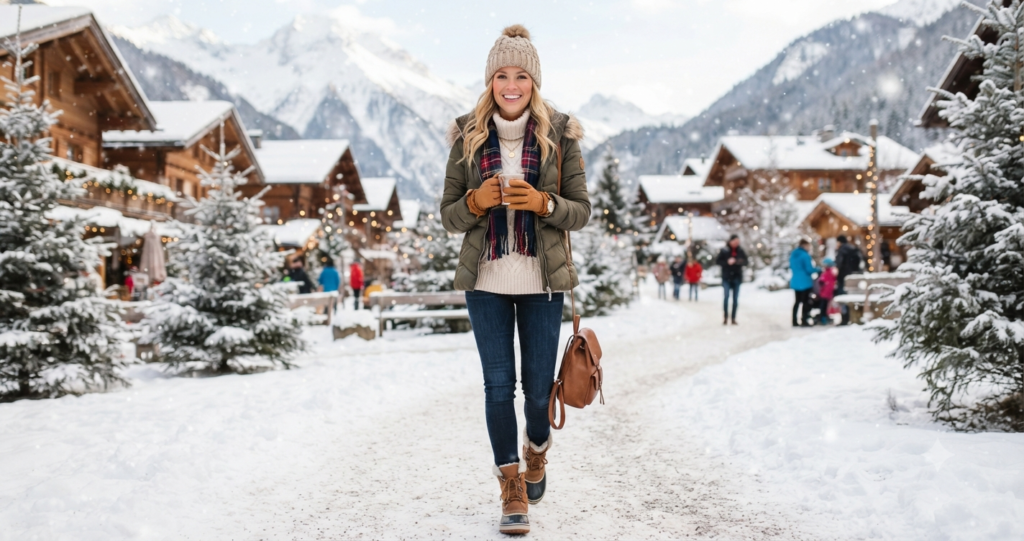
Winter vacation dressing is simultaneously the most technically demanding and visually most interesting of travel wardrobe challenges. Cold weather requires genuine layering strategy, but it also unlocks a wardrobe of textures, materials, and silhouettes unavailable in warm-weather travel. This guide covers winter vacation outfit ideas for ski destinations, cold-weather cities, and everything in between.
The Layering System for Winter Travel
Effective winter travel dressing is built on a three-layer system. The base layer sits against skin and manages moisture — merino wool is the gold standard (warm, breathable, resists odour, and can be worn multiple days between washing). The mid layer provides insulation — a cashmere or wool jumper, a fleece, or a puffer vest. The outer layer blocks wind and rain — a quality winter coat, waterproof ski jacket, or insulated parka. Each layer must work independently and in combination with the others.
Winter City Break Outfit Ideas
Winter city breaks — Paris, Prague, Vienna, New York, Tokyo — require warmth without sacrificing the style appropriate for urban exploration and nice restaurants.
The Classic Winter City Look: Straight-leg or slim wool trousers + a turtleneck jumper + a structured wool coat + leather ankle boots + a simple leather bag. This formula works across virtually every winter city context, from morning museum visits to evening dinner reservations.
The Layered Casual Look: Straight-leg jeans + a long-sleeved thermal or fitted top + an oversized knit sweater + a longline puffer coat + clean leather trainers or ankle boots. Practical for full walking days in cold conditions.
The Smart Evening Look; A midi slip dress over a fitted long-sleeved base layer + tights + knee-high or ankle boots + a tailored coat. The contrast between the summery slip dress and the cosy layering underneath is a distinctly modern winter fashion approach.
The Monochrome Cold-Weather Look: Building an outfit in a single colour family — all black, all ivory, all camel — is a reliable approach for winter travel that reads as intentional and sophisticated while simplifying outfit decisions.
Ski Vacation Outfit Ideas
Ski vacation dressing has two distinct contexts: on-mountain (functional performance wear) and après-ski or resort village (the transition from mountain to social setting that is one of skiing’s most distinctive style situations).
On the mountain: insulated, waterproof ski jacket and trousers in colours and styles you feel confident in; thermal base layers; a neck gaiter or balaclava; quality gloves; and a helmet (required at most modern ski destinations). Technical performance matters above all.
For après-ski and resort village: this is where ski resort style becomes genuinely interesting. The transition from ski gear to lodge or village wear offers the opportunity for unexpected combinations. A puffer vest over a fitted turtleneck with slim-fit ski pants and snow boots; a chunky cable-knit cardigan with jeans and fur-trim boots; a fleece-lined dress with thermal tights and snow boots. Ski resort towns have a playful, slightly retro aesthetic that rewards creative dressing.
Cold-Weather Accessories
Accessories are more functionally important in winter than in summer. A quality cashmere or wool scarf provides significant warmth and elevates any outfit. Leather gloves serve both warmth and aesthetic purposes. A fitted beanie or hat (avoid overly large or novelty styles for travel contexts) protects against wind and cold while reading as intentionally styled. Wool socks are non-negotiable for genuine comfort in cold conditions — cheap thin socks in cold weather are miserable.
Winter Vacation Packing Strategy
Winter clothing is bulkier and heavier than summer travel wear. Compression packing cubes significantly reduce the volume of knits and cosy layers. Wear your heaviest items (coat, boots, chunky knit) on travel days rather than packing them. Merino wool base layers are the single best investment for winter travel — they are warm, lightweight, and can be worn multiple times between washing, reducing overall pack volume.
For a seven-day winter city break: one quality coat (worn on travel days); two pairs of trousers (one casual, one smart); two or three jumpers or knits; two or three base-layer tops; one dress or skirt with tights; two pairs of shoes (comfortable walking boots + one smarter evening option); and a full accessories set (scarf, hat, gloves, wool socks).
Destination-Specific Winter Outfit Considerations
Northern European Cities (Oslo, Helsinki, Reykjavik): Genuine cold-weather performance is essential. High-quality insulated coats, waterproof footwear, and thermal layering are functional requirements, not optional. Scandinavian style is minimalist and quality-focused — clean lines, neutral colours, excellent fabrics.
Central European Cities (Prague, Budapest, Vienna): Cold but typically not extreme. A quality winter coat, ankle boots or knee-high boots, and a layered approach are sufficient. Cobblestones are significant — choose stable, comfortable footwear.
Southern European Cities in Winter (Rome, Barcelona, Athens): Winter in Southern Europe is mild compared to Northern or Central Europe, but evenings can be cold and buildings are often poorly insulated. A mid-weight coat and light layers are more appropriate than a heavy parka.
What to Wear for Northern Lights Trips and Christmas Markets
Aurora-hunting trips involve standing still outdoors for extended periods in some of the coldest destinations on a typical winter itinerary, which makes hand and foot warmers, a proper insulated hat covering the ears, and mittens (warmer than gloves for true cold) worth packing specifically for this activity, on top of the standard layering system. Snow pants over regular trousers are common for tour groups waiting outside for hours, even if they look bulky.
Christmas markets call for a more relaxed version of winter city dressing — comfortable waterproof boots for cobblestone or icy market streets, and a thermos-friendly outfit that lets you hold a warm drink for long stretches while browsing stalls. A crossbody bag keeps your hands free for mulled wine and shopping alike.
More Cold-Weather Guides
For destination-specific winter packing, see:
- Banff & the Canadian Rockies in Winter
- What to Wear in New York City (Winter Section)
- Mountain Vacation Outfit Ideas
Frequently Asked Questions
What is the warmest but most stylish winter travel coat?
A long wool or wool-blend coat in a neutral colour (camel, charcoal, black, or navy) is the most versatile stylish winter travel coat for city breaks. For genuinely cold destinations (below -10°C), a high-quality down or synthetic-insulated parka is warmer but less elegant — the trade-off is real. A mid-length puffer coat in a muted colour is an increasingly stylish compromise.
What shoes should I pack for winter travel?
Comfortable, waterproof ankle boots or knee-high boots handle most winter city situations. Choose styles with some grip on the sole for icy or wet surfaces. For ski destinations, snow boots are needed for village walking. A pair of warm indoor shoes (ballet flats, loafers, or block-heeled boots) for restaurant evenings completes the footwear requirements.
How do I stay stylish in very cold temperatures?
Invest in quality base layers that provide genuine warmth without bulk. A merino wool base layer under a slim jumper under a coat is warmer and slimmer than multiple bulky layers. Cashmere is significantly warmer than standard wool for its weight — a cashmere jumper plus a quality coat outperforms many cheaper layering combinations in genuine comfort.
What should I pack specifically for a northern lights trip?
Hand and foot warmers, mittens (warmer than gloves), an insulated hat covering the ears, and snow pants over regular trousers for the long stretches spent standing still outdoors waiting for the aurora to appear.
What shoes work best for Christmas markets?
Comfortable, waterproof boots with good grip handle cobblestone or icy market streets far better than fashion boots — market visits usually involve hours of standing and slow walking between stalls.
✈️ You Might Also Like

Beach Vacation Outfits: What to Wear at the Beach
Beach dresses

Summer Vacation Outfit Ideas: The Complete Warm-Weather Packing Guide
Beach vacation outfits

Cute Vacation Outfits for Women: 25 Stylish Ideas for Every Trip
Beach vacation outfits

What to Wear in the Dominican Republic: The Complete Style Guide
Beach vacation outfits