
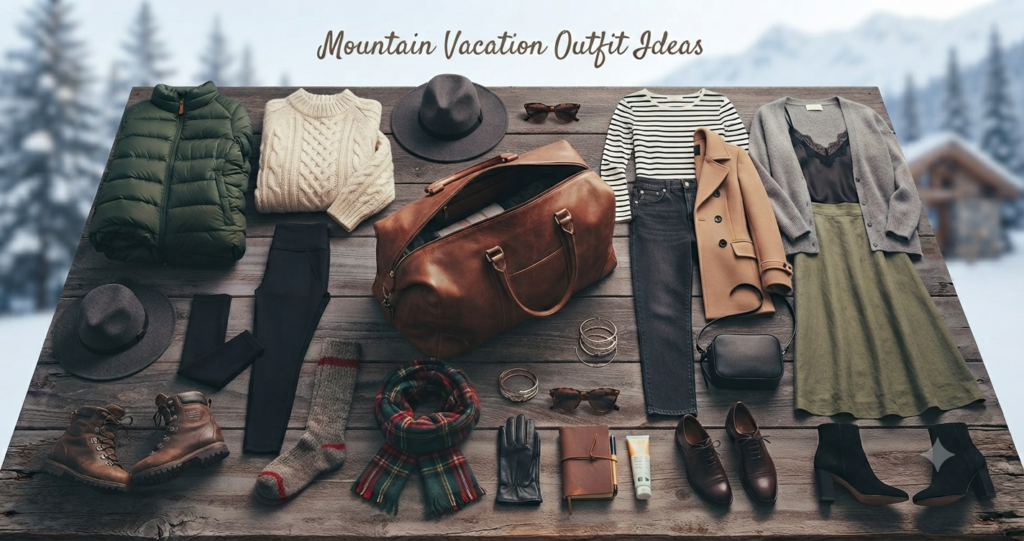
Mountain vacations span an enormous range of experiences — from luxury ski resort après culture to wilderness hiking adventures to charming alpine village exploration. Each context demands different clothing, but all mountain travel shares a common requirement: functional layering that handles rapidly changing weather and temperatures. This guide covers mountain vacation outfit ideas for every alpine context.
Understanding Mountain Weather and Dressing
Mountain weather is genuinely unpredictable. Temperatures can drop significantly as altitude increases — a general rule is approximately 6.5°C per 1,000 metres of elevation gain. Cloud cover, wind exposure, and sun angle all change rapidly in mountain environments. An outfit that is comfortable at the trailhead may be cold at the summit, and vice versa. This is why layering is not optional in mountain contexts — it is a fundamental safety and comfort requirement.
The Mountain Layering System
Effective mountain dressing uses three functional layers: base (moisture management), mid (insulation), and outer (weather protection). The base layer pulls moisture away from skin — merino wool or synthetic moisture-wicking fabrics, never cotton (which retains moisture and becomes dangerously cold when wet in mountain environments). The mid layer provides warmth — a fleece, down jumper, or insulating puffer. The outer layer blocks wind, rain, and snow — a waterproof shell or insulated waterproof jacket depending on temperatures.
Hiking Outfit Ideas
Warm-Weather Mountain Hiking: Moisture-wicking hiking leggings or quick-dry shorts + a fitted technical t-shirt or tank + a lightweight long-sleeved layer for UV protection and temperature changes + waterproof hiking boots or trail runners + wool hiking socks. Pack a packable rain jacket regardless of morning forecast — because mountain weather changes quickly.
Cool-Weather Mountain Hiking: Merino wool base layer top + a mid-weight fleece or insulating layer + a waterproof softshell or hardshell jacket + hiking trousers (convertible styles allow zip-off to shorts if temperatures warm) + waterproof hiking boots with ankle support + wool hiking socks.
Winter or High-Alpine Hiking: Full thermal base layer (top and bottom) + mid-layer fleece + insulated waterproof jacket + insulated waterproof trousers + four-season hiking boots + gaiters if snow is present + wool hat and gloves.
Stylish Mountain Outfits (Non-Hiking)
Mountain destinations also involve village exploration, restaurant dinners, and cable car excursions that do not require full hiking gear. Stylish but practical mountain outfits:
Alpine Village Exploration: Straight-leg jeans or casual trousers + a chunky knit jumper or fitted fleece + a puffer vest + ankle boots or sturdy chelsea boots. This works for village strolling, mountain café stops, and casual dinner.
Mountain Resort Chic: Fitted ski pants or thermal leggings + a quality turtleneck + a longline puffer coat + snow boots. This is the mountain equivalent of smart casual — polished enough for resort restaurants, functional enough for snowy conditions.
Alpine Evening: Dark jeans or tailored trousers + a soft cashmere or merino jumper + leather or suede ankle boots. The mountain evening aesthetic rewards warm textures and layered comfort rather than summer-style elegance.
Ski and Snowboard Outfit Ideas
On-mountain ski wear combines technical performance with increasing aesthetic consideration. Modern ski jackets and trousers are available in both purely technical versions and fashion-forward styles from brands like Moncler, Bogner, and Perfect Moment. Key considerations: waterproof rating (measured in millimetres — higher is better for snowy or wet conditions); insulation (down is warmest for cold days, synthetic is more practical for varied conditions); and ventilation (underarm zips allow temperature regulation during exertion).
Helmet use is strongly recommended at all modern ski destinations. Choose a helmet that fits properly and, if desired, one that coordinates with your jacket colour — helmet choices are now as considered as any other ski wardrobe decision.
Mountain Footwear
Footwear is the most critical mountain outfit decision. Hiking boots must provide ankle support, waterproofing, and grip for the terrain type. Trail runners are appropriate for well-maintained, lower-altitude trails but lack the support and protection for technical terrain. For snow: insulated, waterproof winter boots with good grip for village use; ski boots for on-mountain use (generally rented at destination).
Breaking in hiking footwear before a mountain vacation is non-negotiable. New hiking boots on a multi-day mountain trip will cause blisters — test them thoroughly on walks at home first.
Mountain Vacation Accessories
A quality beanie or wool hat; merino or wool gloves (touch-screen compatible for map checking); a neck gaiter or warm scarf; UV-protective sunglasses (mountain UV exposure is significantly higher than at sea level); and a compact packable backpack or daypack for carrying layers, water, and supplies on excursions.
More Mountain Guides
Planning a specific mountain trip? These destination guides go deeper on layering and footwear:
- What to Wear in Banff & the Canadian Rockies
- What to Wear in the Swiss Alps
- Winter Vacation Outfit Ideas
Frequently Asked Questions
What should I wear for a mountain hike as a beginner?
Start with moisture-wicking clothing (avoid cotton), comfortable and broken-in footwear with good grip, and a packable rain layer. The essential beginner mountain hiking mistake is overdressing at the start — begin with less insulation than you think you need, as exertion generates significant body heat. Add layers at stops and summits. Always have more warmth available than you expect to need.
What do I wear for après-ski?
Après-ski is one of skiing’s most distinctive social contexts — the transition from mountain performance wear to resort socialising. Classic après-ski style: remove your ski jacket (keep base layers if they are stylish enough, or change), add a chunky knit or fleece, and swap ski boots for snow boots or warm footwear. The aesthetic ranges from very casual (snow pants + fleece) to deliberately fashion-forward (slim ski pants + statement knit + structured accessories). The mountain resort context rewards creativity.
Can I look stylish while hiking?
Yes — outdoor performance wear has become increasingly design-conscious. Brands like Arc’teryx, Patagonia, and Salomon produce technically excellent gear that is also visually considered. A coordinated colour palette in your hiking outfit reads as intentional. Fitted base layers and well-chosen outerwear create a more polished outdoor aesthetic than mismatched gear from multiple brands in clashing colours.
What should I pack for a mountain trip in shoulder season (spring or fall)?
Shoulder season is the trickiest mountain packing scenario because conditions swing the most: a sunny trailhead morning can turn into sleet by afternoon at elevation. Pack a genuine 3-layer system (moisture-wicking base, insulating mid, waterproof shell) even for a day hike, and don’t assume valley-floor weather predicts what you’ll find higher up.
Are jeans ever okay for a mountain trip?
For the drive up, the lodge, or a mountain town’s main street, yes. For any actual hiking or activity, no — denim holds moisture, dries slowly, and restricts movement in a way that becomes a real problem if weather turns. Save jeans for arrival day and evenings, and pack technical or softshell pants for anything active.
Packing for a Multi-Day Mountain Trip vs. a Day Trip
A single-day mountain outing and a multi-night stay call for different priorities. For a day trip, pack light and focused: one solid layering system, enough water and snacks, and a change of socks in the car for the drive home. For a multi-night stay, laundry access is the real variable — mountain lodges rarely have same-day laundry, so pack enough base layers for the full trip rather than planning to rewash, and bring one non-technical outfit for evenings at the lodge so you’re not stuck in hiking gear at dinner every night. A packable duffel that compresses down for the return trip is also worth including if you’re buying any local gear or souvenirs along the way.