
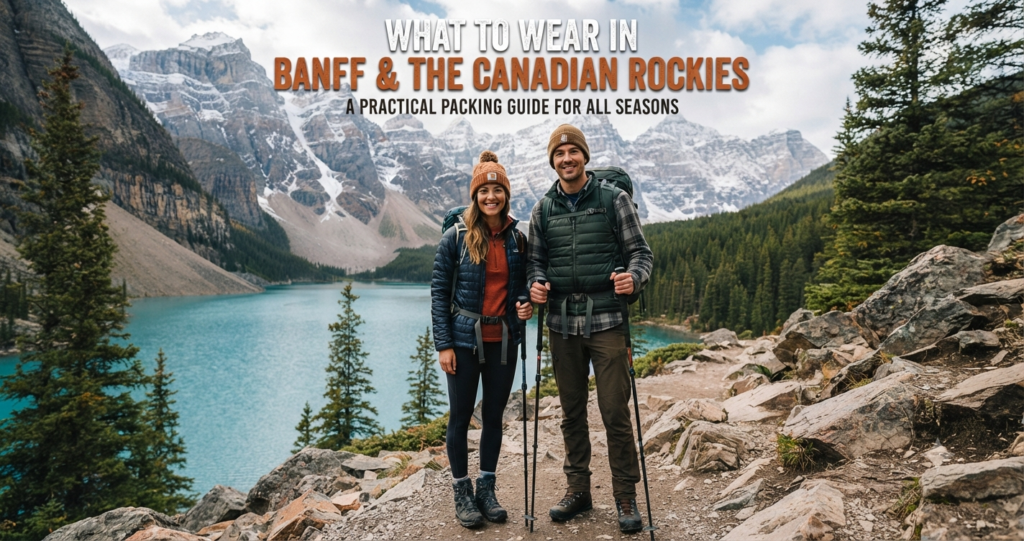
Banff is a strange and wonderful place to dress for. In the same afternoon you might walk a glacier-fed lake trail in bright sun, get caught in a cold drizzle at the top of the Banff Gondola, and end the night in a cozy lodge bar with a fireplace roaring behind you. The Canadian Rockies don’t do one climate — they do four seasons before dinner. That makes Banff outfit planning less about picking “a look” and more about building a flexible system that moves with the mountain.
This guide covers what to actually wear in Banff and Lake Louise year-round, how to layer for wild temperature swings, and what to pack so you’re ready for a hike, a gondola ride, and a nice dinner on Banff Avenue without checking three bags.
Understanding Banff’s Weather (It Changes Fast)
Banff sits at roughly 1,400 meters (4,500 feet) elevation, tucked inside Banff National Park in Alberta. Elevation and mountain microclimates mean the temperature can swing 15–20°F (8–11°C) between a sunny valley trail and an exposed ridge, and afternoon thunderstorms are common even in July. A few seasonal basics:
- Summer (June–August): Warm days in the 65–75°F (18–24°C) range, but mornings and evenings drop into the 40s (single digits °C). Sun is intense at altitude.
- Shoulder season (May, September–October): Highly variable — expect anything from sunny and mild to snow flurries. This is when layering matters most.
- Winter (November–April): Consistently below freezing, often well below, with wind chill at higher elevations. Snow on the ground for most of the season.
If you’re combining Banff with a warm-weather trip elsewhere, it’s worth reading how packing logic shifts entirely somewhere like our New Zealand outfit and packing guide, which deals with similarly dramatic weather variation across a single trip.
The Layering System: Your Most Important Packing Decision
Alpine dressing works on three layers, and getting this right matters more than any single item you pack.
Base layer: A moisture-wicking top (merino wool or synthetic, never cotton) worn against the skin. Cotton holds sweat and chills you fast once you stop moving — a real problem on exposed ridgelines.
Mid layer: A fleece pullover or lightweight down/synthetic insulated jacket that traps warmth. This is the layer you add or remove most often throughout the day.
Outer layer: A waterproof, windproof shell jacket. Banff weather turns quickly, and a shell that blocks wind and rain (not just “water-resistant”) is non-negotiable, even in July.
Pack pieces that layer well together rather than one bulky coat. A packable puffer jacket, a good shell, and a couple of merino base layers will outperform a single heavy parka in almost every Banff scenario. If you want a broader refresher on building a layering-friendly travel wardrobe before you pack, our travel capsule wardrobe guide walks through mixing and matching a small set of pieces into many outfits.
What to Wear for Hiking & Lake Trails
Banff’s biggest draw — Lake Louise, Moraine Lake, Johnston Canyon, Sulphur Mountain — is best explored on foot, and trail-appropriate clothing matters both for comfort and safety.
- Tops: Moisture-wicking t-shirt or long-sleeve base layer, plus a packable fleece or light insulated layer for summit stops and shaded canyon sections.
- Bottoms: Quick-dry hiking pants or leggings. Convertible zip-off pants are genuinely useful here given the temperature swings between valley and viewpoint.
- Footwear: Broken-in hiking boots or trail shoes with real tread — many popular trails have loose rock, roots, or lingering snow patches even in summer. Save the white sneakers for town.
- Accessories: A brimmed hat or cap, UV-protective sunglasses (snow and glacier ice reflect sun aggressively), and a buff or light scarf that doubles as sun protection or warmth.
Color-wise, muted earth tones (olive, rust, charcoal, navy) are both practical for trail dirt and align with Parks Canada guidance to avoid loud colors in bear country during certain seasons — check current trail advisories before you go. For a comparison of dressing for another high-altitude, trekking-heavy destination, see our Kyrgyzstan trekking packing list, which covers similar layering logic for mountain terrain.
Town Style: Banff Avenue & Lake Louise Village
Off the trail, Banff’s town style is relaxed mountain-chic rather than resort glam — think well-made outdoor brands styled intentionally rather than technical gear. A good uniform:
- Well-fitted jeans or corduroy pants with a knit sweater or flannel shirt
- A structured wool or shearling-lined jacket over a simple base layer
- Ankle boots or clean sneakers with good tread (Banff Avenue can be icy or wet depending on season)
- A scarf and beanie as both function and finishing touch
Restaurants in Banff and the lodges around Lake Louise lean smart-casual at most — you won’t need cocktail dresses or blazers, but a slightly elevated outfit works well for a nicer dinner after a day on the trails.
Gondola Rides & Scenic Viewpoints
The Banff Gondola and Lake Louise Gondola both climb well above town elevation, where wind and cold are noticeably more intense than at the base — even on a warm day. Bring your full mid and outer layer even if you’re comfortable in a t-shirt in the parking lot. Gloves and a warm hat are worth carrying in a day bag from September through May, and honestly worth having in a backpack in summer too, since the summit deck can be 15°F colder and windy.
Winter in Banff: Skiing, Apres-Ski & Snow Days
If you’re visiting Banff, Lake Louise, or Sunshine Village ski resorts in winter, dressing well means genuine cold-weather gear, not fashion layering:
- On the slopes: Insulated, waterproof ski jacket and pants, thermal base layers, wool socks, ski gloves, a helmet-compatible hat or headband, and goggles.
- Apres-ski: Warm, cozy, and a little polished — a shearling or puffer coat, thermal leggings or wool trousers, and insulated boots. Many lodges have fireplace lounges where the vibe is relaxed but put-together.
- Everyday winter town wear: A heavy insulated parka rated for well below freezing, thermal layers, waterproof snow boots with real traction, and always a hat, scarf, and gloves.
For more on building a resort-ready cold-weather wardrobe, our guide on what to pack for Switzerland covers similar alpine winter essentials, from insulated boots to lodge-appropriate evening wear.
Footwear: The One Category Worth Splurging On
More than any single wardrobe decision, footwear determines how much you’ll enjoy Banff. A rough guide:
- Hiking boots — waterproof, broken in before you arrive, with ankle support for uneven trails
- Insulated waterproof snow boots — essential November through April, useful as early as October
- Comfortable walking shoes or clean sneakers — for town days and easier paved paths like the Bow River trail
- Warm wool socks — pack more pairs than you think you need; wet feet ruin mountain days fast
The Banff Packing List
- 2–3 moisture-wicking base layer tops (merino wool ideal)
- 1 fleece or lightweight insulated mid layer
- 1 waterproof, windproof shell jacket
- 1 heavier insulated coat (winter visits) or packable puffer (summer, for elevation and evenings)
- Quick-dry hiking pants + 1–2 casual pants or jeans for town
- Thermal leggings (shoulder season and winter)
- Hiking boots, snow boots (winter), and one pair of everyday shoes
- Wool socks (bring extra), gloves, warm hat, scarf or buff
- Sunglasses with UV protection and sunscreen (higher UV exposure at altitude, plus snow glare in winter)
- Swimsuit if your hotel has hot springs access (Banff Upper Hot Springs is a popular stop year-round)
- Daypack for hikes, with room for extra layers
Practical Notes Before You Go
A few things worth knowing beyond the outfits themselves: wildlife safety in Banff National Park is a real consideration — carry bear spray on trails and check current Parks Canada advisories, since some trails have seasonal restrictions. Altitude, even at Banff’s relatively modest elevation, can intensify sun exposure and dehydration, so sunscreen and water matter more than they might at sea level. And if your itinerary bookends Banff with a warmer or more humid destination, our Peru and Machu Picchu packing guide is a useful comparison for how altitude and layering logic shift between mountain regions.
Pack for flexibility over fashion here. The best-dressed person on a Banff trail isn’t wearing the trendiest gear — they’re the one who’s warm on the summit, dry in the surprise rain shower, and comfortable enough to actually enjoy the view.
Frequently Asked Questions
Do I need a winter jacket in Banff in summer?
Not a full parka, but you do need warmth. Summer days often reach the low 20s °C, yet early mornings at the lakes can sit just above freezing. A packable insulated jacket plus a waterproof shell covers almost every summer day.
What should I wear for sunrise at Moraine Lake or Lake Louise?
Dress as if it were late autumn: a warm base layer, fleece, insulated jacket, toque and light gloves. You will be standing still in the cold for 30 to 60 minutes, and the lakeshore stays shaded until the sun clears the peaks.
Can I wear jeans in Banff?
Jeans are fine around Banff Avenue, for dinner and for short, flat lakeshore walks. Skip them on longer trails: denim stays wet and cold once it rains, which happens often in the mountains.
Is there a dress code at Banff restaurants and hotels?
Banff is mountain casual. Even the upscale dining rooms at the big historic hotels are relaxed smart casual: dark jeans or chinos, a clean sweater or button-down and tidy boots or sneakers are enough.
Do I need hiking boots, or are trail runners enough?
For well-maintained trails like Johnston Canyon or the Lake Agnes Tea House, grippy trail runners work well in dry weather. For longer hikes, shoulder season or snowy sections, waterproof hiking boots with ankle support are the safer choice.
When does it start snowing in Banff?
Snow can fall at higher elevations in any month. In town, the first lasting snow usually arrives between October and November and stays until spring, so pack real winter gear from late October onward.
More Mountain & North America Guides
- Mountain Vacation Outfit Ideas
- What to Wear in the Swiss Alps
- Best Ski Resorts: Alps, Rockies & Beyond
- Winter Vacation Outfit Ideas
- What to Wear in New York City
Plan Your Banff Trip
👉 Browse Banff tours and activities on GetYourGuide — Lake Louise day trips, gondola tickets, and guided hikes.