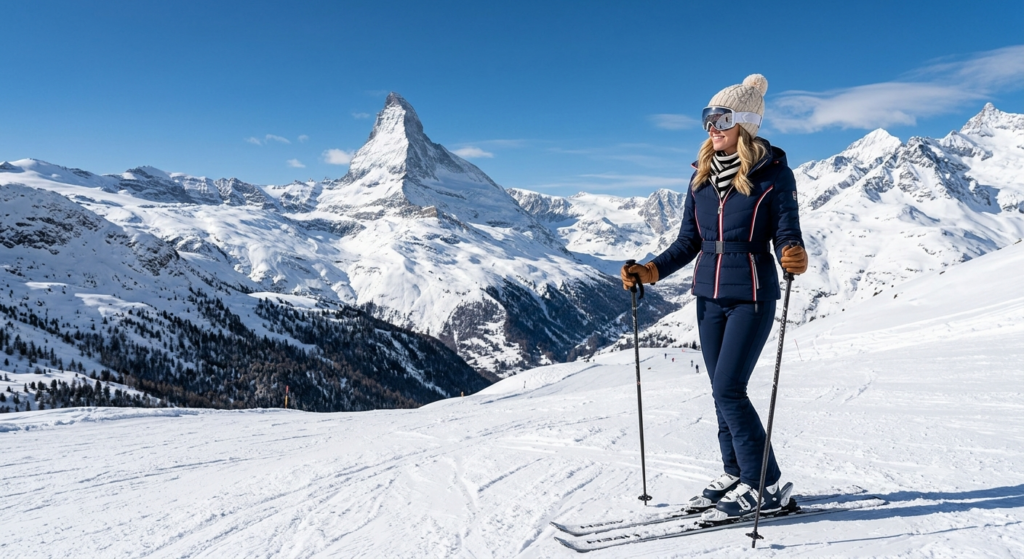
The Swiss Alps are one of the world’s most iconic destinations — a landscape of glaciers, jagged peaks, and picture-perfect villages where cowbells echo across flower-filled meadows in summer and pristine powder blankets everything in winter. Whether you’re visiting for world-class skiing in Verbier, hiking above Zermatt with the Matterhorn as your backdrop, or experiencing the magic of a Christmas market in Grindelwald, knowing what to wear in the Swiss Alps is essential for both safety and style.
The Swiss Alps: Two Very Different Experiences
Dressing for the Swiss Alps depends entirely on when you visit:
- Winter (December–April): Skiing, snowboarding, ice skating, sleigh rides, and après-ski. Cold, snowy, and demanding proper winter technical gear.
- Summer (June–September): Hiking, mountain biking, via ferrata, lake swimming, and village exploring. Warm days but cold nights and changeable mountain weather.
Winter in the Swiss Alps: What to Wear Skiing
The Layering System
Skiing and snowboarding in the Alps requires a proper layering system to manage body temperature as you move from freezing chairlift to warm ski lodge to active slopes:
- Base layer (thermals): Moisture-wicking merino wool or synthetic thermal underwear — top and bottom. Merino wool is worth the investment: it regulates temperature, resists odours, and feels comfortable next to skin all day.
- Mid layer: A fleece jacket or a thin down gilet (vest) for extra warmth on cold days. Should be easy to remove and pack into a jacket pocket when you heat up on the slopes.
- Outer layer (ski jacket + ski trousers): Waterproof, windproof, and breathable. Modern ski jackets have ventilation zips for temperature regulation. Ski trousers (salopettes) are reinforced, waterproof, and designed to move with your body.
Ski Accessories (Critical for Safety and Comfort)
- Ski helmet: Non-negotiable. Helmets are now worn by the vast majority of skiers at Swiss resorts.
- Ski goggles: Essential for sun glare on snow and protection from wind and cold at speed.
- Warm waterproof gloves or mittens: Your hands will suffer without good gloves. Invest in proper ski gloves — thin inner gloves plus a waterproof outer works well for very cold days.
- Neck gaiter or balaclava: For cold days and chairlift exposure
- Warm ski socks: Merino wool or specialist ski socks — only one pair in your boots (layering socks causes blisters)
- Ski boots: Rented or owned — ensure they fit properly before your first day
- SPF 50 sunscreen and lip balm: UV radiation is significantly stronger at altitude and reflected by snow — sunburn on the slopes is extremely common
Après-Ski Style: The Fun Part
Après-ski — the tradition of socialising after a day on the slopes — is one of the great pleasures of the Alps. Swiss resorts like Verbier, Zermatt, Gstaad, St Moritz, and Saas-Fee have legendary après-ski scenes.
- Casual après-ski (mountain bars, fondue restaurants): Change from ski gear into warm, stylish casuals — quality knit sweaters, fleece-lined leggings or jeans, warm ankle boots, a cosy puffer vest
- Upscale après-ski (hotel bars, fine dining in Zermatt or St Moritz): The Swiss mountain glam look — elegant knitwear, tailored après trousers or dark jeans, quality leather or suede ankle boots, gold jewellery. St Moritz in particular has an extremely well-heeled clientele.
- The classic Swiss look: A quality Fair Isle or Nordic pattern sweater, dark fitted jeans or tailored ski trousers worn as evening trousers, fur-lined leather boots
Summer in the Swiss Alps: What to Wear Hiking
Summer hiking in the Swiss Alps is spectacular — wildflower meadows, glacial lakes, and unobstructed mountain views. However, alpine weather changes fast:
- Hiking trousers: Lightweight, quick-drying, and comfortable. Many have zip-off legs for versatility.
- Moisture-wicking base layer: A merino wool or technical top that manages sweat on uphill sections
- Mid layer: A fleece or light down jacket — temperatures drop fast above 2,000m even in July
- Waterproof jacket: Mountain thunderstorms build fast in summer afternoons — always pack one
- Hiking boots: Proper ankle-supporting boots for serious trails; trail runners for gentler paths
- Sun hat or cap: High altitude UV is intense even when it feels cool
- Gaiters: For early season hiking when snow may still be present on high passes
Summer Village Exploring
The Swiss alpine villages — Zermatt, Grindelwald, Murren, Wengen — are charming and surprisingly sophisticated. For village exploring after a hike:
- Comfortable walking shoes or trail shoes
- Smart-casual clothing — jeans, a quality knit, a linen shirt
- A fleece or light down jacket for evenings (temperatures drop significantly after sunset even in summer)
Book Swiss Alps ski lessons, guided hikes, and mountain experiences on GetYourGuide — from beginner ski instruction to Matterhorn glacier hikes and scenic Jungfrau railway experiences.
Swiss Alps Packing List
Winter
- Thermal base layers (top + bottom, 2 sets)
- Fleece mid-layer
- Waterproof ski jacket + ski trousers
- Ski helmet + goggles
- Waterproof gloves or mittens
- Warm wool socks (specialist ski socks)
- Neck gaiter/balaclava
- Après-ski outfit (warm, stylish knitwear + boots)
- SPF 50 sunscreen + SPF lip balm
Summer
- Moisture-wicking hiking top (2–3)
- Hiking trousers (1–2 pairs)
- Fleece or light down jacket
- Waterproof jacket
- Hiking boots
- Warm layer for evenings
- Comfortable village clothes for après-hike
- Sunscreen + sunglasses + sun hat
Book Your Swiss Alps Stay
Car-free Zermatt is the most dramatic — the Matterhorn visible from nearly every window. Verbier has the best nightlife. Grindelwald and the Jungfrau region are perfect for families and spectacular scenery. Search Swiss Alps hotels and chalets on Booking.com — book early as popular resorts fill up months in advance for both winter and summer peak seasons.
Final Thoughts
The Swiss Alps demand proper preparation above anything else — the weather is serious and the activities are physically demanding. But within those practical requirements, there’s tremendous room for the kind of stylish, quality mountain dressing that makes après-ski and village evenings a genuine pleasure. Invest in good base layers, dress up for evenings, and let one of earth’s most extraordinary landscapes do the rest of the work.
✈️ Trip Essentials
Affiliate links — we may earn a small commission at no extra cost to you.
Ski chalets, mountain hotels in Zermatt, Verbier and St. Moritz.
Skip the tourist traps — book top-rated tours, day trips and experiences in The Swiss Alps with instant confirmation.
Ready to start packing? See our complete Swiss Alps packing list for women for everything you need to bring.
the Swiss Alps Packing List
The Swiss Alps are extraordinary in every season — winter skiing and snowboarding at Zermatt, Verbier, and St. Moritz; summer hiking past wildflower meadows and glacial lakes at Grindelwald, Lauterbrunnen, and Saas-Fee; autumn colours in the valleys; spring thaw revealing rushing waterfalls. But the Alps are also a place where the weather changes fast and altitude demands respect. Packing right is the difference between a spectacular alpine adventure and a cold, underprepared struggle. This Swiss Alps packing list for women covers every season.
Swiss Alps Weather by Season
- Winter (December–March): Ski season. Village temperatures typically -5 to 5°C at resort level; on pistes at 2,000–3,500m it’s -10 to -20°C with wind chill. Heavy snowfall. Ski gear is essential; après-ski is smart-casual in most resorts.
- Spring (April–May): Snow melting, wildflowers emerging, mountain huts opening. Unpredictable weather — sunshine can turn to snow in hours at altitude. Layering is critical.
- Summer (June–September): Peak hiking season. Valley temperatures 20–28°C; at altitude (above 2,000m) temperatures drop 10–15°C from valley level with strong UV. July–August sees thunderstorm risk in afternoons — start hikes early.
- Autumn (October–November): Quieter, golden light on the mountains. Cool to cold — pack medium-weight layers. First snowfalls arrive at high altitude by October.
Swiss Alps Packing List for Women
Winter / Ski Trip
- Ski jacket: Waterproof, windproof, and insulated. A shell jacket with separate mid-layer gives more temperature flexibility than a single insulated jacket.
- Ski trousers/salopettes: Waterproof with reinforced knees. Women’s-fit ski trousers are more comfortable than unisex options for all-day skiing.
- Thermal base layers (top and bottom): Merino wool or high-quality synthetic. Merino regulates temperature, resists odour, and feels next to skin without itching.
- Mid-layer fleece or down jacket: For extra warmth on very cold days or rest days in the village.
- Ski socks: Dedicated ski socks (Smartwool, Falke, Darn Tough) that sit just below the knee for boot warmth without bunching.
- Ski helmet: Non-negotiable. Can be rented at any resort.
- Ski goggles: For snow days and high wind.
- Warm hat, neck gaiter, gloves or ski mittens: Mittens are warmer than gloves.
- Après-ski outfit: Zermatt and Verbier are fashionable — a stylish sweater, skinny jeans or leggings, and warm ankle boots or UGGs cover most après settings.
Summer / Hiking
- Waterproof hiking boots: Essential for rocky alpine terrain. Gore-Tex lining keeps feet dry when hiking through morning dew, stream crossings, and afternoon rain. Break them in before your trip.
- Moisture-wicking hiking tops (2–3): Merino or synthetic. Avoid cotton — it stays wet and causes chafing and cold when wet.
- Convertible hiking trousers: Zip-off trousers convert to shorts for valley sections in full sun and back to trousers for altitude.
- Warm mid-layer: A lightweight fleece or down jacket for above 2,000m. Even in July, temperatures at the Jungfraujoch (3,454m) can be 0°C or below with wind chill.
- Waterproof shell jacket: Afternoon thunderstorms are a daily risk in summer. A packable rain jacket that fits in your daypack is non-negotiable.
- Hiking socks (3–4 pairs): Merino wool hiking socks — they cushion, wick moisture, and resist blisters over long days.
- Trekking poles: Reduce knee strain significantly on steep descents. Many of Switzerland’s most dramatic trails (Schilthorn to Mürren, Five Lakes Walk above Zermatt) involve significant elevation loss.
- SPF 50+ sunscreen + lip balm with SPF: UV intensity increases approximately 10–12% per 1,000m of altitude. Sunburn at altitude is faster and more severe than at sea level.
- Sunglasses with UV400 protection: Reflected UV from snow and glacier surfaces can cause photokeratitis (snow blindness).
Village & Après Essentials
- 1–2 casual outfits for village dinners, fondue restaurants, and cable car rides (jeans or chinos + a warm knit)
- Comfortable walking shoes or trainers for village exploring
- Warm scarf and hat for evening walks in the village
Swiss Alps Activity Guide: What to Wear
Matterhorn Glacier Paradise (Zermatt)
The cable car to 3,883m at the Matterhorn Glacier Paradise is one of Europe’s highest viewpoints and operates year-round. Even in July, temperatures here are -5 to -8°C with wind chill. Bring full winter layers regardless of valley weather — many summer visitors are unprepared for how cold the top is. Sunglasses with high UV protection are essential — the glacier reflects intense UV.
Jungfrau Region Hiking (Grindelwald, Lauterbrunnen)
The Bernese Oberland’s classic hikes — the Eiger Trail, Männlichen to Kleine Scheidegg, the Lauterbrunnen Valley walk — range from easy valley walks to challenging high-altitude routes. Start early (before 9am) to beat afternoon thunderstorms in summer. Wear waterproof hiking boots, layers, and keep your rain jacket packed accessible rather than deep in your bag. The trains and cable cars are very expensive — pre-book the Swiss Travel Pass or regional day passes for significant savings.
Five Lakes Walk, Zermatt
The Five Lakes Walk above Zermatt (starting from Blauherd, 2,571m) is one of Switzerland’s most photographed hikes — each lake gives a different reflection of the Matterhorn. The 9.5km route involves 500m of descent. Bring waterproof boots (early season snow patches), poles, and a packable down jacket for the start. Temperatures at Blauherd can be 10–15°C cooler than Zermatt village even in summer.
Common Swiss Alps Packing Mistakes
- Underestimating altitude cold: A sunny summer day in Interlaken (568m) feels like a different world from the Jungfraujoch (3,454m). Many tourists arrive at high-altitude viewpoints in t-shirts and are genuinely frozen. Always pack a down layer and waterproof jacket in your daypack.
- Inadequate footwear for hiking: Trainers are not hiking shoes. Rocky alpine terrain, wet grass, and uneven trails are hazardous in running shoes. Gore-Tex hiking boots with ankle support protect against rolled ankles and wet feet.
- Forgetting sunscreen at altitude: The combination of higher UV intensity and reflective snow means alpine sunburn happens in 20–30 minutes at 3,000m+ without protection. Apply before going up — reapply every 2 hours.
- Not checking weather before hiking: MeteoSwiss (the Swiss national weather service) provides excellent mountain-specific forecasts. Check it the night before and the morning of any significant hike. Afternoon thunderstorms are common June–August.
Swiss Alps Packing FAQ
What’s the best base for exploring the Swiss Alps?
It depends on your priorities. Zermatt is the most dramatic — car-free, under the Matterhorn, with year-round skiing and world-class hiking. Interlaken is the best hub for the Jungfrau region — budget-friendlier than Zermatt with excellent rail connections. Grindelwald has better value accommodation with direct access to the Eiger Trail. For skiers, Verbier (Swiss French-speaking region) and St. Moritz (glamorous, expensive) are the other major resort alternatives.
Do I need crampons for summer hiking?
For most popular summer hiking trails, no. Trails like the Five Lakes Walk, Eiger Trail, and Männlichen to Kleine Scheidegg are well-maintained and crampons aren’t required in summer (June–September). For glacier hiking, via ferrata routes, or high-altitude traverses above 3,500m (like the Monte Rosa Hut approach), micro-spikes or crampons may be needed in early season (May–June) when snow patches remain. Check current trail conditions on the Swiss hiking portal (schweizmobil.ch) before your visit.
Is the Swiss Travel Pass worth it?
For most first-time visitors spending 5+ days exploring multiple regions, yes — the Swiss Travel Pass covers trains, most cable cars and mountain railways, buses, and lake boats at a significant discount versus buying individual tickets. For the Jungfraujoch specifically, the pass gives a 25% discount on the expensive summit railway ticket. For a one-region visit or 3 days or fewer, individual regional day passes (Jungfrau Travel Pass, Tell Pass) often offer better value.
Pingback: Swiss Alps Packing List for Women: What to Pack for the Swiss Alps - Vacation Style Guide