
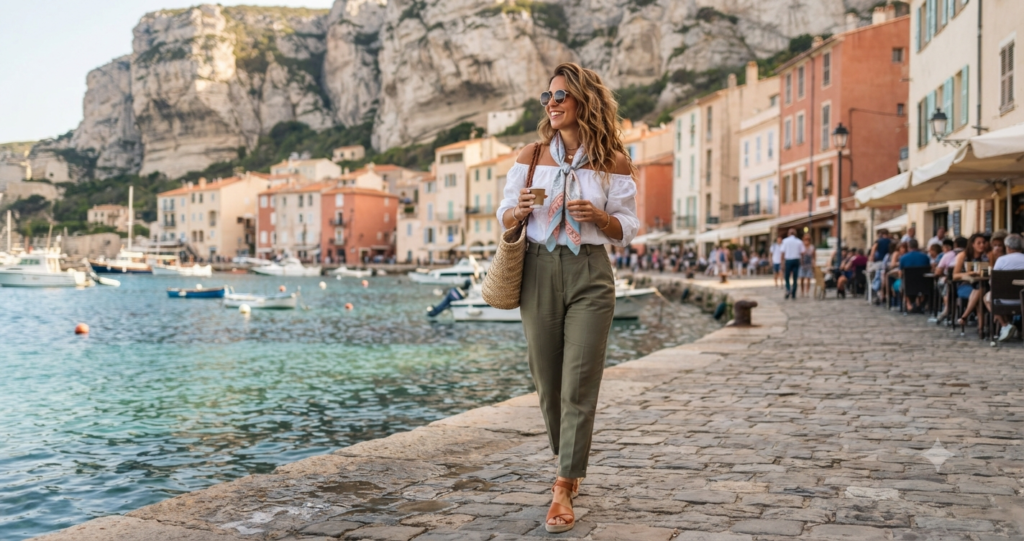
Corsica doesn’t fit neatly into a packing list template. It’s a French island with an Italian soul, ringed by some of the clearest water in the Mediterranean, but its interior is a wall of granite peaks and chestnut forests that stays snow-capped well into spring. You can swim in a turquoise cove near Bonifacio in the morning and be hiking a rocky mountain trail by afternoon. That range is exactly why so many visitors overpack the wrong things and underpack the right ones — a sundress and sandals get you through Ajaccio’s waterfront, but they won’t get you up a single switchback of the GR20.
This guide breaks down what to actually wear in Corsica by season and by activity, with real fabric and color recommendations, so you can pack one bag that works for the coast, the villages, and the mountains.
Understanding Corsica’s Climate
Corsica has a genuinely split personality. The coast — Ajaccio, Calvi, Porto-Vecchio, Bonifacio — has a classic Mediterranean climate: hot, dry summers (often 28-32°C / 82-90°F) and mild, wet winters rarely below 8°C / 46°F. The interior is a different story entirely. Towns like Corte and Zonza sit at altitude, and the mountains behind them hold snow into May or June some years. Evenings anywhere on the island cool down faster than mainland France, thanks to wind coming off the water or down from the peaks. Pack for the coast, but always carry one layer built for the mountains.
What to Wear in Corsica by Season
Spring (April–May)
Spring is shoulder season and arguably the best time to visit — wildflowers cover the maquis scrubland and temperatures sit in a comfortable 16-21°C / 60-70°F range on the coast, cooler inland. Layer with a lightweight cotton or linen top, a mid-weight cardigan or fleece, and a water-resistant jacket for sudden coastal wind. Jeans or lightweight trousers work better than shorts until late May. If you’re heading into the mountains, a merino wool base layer is worth the suitcase space; interior temperatures can still dip near freezing overnight.
Summer (June–August)
This is peak heat and peak crowds. Breathable natural fabrics matter more than anything else: linen shirts and dresses, cotton shorts, and moisture-wicking activewear if you’re hiking. Stick to light, sun-reflecting colors — white, sand, pale blue, terracotta — rather than dark tones that absorb heat. A wide-brim hat and genuinely good sunglasses are non-negotiable; the Mediterranean sun reflects hard off white limestone towns like Bonifacio. Evenings in beach towns stay warm, but bring one light layer for boat trips, when sea wind cuts the heat fast.
Fall (September–October)
Early fall keeps summer’s warmth with fewer crowds and is one of the best windows for hiking, since peak-season heat has broken. Pack for a 10-15°C / 50-59°F swing between midday and evening: a linen or cotton layer for daytime, a packable fleece or light jacket for dinner outdoors. Waterproof outerwear becomes more useful from mid-October on, as this is when Corsica’s rainy season starts to arrive.
Winter (November–March)
Most coastal towns quiet down considerably, though Ajaccio and Bastia stay lived-in year-round. Think mainland French winter layering rather than beach-destination winter: a warm coat, a knit sweater, waterproof boots, and a scarf. If you’re anywhere near the mountains, winter here means genuine snow — the interior sees ski conditions at altitude.
Dressing for the GR20 and Mountain Trails
The GR20 is one of Europe’s most demanding long-distance trails, and Corsica’s interior more broadly rewards proper hiking gear over resort wear. Moisture-wicking synthetic or merino base layers, a lightweight insulating layer, and a genuinely waterproof, windproof outer shell are the core of a mountain packing list here — weather can shift from clear to squally in under an hour at altitude. Broken-in hiking boots with ankle support matter more than any other single item; the terrain is rocky granite, not groomed path. Even in July, pack a warm hat and gloves for high-altitude refuge stays, where nights regularly drop close to freezing.
Dressing for Coastal Towns and Beach Days
Corsica’s beach towns lean relaxed but not sloppy — swimwear is for the beach and pool, not for walking through town, which is generally true across the Mediterranean. A cover-up, sundress, or linen shirt over your swimsuit is the norm for beachfront restaurants. Espadrilles or comfortable leather sandals handle the cobblestone streets of towns like Bonifacio and Calvi better than flip-flops. For boat excursions to spots like Scandola Nature Reserve or the Lavezzi Islands, bring a light windbreaker — open water on a moving boat is noticeably cooler than the beach itself.
What to Wear for Dinner and Evenings Out
Corsican dining, particularly in Ajaccio, Porto-Vecchio, and Calvi’s harbor restaurants, trends toward smart-casual French coastal style rather than strict formality. A linen shirt or midi dress with sandals or loafers covers most evenings comfortably. Bring one slightly dressier outfit — a linen blazer, a nicer dress, closed-toe shoes — for a special dinner, since higher-end restaurants in the resort towns do expect a bit more polish than a beach cover-up.
Fabrics and Colors That Work Best
Linen and cotton dominate for good reason — they breathe in Mediterranean heat and handle both beach and town settings. Merino wool is the best cold-weather and mountain layer because it regulates temperature without bulk. For colors, take a cue from the landscape: the maquis scrubland’s sage greens, the limestone whites and sand tones of Bonifacio, and the deep blues of the Mediterranean all photograph well and stay practical in strong sun. Save black and other heat-absorbing dark colors for evening wear only.
Corsica Packing List Checklist
- Linen or cotton shirts and dresses (2-3 for warm months)
- Lightweight trousers or shorts
- One swimsuit plus a beach cover-up
- Merino wool base layer (year-round, essential if hiking)
- Packable fleece or light insulating layer
- Waterproof, windproof outer shell
- Broken-in hiking boots (for GR20 or interior trails)
- Espadrilles or comfortable sandals for towns
- Wide-brim hat and UV-protective sunglasses
- One smart-casual outfit for evenings out
- Reusable water bottle and daypack for hiking or boat excursions
How Corsica Compares to Other Mediterranean Islands
If you’ve packed for other Mediterranean island destinations before, you already have a head start — the core principles overlap, even if the details shift island to island. Our guide to what to wear in Sardinia covers a very similar coastal-meets-interior climate just across the water. What to wear in Sicily leans more urban and volcanic-terrain specific, while what to wear in Malta deals with a smaller, denser island where limestone heat is the main factor. For the broader style logic behind all of these guides, our Mediterranean fashion style guide is worth a read, and if your trip includes mainland Italy, the Puglia packing list covers a comparable mix of beach towns and countryside.
What NOT to Wear in Corsica
A few habits that read fine on a resort beach don’t translate well once you’re off the sand. Swimwear alone, without a cover-up, is generally not worn walking through town centers or into churches and chapels — Corsica has a strong Catholic tradition, and modest dress (shoulders and knees covered) is expected if you plan to visit any of the island’s chapels or the citadel churches in Bonifacio and Corte. Heavy, non-breathable synthetic fabrics are also a mistake in summer; between the heat and the humidity near the coast, they’ll be uncomfortable within an hour. And while flip-flops are fine for the beach itself, they’re a poor choice for the cobbled, uneven streets found in almost every old town on the island — a low block heel sandal or espadrille handles the terrain far better.
Packing for a Multi-Day GR20 Trek
If the GR20 specifically is on your itinerary, treat it as a separate packing list from the rest of your trip. Beyond the base layers and shell already mentioned, prioritize a lightweight, quick-dry hiking shirt (avoid cotton entirely here — it stays wet and gets cold once you sweat), trekking poles for the steep granite descents, and a headlamp for the refuge huts, which often have limited lighting. Many hikers ship or store their “town” clothes at a hotel in Calenzana or Conca before starting the trail, then change back into them at the finish — there’s little reason to carry both a mountain kit and a resort wardrobe in the same pack.
Accessories Worth Packing
A few smaller items make a disproportionate difference on this island specifically. A dry bag or waterproof phone pouch is genuinely useful for boat excursions and coastal hikes near sea spray. A lightweight scarf or sarong pulls double duty as a beach cover-up, a chapel-visit shoulder cover, and an extra layer on a cool evening. And because much of Corsica’s most photogenic scenery — the Calanques de Piana, the citadel walls of Bonifacio — involves uneven rock and gravel paths, a crossbody bag beats a shoulder bag for keeping your hands free.
Final Tips
The single biggest packing mistake for Corsica is treating it as a pure beach destination. Pack for the coast you’ll spend most of your time on, but don’t leave home without at least one real layer built for altitude and wind — the mountains are never far away, geographically or in terms of what the weather can do. A capsule wardrobe built around linen, merino, and one solid waterproof shell will comfortably cover a harbor dinner in Calvi, a hike above Zonza, and a boat trip to the Lavezzi Islands, all in the same week.