Packing for hot weather travel is deceptively difficult. The instinct to pack light, breezy clothing runs into practical realities: intense UV exposure, air-conditioned interiors that require layering, cultural contexts that may require more coverage than bare skin, and the demands of sightseeing that mean comfort and functionality matter as much as aesthetics. This guide covers everything you need to know about what to wear in hot weather when travelling, across different destination types and cultural contexts.
The Fabric Priority: Everything Starts Here
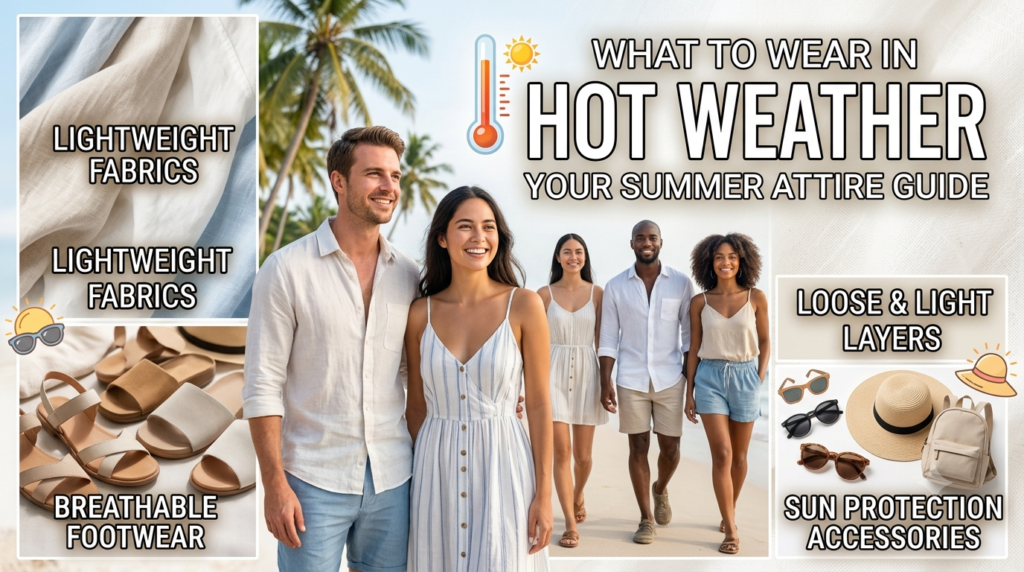
In hot weather, fabric is the single most important variable. Natural breathable fibres — linen, cotton, and bamboo — allow air to circulate and moisture to evaporate, keeping you significantly cooler than synthetic fabrics. Polyester and nylon trap heat and moisture against the body. For hot weather travel, invest in high-quality linen and cotton pieces. Loose, flowing cuts enhance breathability further.
Colour Strategy for Hot Weather
Pale and white colours reflect solar radiation rather than absorbing it. White, cream, pale blue, sage green, and soft pink are excellent hot weather travel colours. The practical challenge: pale colours show marks from sunscreen and street food more visibly. Carry a small stain-removal pen and save white linen for evenings.
Cultural Contexts in Hot Weather Destinations
Many of the world’s hottest travel destinations — Southeast Asia, the Middle East, South Asia, North Africa — have cultural norms requiring more coverage. A floor-length linen skirt and loose cotton blouse is both respectful and significantly cooler than jeans and a fitted top. The modesty requirement and comfort requirement are not in conflict when you choose the right fabrics and cuts.
Packing for Hot Weather Travel
A handful of lightweight, breathable pieces you can rotate and hand-wash beat a full suitcase — hot-climate travel wardrobes work best built around 3-4 tops, 2-3 bottoms, and one cover-up or layer, all in natural or moisture-wicking fabrics. A collapsible fan, electrolyte packets, and a wide-brim hat are worth the small amount of space they take up.
Hot Weather Travel Wardrobe Essentials
- 3–4 linen or cotton loose dresses (maxi or midi)
- 2–3 breathable linen tops (loose fit, long-sleeve options)
- 2 pairs wide-leg linen or cotton trousers
- Flat leather sandals with ankle straps
- 1 pair comfortable walking shoes for active days
- 1–2 lightweight cardigans or wraps for air-conditioned interiors
- Wide-brim sun hat and UV sunglasses
- SPF 50+ sunscreen
- 1 light scarf for cultural sites and modesty cover
Day-to-Night Temperature Swings in Hot Climates
Many hot destinations — deserts, high-altitude tropical regions, and Mediterranean coastal towns in shoulder season — cool down sharply after sunset, sometimes by 20-30 degrees. Packing purely for daytime heat means being caught out once the sun goes down. A lightweight packable layer (a linen shirt, a cotton cardigan, or a light shawl) that folds small enough to carry in a day bag solves this without adding real bulk to a suitcase built around hot-weather basics. This matters most in dry-heat destinations, where the lack of humidity to hold daytime heat means temperature drops are far more dramatic than in humid climates.
Accessories and Hair for Hot Weather Travel
Bag choice matters more in heat than travelers often expect — a structured leather bag can feel unpleasant against bare, sweaty skin, while a canvas or straw tote breathes and doesn’t retain heat the same way. Minimal jewelry is more practical too; metal warms quickly in direct sun and can be uncomfortable against skin by midday. For hair, a few hair ties or clips and a silk or satin scarf do double duty — keeping hair off the neck in humidity and working as an easy head covering for religious sites that require one, without needing a separate accessory for each purpose.
What’s the biggest mistake people make packing for hot weather?
Packing only sleeveless and short options — without at least one long-sleeve, loose-fit piece for intense sun exposure or a conservative dress-code site, travelers often end up buying something locally that they already owned space for at home.
Are moisture-wicking synthetic fabrics ever better than natural fibres in heat?
For high-output activity like hiking, yes — technical synthetics move sweat away from skin faster than cotton, which can stay damp and heavy. For general sightseeing and everyday wear, though, natural fibres’ breathability usually wins on comfort.
Do dark colours really absorb more heat than light colours?
Yes, in direct sun — dark fabrics absorb more solar radiation and can feel noticeably warmer against the skin, which is why light neutrals and pastels dominate hot-weather packing lists. In full shade or indoors, the difference is negligible, so it’s mainly a factor for destinations with intense midday sun exposure.
Sun Protection: Clothing as SPF
Lightweight long-sleeved linen shirts and maxi dresses provide better sun protection than sunscreen alone for extended outdoor sightseeing. UPF-rated clothing (UPF 50+ blocks 98% of UV radiation) is worth considering for full-day tropical excursions.
Footwear for Hot Destinations
Feet swell in heat — choose footwear with adjustable straps. Quality leather flat sandals are the hot weather travel shoe of choice: breathable, versatile, and available in styles that work across dress codes. Rotate between sandals and closed shoes to prevent foot fatigue.
The Air-Conditioning Problem
Air conditioning in tropical countries is often set to extremely cold temperatures. Always carry a lightweight layer: a linen cardigan, cotton wrap, or light kimono jacket.
Humidity vs. Dry Heat: Different Strategies
Humid heat (much of Southeast Asia, the Gulf Coast, tropical destinations) calls for fabrics that dry fast and don’t cling — linen, moisture-wicking synthetics, and looser cuts that allow airflow. Dry heat (desert climates, the Mediterranean in peak summer) is more forgiving of natural fibers like cotton, but sun exposure and hydration matter even more since sweat evaporates before you notice how much you’re losing.
Frequently Asked Questions
Should I wear long sleeves in the heat?
Paradoxically, yes — loose long sleeves in breathable linen or cotton can feel cooler than bare arms in direct sun, because they protect from solar radiation that heats the skin directly. This is why people in the hottest climates wear flowing long robes.
Final Thoughts
Dressing for hot weather travel is about working with your environment: breathable natural fabrics in light colours, loose cuts, sun protection through both clothing and sunscreen, and a light layer always in your bag for the inevitable cold restaurant or museum.
What colors are actually coolest to wear? White and light neutrals reflect the most heat, but very lightweight black or navy can outperform a heavier white fabric — fabric weight and weave matter as much as color.
Is cotton or linen better for hot weather? Linen breathes better and dries faster, making it the stronger choice for humid climates; cotton is fine in dry heat but stays damp longer once you sweat.
How do I dress for hot days but cold, over-air-conditioned interiors? A lightweight scarf or cardigan that packs down small is the standard fix — restaurants, museums, and transit are frequently over-cooled relative to the outdoor heat.