Turkey is one of the world’s most geographically and culturally diverse travel destinations, spanning two continents and encompassing everything from the cosmopolitan streets of Istanbul to the surreal landscapes of Cappadocia, the turquoise coast of the Aegean and Mediterranean, and the ancient ruins of Ephesus. Each context has different packing requirements, and Turkey’s particular cultural considerations â particularly regarding modest dress for religious sites â add specific elements to the essential packing list. This comprehensive Turkey packing list covers what you need for a well-prepared Turkish adventure.
Understanding Turkey’s Climate and Regions
Turkey’s climate varies dramatically by region and season. Istanbul has a temperate continental climate with hot summers (25â30°C), cold winters, and rain year-round. The Aegean and Mediterranean coasts are hot and dry in summer (30â40°C), mild in spring and autumn. Cappadocia has a more extreme continental climate â hot in summer but cold (and potentially snowy) in winter, with cold mornings and evenings even in summer due to its altitude. The Black Sea coast is cool and green. Understanding your specific itinerary determines your packing needs.
Modesty Considerations for Turkey
Turkey is a predominantly Muslim country, and while it is largely secular â particularly in cities and coastal resorts â modest dress is required for mosque visits and is respectful in more traditional areas. For mosque visits: covered shoulders, covered knees, and a headscarf for women (usually provided at the entrance, but bringing your own is more hygienic). The essential piece is a lightweight scarf large enough to cover your hair and shoulders â it doubles as a beach cover-up, a layer against air conditioning, and a cultural-site essential. Outside of religious sites, Turkey’s coastal and urban areas are entirely casual.
Turkey Packing List: Clothing
For Istanbul: The city blends secular cosmopolitan modernity with religious tradition. Smart casual clothing works across contexts. Comfortable walking shoes are essential â Istanbul’s historic areas involve extensive walking on uneven terrain. A mix of casual daytime clothing and slightly smarter evening options for the city’s restaurants and bars.
For Coastal Areas (Bodrum, Antalya, Fethiye): Standard beach packing â swimwear, cover-ups, light dresses, sandals. Turkey’s coastal resorts are European in character and casual beach attire is entirely appropriate in these areas.
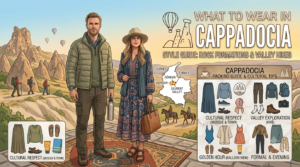
For Cappadocia: Comfortable clothing for hot-air balloon rides (temperatures at altitude are significantly cooler than ground level â bring a warm layer regardless of season), easy-to-move-in clothing for cave exploration and hiking, and comfortable closed-toe shoes for uneven cave terrain.
For Ephesus and Archaeological Sites: Comfortable walking shoes that can handle rough, uneven ancient stone surfaces; sun protection including a hat and long-sleeved layer; and enough coverage for respectful site visits.
Essential Turkey Packing Items
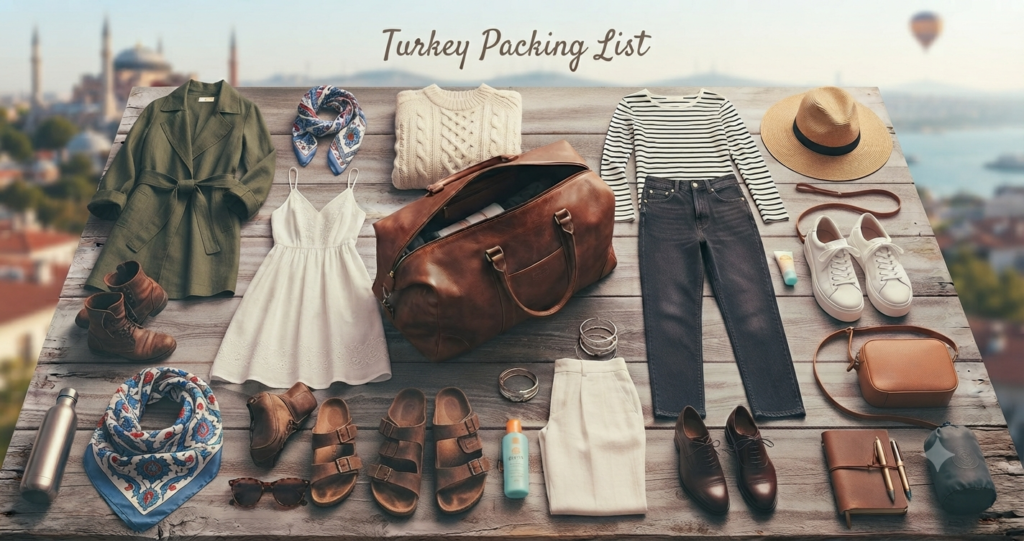
A lightweight, large scarf â absolutely essential for mosque visits and sun protection across the country. Comfortable walking shoes with good grip. Sunscreen (the Turkish sun is intense from May through September). A sun hat. A power adapter (Turkey uses Type F European plugs). Cash in Turkish lira for bazaars and smaller establishments â while cards are accepted in tourist areas, the Grand Bazaar and traditional markets prefer cash.
Turkey Packing List: Footwear
Comfortable walking shoes are critical for Istanbul, Ephesus, and Cappadocia. Sandals work for coastal resort areas. Closed-toe shoes are practical for cave exploration in Cappadocia. Note: you remove your shoes when entering mosques â slip-on styles are convenient.
Turkey Packing List: What NOT to Pack
Expensive jewellery or watches that attract theft. Clothing that is overly revealing for non-beach contexts â while Turkey’s coastal resorts are relaxed, covering up outside beach areas is respectful and avoids unwanted attention in more traditional areas. Heavy luggage â Turkey’s ancient sites involve substantial walking and your hotel may not always be convenient to parking.
Frequently Asked Questions
Do women need to cover their hair in Turkey?
Only when visiting mosques â a headscarf is required inside. Outside of mosques, there is no requirement. Turkish women in cities do not generally cover their hair, though in more conservative rural areas modest dress is appropriate.
What should I wear in Istanbul?
Smart casual clothing works across Istanbul’s diverse contexts â from the Grand Bazaar to rooftop bars to mosque visits. Comfortable walking shoes are essential. A scarf for mosque visits. Light layers for evenings, which can be cooler than the warm days suggest.
What is the best season to visit Turkey?
Spring (April–May) and autumn (September–October) offer the best combination of pleasant temperatures and manageable crowds. Summer is hot and crowded but ideal for coastal destinations. Winter in Istanbul is cold but manageable and much less crowded.