
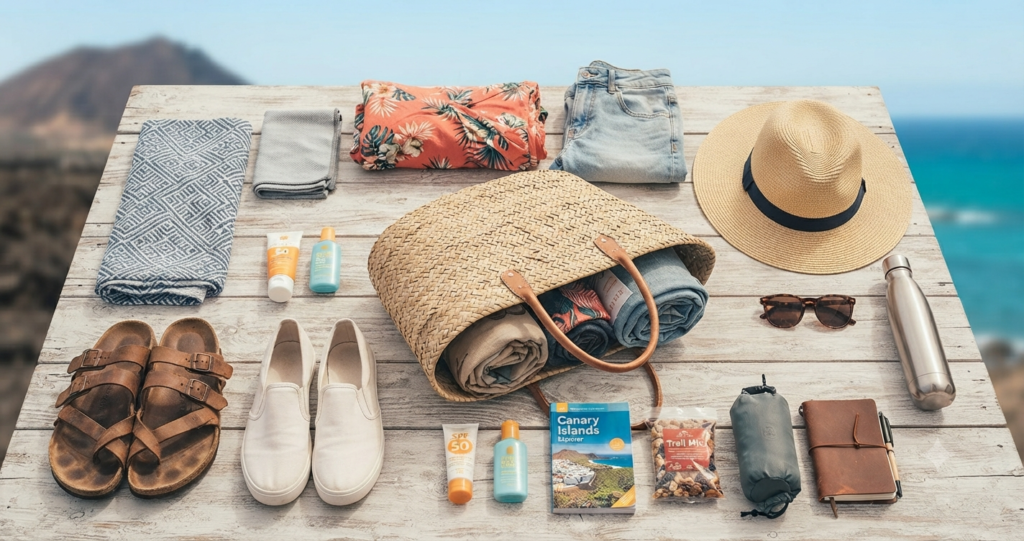
The Canary Islands are Spain’s sun-soaked archipelago off the coast of Northwest Africa — seven volcanic islands offering dramatic landscapes, year-round warm weather, and a unique blend of Spanish, African, and Atlantic cultures. From the iconic Teide volcano in Tenerife to the sand dunes of Gran Canaria and the lava fields of Lanzarote, here’s exactly what to wear in the Canary Islands for every occasion.
Canary Islands Climate
The Canary Islands are famously called “The Islands of Eternal Spring.” Temperatures average 20–28°C (68–82°F) year-round, making them one of Europe’s most reliable winter sun destinations. Summer (July–September) is hot and dry at around 25–30°C. The northern sides of the islands receive more rainfall and cloud, while the south is drier and sunnier. Pack accordingly based on which island and which region you’re visiting.
What to Wear on the Beach
The Canary Islands have diverse beaches — black volcanic sand, golden dunes (Maspalomas in Gran Canaria), and rocky coves:
- Swimwear: Pack 2–3 swimsuits. European beach culture is relaxed — bikinis, one-pieces, and swim briefs are all standard.
- Cover-ups: A lightweight kaftan or linen shirt for beach bar visits. Even in December you may need a light layer for evenings.
- Footwear: Flip flops for the beach, comfortable sandals for the promenade.
What to Wear for Exploring Towns and Villages
Beyond the resort zones, the Canary Islands have charming historic towns — La Laguna in Tenerife (UNESCO Heritage), Las Palmas in Gran Canaria, Arrecife in Lanzarote:
- Women: A casual sundress or light trousers with a top. Comfortable walking shoes or sandals.
- Men: Shorts or jeans with a casual shirt or t-shirt. Sneakers or sandals.
- Churches: Carry a scarf or cardigan to cover shoulders.
Hiking and Volcano Treks
Mount Teide (Tenerife), Roque Nublo (Gran Canaria), and Caldera de Taburiente (La Palma) are spectacular hikes:
- Layers are essential: Teide’s summit can be cold and windy even in summer (bring a fleece and windproof jacket).
- Hiking boots or trail shoes: Volcanic terrain is rough and requires proper footwear.
- Sun protection: At altitude, UV exposure is intense even on cool days.
- Moisture-wicking clothing: Breathable hiking shirts and pants.
Evening Wear in the Canaries
The Canary Islands resort towns have a lively evening scene — “el paseo” (the evening stroll) is a Spanish tradition:
- Women: A sundress, maxi dress, or casual-chic separates. Light heeled sandals or comfortable wedges.
- Men: Casual smart — clean jeans or chinos with a shirt. Loafers or clean sneakers.
- Layer up: Canary Island evenings can be surprisingly cool, especially in winter. A light jacket is essential in December–March.
Winter Visits to the Canary Islands
The Canaries are hugely popular with Northern Europeans escaping winter. In December–February, while days are warm and sunny (20–23°C), evenings can feel cool (15–18°C):
- Bring a light jacket or cardigan for evenings
- A pair of jeans or light trousers alongside your shorts
- Closed-toe shoes for cooler evenings
Canary Islands Packing List
- 2–3 swimsuits + cover-ups
- 3–4 casual day outfits
- 1–2 light layers (cardigan/jacket) for evenings and cooler areas
- Hiking gear if planning volcano treks
- 2 evening outfits
- Comfortable walking shoes + flip flops + sandals
- Wide-brimmed hat + sunglasses
- Sunscreen
The Canary Islands suit a more versatile, layerable wardrobe than a pure tropical destination — perfect for those who want sun without the tropical humidity. See also our guides to Sardinia and Madeira.
the Canary Islands Packing List
The Canary Islands require a more versatile wardrobe than a pure tropical destination — this packing list covers everything for beach days, volcano hikes, and Spanish island evenings.
Critical Climate Notes
- Summer (July–Sept): Hot 25–30°C — pack for heat
- Winter (Dec–Feb): Warm days 18–23°C, cool evenings 14–17°C — pack layers
- High elevations (Teide, Tenerife): Cold and windy year-round — warm layer + windproof jacket essential
- Northern coasts: More cloud and rain than the sunny south
Clothing
Swimwear
- 2–3 swimsuits
- 1 rash guard
Beach and Casual Daywear
- 2–3 beach cover-ups or sundresses
- 3–4 casual outfits (shorts, t-shirts, light dresses)
- 1–2 pairs jeans or lightweight trousers
- 1–2 light long-sleeve tops
Essential Layers (more important than for purely tropical destinations)
- 1 fleece or sweater — essential for evenings, highlands, and winter visits
- 1 windproof/rain jacket — crucial for Teide hikes and Atlantic-coast visits
- 1 light jacket for summer evenings
Hiking Gear (for Teide or volcanic parks)
- Sturdy hiking boots or trail shoes
- Warm fleece or thermal layer (Teide summit can be near freezing)
- Windproof jacket
- Moisture-wicking hiking shirts
- Convertible hiking pants
Evening Wear
- 2 casual smart dinner outfits
- Women: sundress + light jacket
- Men: clean jeans or chinos + shirt
Footwear
- Flip flops for beach days
- Walking sandals or sneakers
- Hiking boots if volcano trekking
- Casual evening shoes
Accessories and Documents
- Wide-brimmed hat + sunglasses + SPF 50+ sunscreen
- Reusable water bottle (essential for hikes)
- EU health card (EHIC) or travel insurance
- Passport or EU ID card
- Credit cards + euros
What NOT to Pack
- Ultra-light packing only — you’ll need layers
- Only sandals — proper shoes needed for evenings and hiking
- Assuming consistently hot weather — elevation and coast significantly affect temperature
For outfit inspiration, see our guide to what to wear in the Canary Islands.
Different Islands, Different Microclimates
The Canary Islands aren’t one uniform climate — Tenerife, Gran Canaria, and Lanzarote each have their own conditions, and even within Tenerife, the north (Puerto de la Cruz) is noticeably cloudier and greener than the sun-baked south (Costa Adeje). Lanzarote’s volcanic landscape is drier and windier than either. Check the specific microclimate of your base rather than packing for “the Canaries” as a single destination.
Packing for Mount Teide
If a trip up Mount Teide (Spain’s highest peak) is on your Tenerife itinerary, pack real layers — temperatures at the summit can be 20–30°F colder than the coast, with strong wind and intense high-altitude sun. A packable insulated layer, a windproof shell, and sturdy shoes with grip for volcanic rock are essential, even if you’re sweating in a t-shirt at sea level that same morning.
Volcanic Terrain Footwear
Much of the Canary Islands’ most striking scenery — Lanzarote’s Timanfaya National Park, Tenerife’s lunar-like Teide slopes — is sharp volcanic rock that’s tough on regular sandals. Closed-toe shoes with real tread are worth the suitcase space for anyone planning to explore beyond the beach resorts.
Canary Islands Packing FAQ
Is it warm year-round? Yes, broadly — the islands are known as a winter-sun destination with mild temperatures even in January, but coastal wind and evening cool-down still make a light layer worth packing regardless of season.
Do I need to pack differently for Lanzarote versus Tenerife? Lanzarote is drier, flatter, and windier overall; Tenerife has more elevation and microclimate variation, so hiking and altitude gear matters more there than on Lanzarote.
Are the beaches sandy or volcanic? Many Canary Islands beaches have black volcanic sand, which gets significantly hotter underfoot than pale sand — water shoes are genuinely useful for midday beach walks.
Pingback: Canary Islands Packing List: Tenerife, Gran Canaria, Lanzarote & Beyond - Vacation Style Guide