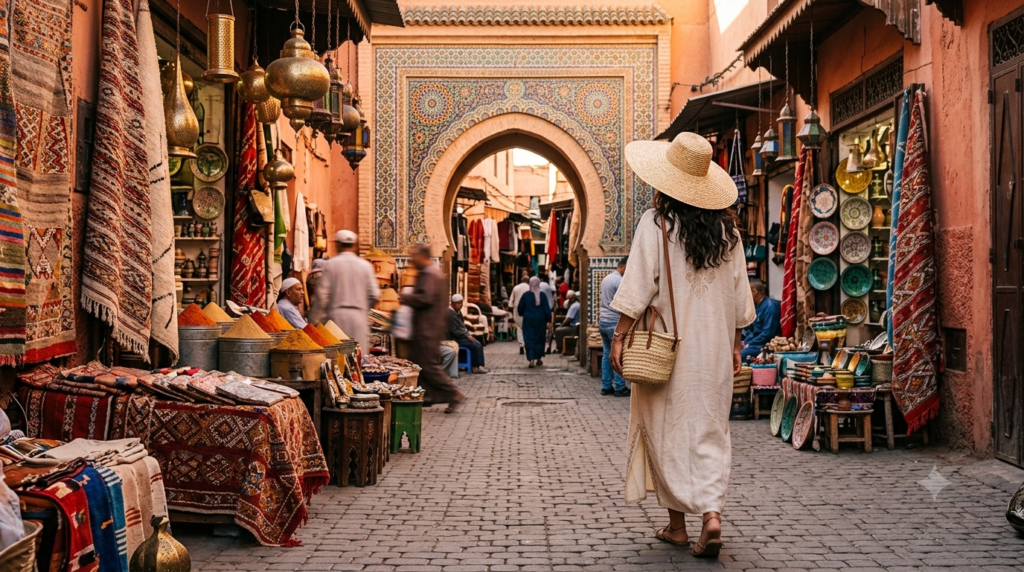
Morocco is one of the world’s most visually intoxicating destinations — a place where ancient medinas overflow with spice markets and artisan workshops, where the Sahara Desert begins just hours from snow-capped Atlas Mountains, and where every riyadh courtyard feels like stepping into a thousand and one nights. But what to wear in Morocco is one of the most important packing decisions you’ll make, balancing cultural respect with practical comfort in a North African climate.
This guide walks you through everything: Marrakech’s medina, Fes’s tanneries, Sahara Desert camping, and the blue streets of Chefchaouen — so you’re perfectly dressed for every experience.
Morocco’s Cultural Context: Why Dress Matters
Morocco is a predominantly Muslim country with a conservative dress culture, particularly outside of tourist resort areas and international hotels. While Moroccan cities are used to foreign visitors and won’t demand strict compliance, dressing respectfully:
- Shows cultural sensitivity and earns genuine respect from locals
- Significantly reduces unwanted attention, particularly for women travelling solo
- Is required to enter mosques and some sacred sites
- Makes your overall experience more enjoyable and authentic
The general rule: cover shoulders and knees in medinas, markets, and religious areas. Resort areas and private riad pools have no such restrictions.
What to Wear in Marrakech
In the Medina & Souks
The Marrakech medina — including Djemaa el-Fna square and the labyrinthine souks — is a sensory explosion where millions of visitors and locals mingle. Dress modestly:
- Women: Lightweight maxi or midi skirts, wide-leg linen trousers, or loose cotton trousers. Cover shoulders with a breathable blouse, light tunic, or shawl. A flowy kaftan-style top is both culturally appropriate and authentically Moroccan in aesthetic.
- Men: Lightweight linen or cotton trousers (long), a short-sleeve shirt. Shorts are generally acceptable in tourist areas but long trousers are more respectful and also protect against sun.
- Avoid: Short shorts, crop tops, vest tops, or anything very tight or revealing in the medina.
In Your Riad or Hotel
Inside your riad or hotel pool area, dress as you normally would — swimwear, shorts, whatever you’re comfortable with. These are private spaces.
At Restaurants and Cafés
Smart casual is fine at most restaurants. Rooftop cafés around Djemaa el-Fna have a relaxed atmosphere but modest dress is still appreciated. For upscale restaurants within riads, a smart outfit is welcome.
The Best Fabrics for Morocco
Morocco gets very hot — Marrakech averages 36–40°C (97–104°F) in summer. Choosing the right fabrics makes the difference between comfortable and miserable:
- Linen: The gold standard for Morocco. Breathable, lightweight, and looks beautiful in the light
- Cotton (loose weave): Classic and comfortable
- Rayon/viscose: Drapes well and breathes in heat
- Avoid: Synthetic fabrics (polyester, nylon) — they trap heat aggressively
Morocco Outfit Ideas: What Actually Works
The Kaftan Approach
Buy a traditional Moroccan kaftan once you arrive — markets in Marrakech and Fes sell beautiful ones from around 200–500 MAD (€18–45). A lightweight kaftan is both culturally respectful and the most comfortable thing you’ll wear in the heat. It works for medina exploring, casual dinners, and serves as a gorgeous souvenir.
Linen Wide-Leg Trouser Set
A matching linen trouser and tunic or blouse set is the most versatile outfit for Morocco. Cool enough for hot days, respectful enough for souks, and polished enough for riyadh dinners.
Maxi Wrap Dress
A lightweight maxi wrap dress covers all the bases — long enough, shoulders can be covered with a shawl, and easy to adjust for comfort. In dusty rose, terracotta, or cobalt blue, it photographs magnificently against Morocco’s architecture.
Visiting Mosques in Morocco
Non-Muslims are permitted to enter some Moroccan mosques (the famous Hassan II Mosque in Casablanca, for example), but most mosques require:
- Full modest coverage — shoulders, arms, and legs completely covered
- Head covering (a scarf or shawl wrapped loosely around the head)
- Shoes removed before entering
- Quiet, respectful behaviour
Many smaller mosques in medinas are not open to non-Muslims at all — always check before entering.
The Sahara Desert: What to Wear
A Sahara Desert camping experience (typically near Merzouga or Zagora) is one of Morocco’s most extraordinary experiences. Dressing correctly is both practical and important:
- Daytime desert temperatures: Extremely hot (40°C+) in summer — lightweight, loose, full-coverage clothing protects better than exposed skin against UV radiation and windblown sand
- Desert nights: Can drop to 5–10°C in winter — pack a warm layer even in summer as desert nights cool quickly
- A desert turban or scarf: Wrapping a light cotton scarf around your head and face protects against sun and sand during camel rides — buy one locally, guides can show you how to wrap it properly
- Flat, closed shoes or boots: Sandals get filled with sand immediately; light hiking boots or canvas shoes are better for desert walks
Book Sahara Desert tours, camel treks, and Morocco experiences on GetYourGuide — from overnight Sahara camps to hammam spa experiences and medina food tours.
Chefchaouen: The Blue City
The blue-painted mountain town of Chefchaouen has become famous for its photogenic blue streets and buildings. Outfit tip: wear blue. Soft blue, cobalt, or navy clothing creates an extraordinary visual harmony with the blue walls — your travel photos will be unforgettable. White also works beautifully. Continue wearing modest, comfortable clothing as Chefchaouen is a small traditional mountain town.
Morocco Accessories: What to Pack
- A large lightweight scarf: The single most important accessory in Morocco — head covering, sun protection, shoulder cover, and evening wrap all in one
- Comfortable flat shoes or sandals: Medina streets are cobblestone and uneven — never wear heels
- A small leather crossbody bag or money belt: Keep valuables secure in busy medinas
- Sunglasses + wide-brim hat: Essential sun protection
- SPF 50 sunscreen: Apply before entering medinas as shade is limited
Morocco Packing List
- 3–4 long, loose tops or tunics
- 2–3 linen or cotton wide-leg trousers or maxi skirts
- 2 maxi wrap dresses
- 2–3 large lightweight scarves
- 1 warm layer (fleece or light jacket) for desert nights and Atlas Mountain excursions
- 1 swimsuit (for riad pools)
- Comfortable flat sandals or walking shoes
- Closed shoes for desert visits
- Sun hat + sunglasses
What NOT to Wear in Morocco
- Short shorts or miniskirts in medinas or traditional areas
- Crop tops, halter necks, or very revealing tops outside of hotel/riad grounds
- Tight clothing — loose is cooler and more respectful
- High heels — medina streets will defeat them instantly
- Visible expensive jewellery in busy markets
Book Your Morocco Accommodation
Staying in a traditional riad (a Moroccan courtyard house converted to a guesthouse) is the quintessential Morocco experience. Marrakech has hundreds, from budget to luxury. Book Morocco riads and hotels on Booking.com — compare riad options carefully as quality varies significantly.
Final Thoughts
Morocco rewards travellers who dress respectfully and practically. The key formula: loose, light fabrics that cover shoulders and knees, a large scarf for flexibility, and comfortable flat shoes for the medina. Within those parameters, there’s enormous room for beautiful, colourful, and creative outfits — and the backdrop of Morocco’s ancient cities and golden desert will make everything you wear look extraordinary.
✈️ Trip Essentials
Affiliate links — we may earn a small commission at no extra cost to you.
Riads in Marrakech’s medina, kasbahs in the Atlas Mountains and coastal hotels in Essaouira.
Skip the tourist traps — book top-rated tours, day trips and experiences in Morocco with instant confirmation.
Exploring the Middle East? Check out our full guide on what to wear in Oman — one of the region’s most underrated and stylish destinations.
Exploring more of Africa? See our Africa travel style guide for outfit ideas across the continent.
Pingback: Morocco Packing List for Women: What to Pack for Morocco - Vacation Style Guide
Pingback: What to Wear in Uzbekistan: Samarkand, Bukhara & Silk Road Outfit Guide - Vacation Style Guide
Pingback: Solo Travel Outfits for Women: The Complete Packing Guide - Vacation Style Guide