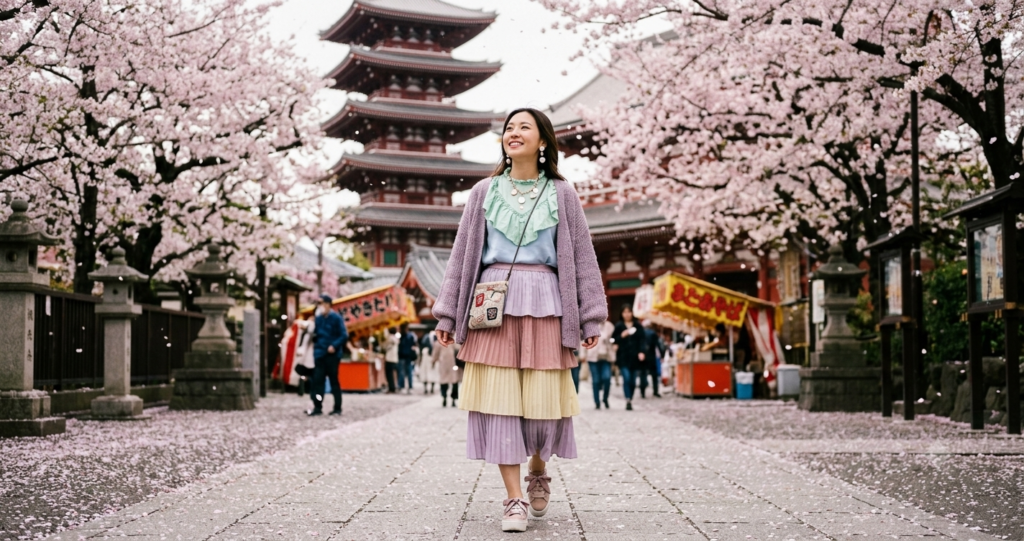
In Tokyo, dress smartly casual — stylish layered outfits work well year-round. Japanese fashion is trend-forward, so feel free to dress up. Comfortable walking shoes are non-negotiable as you’ll walk 15,000+ steps per day exploring the city.
Tokyo is one of the most visually extraordinary cities on earth — a place where ancient Shinto shrines sit beside neon-lit skyscrapers, and where fashion is taken seriously as a form of personal expression. Knowing what to wear in Tokyo requires understanding both the city’s cultural norms and its wildly diverse neighbourhoods, each with its own distinct fashion energy.
Whether you’re exploring the quiet temples of Asakusa, shopping the designer boutiques of Ginza, or experiencing the harajuku street fashion scene, this guide will make sure your wardrobe is perfectly dialled in.
Understanding Tokyo’s Fashion Culture
Tokyo is one of the world’s fashion capitals — but in a distinctly Japanese way. A few key principles:
- Neatness is paramount: Japanese culture places great value on being well-groomed and presentable. Even casual outfits should look intentional and neat.
- Individuality is celebrated: Unlike Parisian minimalism, Tokyo embraces bold personal style — quirky prints, layered looks, and experimental fashion are all at home here.
- Practicality matters: Tokyo involves enormous amounts of walking and public transport. Comfortable, practical footwear is essential.
- Modesty in certain spaces: Temples, shrines, and traditional restaurants may require more conservative dress.
Tokyo by Season: What to Wear
Spring in Tokyo (March–May)
Cherry blossom season (late March–mid April) is the most magical time to visit Tokyo. Temperatures range from 8–20°C (46–68°F) with mild, pleasant days.
- Light layers — temperatures vary significantly between morning and afternoon
- A light trench coat or blazer
- Jeans or tailored trousers with a blouse or fitted knit
- White or pastel colours for cherry blossom photography (they’re stunning against pink blossoms)
- Comfortable walking shoes — you’ll be in parks all day
Summer in Tokyo (June–August)
Tokyo summers are notoriously hot and humid — temperatures hit 30–36°C (86–97°F) with oppressive humidity, especially in July and August. A rainy season (tsuyu) runs June–mid July.
- Ultra-lightweight cotton or linen clothing
- Loose linen trousers or breathable midi skirts
- Moisture-wicking tops — critical for the humidity
- A portable fan (hand fans are widely sold and used in Japan)
- Light cardigan for air-conditioned shops and restaurants (they’re often arctic inside)
- A compact umbrella for afternoon rain showers
Autumn in Tokyo (September–November)
Autumn brings spectacular foliage (koyo) and the most comfortable temperatures (12–22°C). This is many travellers’ favourite time to visit.
- Medium-weight layers — a light jacket or blazer over a knit
- Dark jeans, tailored trousers, or a midi skirt
- Ankle boots or stylish trainers
- Rich jewel tones — burgundy, forest green, mustard — complement the autumn leaves beautifully
Winter in Tokyo (December–February)
Winters are cold and dry (3–10°C / 37–50°F) but rarely severe. Snow is possible but uncommon in central Tokyo.
- A good wool or down coat
- Warm layers — thermal base layers, knit sweaters
- Warm accessories — scarf, gloves, hat (Japanese hat styles are exceptionally stylish)
- Ankle or knee-high boots
Dressing for Tokyo’s Iconic Neighbourhoods
Harajuku — The Fashion Playground
Harajuku (particularly Takeshita Street) is where Tokyo’s most experimental fashion subcultures live — Lolita, decora, kawaii, and everything in between. Here, the wilder and more creative your outfit, the more you’ll fit in. However, Omotesando (the other side of Harajuku) is a luxury shopping boulevard where a more polished look is appropriate.
Shibuya & Shinjuku — Urban Energy
These are Tokyo’s busiest commercial districts. Smart-casual works everywhere — clean jeans, a quality top, good trainers. The famous Shibuya Crossing demands comfortable shoes as you’ll be walking constantly.
Asakusa — Historic Tokyo
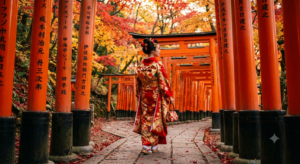
Home to the famous Senso-ji Temple, Asakusa has a more traditional feel. Dress neatly and respectfully. Many visitors rent kimono here for a day — a wonderful way to experience Japanese fashion culture authentically. Book a traditional kimono experience in Asakusa on GetYourGuide.
Ginza — High Fashion District
Ginza is Tokyo’s equivalent of Paris’s Avenue Montaigne — luxury boutiques, high-end restaurants, and an extremely well-dressed local clientele. Dress up: tailored clothing, quality accessories, and polished footwear are the norm.
Yanaka & Shimokitazawa — Bohemian & Vintage
These artsy, independent neighbourhoods welcome eclectic, vintage-inspired looks. Thrift finds, layered textures, and creative personal style fit right in.
Visiting Tokyo Temples & Shrines: What to Wear
Unlike in some Southeast Asian countries, Japanese shrines and temples generally don’t have strict dress codes enforced at the entrance. However, showing respect through your appearance is important:
- Avoid very revealing clothing (crop tops, very short shorts)
- Neat, modest clothing shows respect for the sacred space
- Remove shoes when entering certain indoor shrine areas (slippers are provided)
- Note: Some more conservative temples may have stricter requirements — check in advance
Shoes: A Critical Decision in Tokyo
Tokyo is a walking city — 15,000–25,000 steps per day is common. But there’s another critical consideration: you will frequently need to remove your shoes at temples, traditional restaurants (izakayas with tatami rooms), and ryokan (traditional inns). This means:
- Wear shoes that slip on/off easily without a struggle
- Make sure your socks are clean and without holes — they’ll be on display
- Avoid shoes with complicated lacing systems
- Best options: Clean white sneakers (worn extensively by young Tokyoites), loafers, chelsea boots, or comfortable slip-ons
Tokyo Packing Essentials
- 2–3 pairs of comfortable, stylish trousers or jeans
- 4–5 tops (mix of casual and smart)
- 1–2 dresses or skirts
- 1 blazer or structured jacket
- Season-appropriate coat or layers
- Comfortable but stylish walking shoes
- 1 pair of nicer shoes for evenings in Ginza or upscale restaurants
- Clean, hole-free socks (pack more than you think you need)
- Compact umbrella (available everywhere in Japan but useful to have)
- Small day bag or backpack for temple visits and day trips
What NOT to Wear in Tokyo
- Overly revealing clothing in temples, traditional areas, or formal restaurants
- Strong perfume or cologne — Japanese public transport etiquette strongly discourages strong scents
- Anything dirty or visibly worn — neatness is deeply valued in Japanese culture
- Shoes that are difficult to remove — a practical consideration everywhere
- Outdoor shoes indoors: Always remove shoes when indicated by a genkan (entrance hall) or signage
Can You Wear a Kimono as a Tourist?
Absolutely — and it’s encouraged, not considered cultural appropriation. Many visitors rent traditional kimono or yukata (the lighter summer version) for a day of exploring. It’s a wonderful way to experience Japanese fashion culture. Rental shops are concentrated around Asakusa, Kyoto’s Gion district, and many historic areas. Book a Tokyo kimono rental experience on GetYourGuide — many include hair styling and a professional photo session.
Book Your Tokyo Stay
Tokyo has accommodation for every style and budget — from capsule hotels and design hostels to world-class luxury hotels. The Shinjuku and Shibuya areas are great bases for first-time visitors. Search and book Tokyo hotels on Booking.com with the widest selection and flexible cancellation policies.
Final Thoughts: Dressing for Tokyo
Tokyo rewards the effort you put into your appearance — not because anyone will judge you for dressing casually, but because the city’s incredible fashion culture will inspire you to express yourself more boldly and thoughtfully. Pack versatile basics, wear comfortable shoes, keep everything neat and intentional, and don’t be afraid to pick up something interesting at one of Tokyo’s extraordinary vintage markets or concept stores.
Tokyo doesn’t have one dress code. It has a million — and all of them are valid.
Ready to explore? Browse the best Tokyo tours and experiences on GetYourGuide — from teamLab digital art museums to Mount Fuji day trips and tsukiji sushi breakfasts.
✈️ Trip Essentials
Affiliate links — we may earn a small commission at no extra cost to you.
Hotels in Shinjuku, Shibuya, Ginza and Asakusa — ryokans to ultra-modern Tokyo hotels.
Skip the tourist traps — book top-rated tours, day trips and experiences in Tokyo with instant confirmation.