
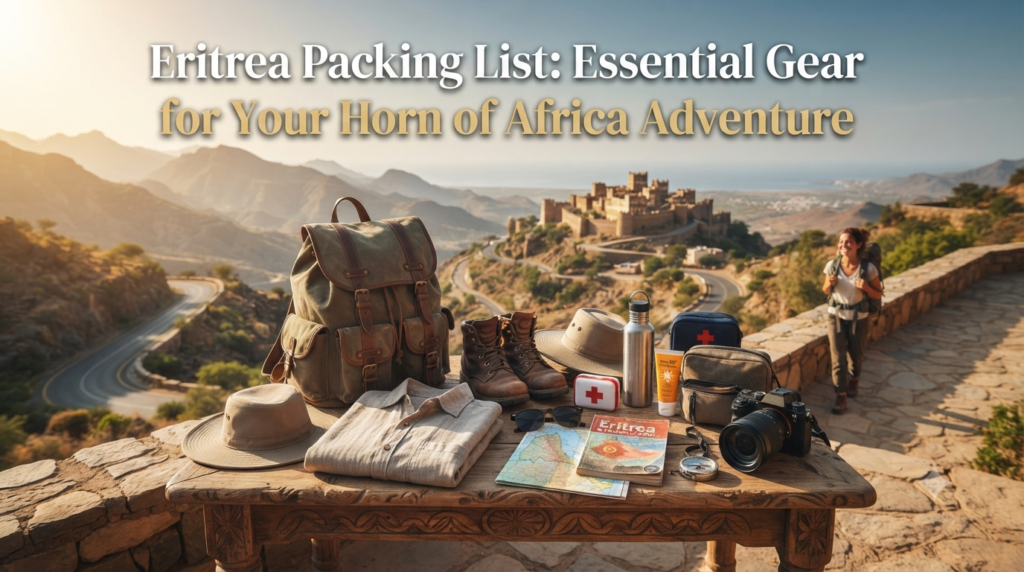
Eritrea is one of Africa’s most isolated and least-visited countries — which makes it one of the most intriguing. With Italian colonial architecture in Asmara (a UNESCO World Heritage City), ancient ruins, Red Sea diving, and dramatic highland landscapes, Eritrea rewards the adventurous traveler. This Eritrea packing list covers what to pack for Asmara, the Red Sea coast, and the lowland regions.
Eritrea at a Glance
Eritrea has three distinct climate zones: the cool, temperate highlands around Asmara (sitting at 2,300m above sea level), the hot, arid western lowlands, and the hot and humid Red Sea coastal strip around Massawa. The best time to visit is October to April, avoiding the intense summer heat of the lowlands and the rainy season in the highlands (June–September). Winter evenings in Asmara can be surprisingly cold despite the equatorial latitude.
Clothing for Asmara (Highland Capital)
Asmara’s altitude keeps temperatures pleasant year-round — typically 15–25°C by day — but evenings can drop to 8–12°C. The city is conservative and remarkably clean. Dressing modestly and smartly is appreciated; locals take pride in their appearance.
- 3–4 lightweight, modest tops or shirts
- 1–2 pairs of trousers or long skirts (women)
- A smart-casual outfit for Asmara’s Art Deco café scene
- Light sweater or cardigan for evenings
- A medium-weight jacket or fleece for cool winter nights
- Comfortable walking shoes for the city’s wide, flat boulevards
Clothing for the Red Sea Coast (Massawa & Dahlak Islands)
The Red Sea coast is hot and humid, with temperatures regularly exceeding 35°C. Massawa is one of the hottest cities on Earth in summer. Even outside peak summer, it’s intensely warm. Light, breathable fabrics are essential. The Dahlak Archipelago offers world-class snorkeling and diving in virtually pristine waters.
- Lightweight linen or cotton shirts and trousers
- Swimsuit and rash guard (for snorkeling — the sun is fierce)
- Light cover-up or sarong for beach areas (modest dress away from the beach)
- Flip flops for the beach
- UV-protection swimwear or rash vest
- Wide-brimmed sun hat
- Polarized sunglasses
Clothing for the Western Lowlands
The western lowlands — including the regions around Keren and Barentu — are hot and dry for most of the year. Temperatures can exceed 40°C in April and May. Light, loose clothing that covers the skin protects against both the sun and dust.
- Long-sleeve, lightweight shirts (for sun protection and modesty)
- Loose trousers or maxi skirt
- Desert scarf or shemagh (doubles as sun protection and dust shield)
- Sturdy sandals or lightweight hiking shoes
Cultural Dress Code
Eritrea is a conservative society with both Christian and Muslim populations. Dressing modestly is important throughout the country, not just at religious sites. Women should avoid short skirts, sleeveless tops, and revealing clothing in public. Men should wear shirts rather than vests in towns and villages. In mosques, women should cover their hair and both genders should remove shoes.
- Modest tops (no sleeveless in public areas)
- Trousers or knee-length skirts minimum
- Loose scarf for women (mosque visits and dusty regions)
- Smart but casual clothing for Asmara — locals dress well
Hiking & Outdoor Gear
Eritrea has spectacular highland landscapes around Filfil Solomuna nature reserve and the scenic road from Asmara down to Massawa. The famous Asmara–Massawa railway line (currently inoperative but historically significant) passes through dramatic escarpment terrain. If you plan hiking or exploring outside main towns, proper footwear and supplies are essential.
- Sturdy hiking boots or trail shoes
- Daypack (20–25L) with water storage
- Water purification tablets or filter (running water can be unreliable)
- High-capacity water bottles (carry at least 3L in the lowlands)
- Electrolyte sachets for rehydration
- Headlamp with spare batteries (power cuts are common)
- Snorkeling gear if visiting the Dahlak Islands
Toiletries & Health Essentials
Eritrea has limited pharmacies and medical facilities outside Asmara. Pack a comprehensive medical kit. Malaria is present in the lowland and coastal regions below 2,000m — Asmara itself is considered malaria-free. Consult a travel health clinic before your trip.
- Antimalarial medication (essential for coastal and lowland areas)
- DEET insect repellent (50%+)
- Sunscreen SPF 50+ and lip balm with SPF
- Water purification tablets
- Oral rehydration sachets
- Comprehensive first aid kit (antiseptic, bandages, blister pads, ibuprofen, antidiarrheals)
- Any prescription medications with extra supply
- Yellow fever vaccination certificate (required for entry)
- Altitude sickness medication if flying directly to Asmara
Electronics & Practical Items
Eritrea uses Type C and L sockets (Italian standard), with 230V. Power outages are frequent in Asmara and almost guaranteed outside the capital. A power bank is essential.
- Type C/L power adapter
- High-capacity power bank (20,000mAh recommended)
- Headlamp for power cuts
- Unlocked smartphone — local SIM cards (EriTel) are available but data is slow and often restricted
- Camera (photography is sensitive — always ask permission and be cautious near government buildings)
- Printed copies of all documents (passport, visa, permits)
- USD or EUR in cash — Eritrean Nakfa (ERN) is non-convertible internationally, and ATMs for foreigners are unreliable
Money & Visas
Eritrea requires a tourist visa for most nationalities, obtained through the Eritrean embassy in your home country. Travel permits are required to visit areas outside Asmara. The local currency (Nakfa) cannot be obtained outside Eritrea and is non-convertible, so bring sufficient USD or EUR in cash. Credit cards are not accepted in most places.
- Carry sufficient USD or EUR cash (most transactions are cash-only)
- Keep receipt of currency exchange transactions
- Visa obtained in advance from an Eritrean embassy
- Travel permit for regions outside Asmara
What to Leave at Home
Photography of military installations, government buildings, and border areas is prohibited and can lead to serious trouble. Leave drones at home — they are illegal in Eritrea. Avoid bringing in pornographic material or books critical of the Eritrean government. Pack conservatively and respectfully.
Photography and What to Pack for Restrictions
Eritrea has some of the strictest photography rules of any African destination, and it affects what’s worth packing. A permit is required to photograph in Asmara (available through your guide or the tourism office), and photographing government buildings, military sites, airports, and bridges anywhere in the country is prohibited. Pack a camera you’re comfortable keeping low-profile rather than an obviously large professional setup, since discretion matters more here than in most travel photography contexts. A printed copy of your permit is worth carrying, since asking to see it is a routine part of being photographed in public areas of Asmara.
Frequently Asked Questions: Eritrea Packing
Do I need a visa and photography permit before arriving in Eritrea?
A visa is required for most nationalities and should be arranged in advance through an Eritrean embassy or consulate, since visa-on-arrival is not reliably available. The Asmara photography permit is typically arranged locally through your guide or hotel once you’ve arrived, rather than before departure.
Is Eritrea safe and comfortable for female travelers?
Eritrea is generally considered safe, with low crime and a reputation for hospitality, though tourism infrastructure is limited outside Asmara. Modest dress (covered shoulders and knees, especially outside the capital) is expected and helps travelers blend in and be treated respectfully.
Eritrea Packing List Summary
Eritrea is extraordinary: an Art Deco capital in the clouds, untouched Red Sea reefs, and a people who remain genuinely welcoming despite their country’s isolation. Pack modestly, pack light, and pack prepared for heat, potential power outages, and limited facilities outside Asmara. Those who arrive well-prepared will find one of Africa’s most rewarding and memorable travel experiences.