
Tokyo — World’s most Michelin-starred city — more than Paris, London, and New York combined
$3 — Average price of a complete meal at a Bangkok street food stall — best value culinary travel
San Sebastian — Highest concentration of Michelin stars per capita of any city in the world
Oaxaca — Mexico’s culinary capital — birthplace of mole, mezcal, and some of Mexico’s most complex cuisine
Bologna — Italy’s food capital — birthplace of ragù bolognese, mortadella, and fresh egg pasta tradition
Eating Is the Most Direct Path to Understanding a Culture
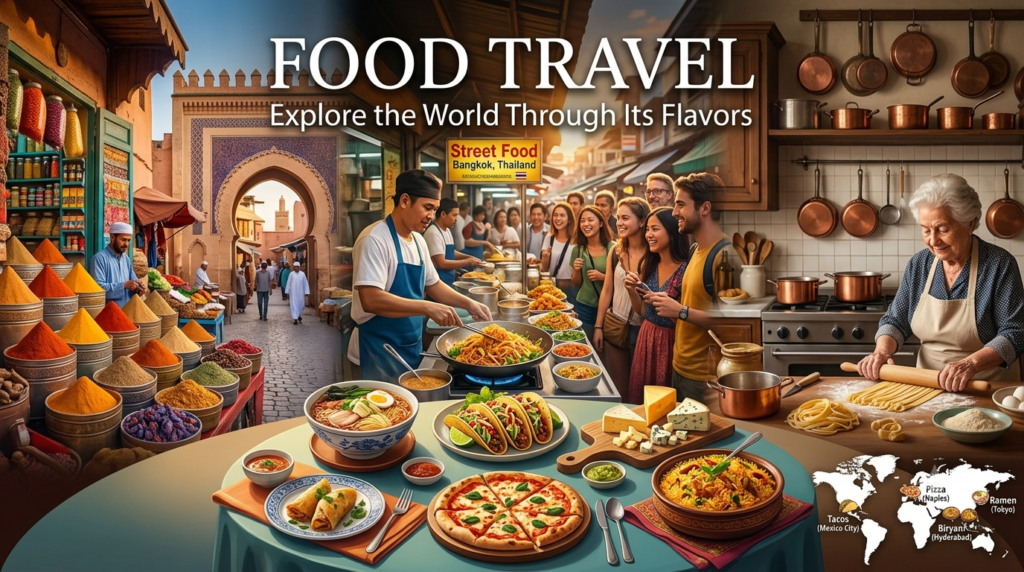
Food travel — choosing destinations, planning itineraries, and building trip experiences around the act of eating — has evolved from a niche interest into one of the most powerful travel motivations globally. What a culture eats, how it prepares food, the social rituals around eating, and the ingredients shaped by local geography all reveal something about a place that museums and monuments can’t. This guide covers the world’s greatest food destinations, how to experience them authentically, and how to build food-focused travel experiences at every budget level.
The World’s Best Food Cities
Tokyo, Japan: Tokyo has more Michelin-starred restaurants than any other city in the world — more than Paris, London, and New York combined. But Tokyo’s greatest food experience isn’t at its Michelin establishments; it’s in its ramen shops, sushi counters, yakitori izakayas, and convenience stores (which sell genuinely excellent food) that make Tokyo the world’s most comprehensive food city across every price point simultaneously.
Bangkok, Thailand: The world’s undisputed street food capital — Bangkok’s footpaths, markets, and food courts deliver extraordinary culinary complexity at prices that make fine dining at equivalent quality anywhere else in the world seem absurd. Pad thai from a market stall at 3am, boat noodles on the khlongs, green curry in a century-old shophouse — Bangkok’s street food is among the world’s greatest eating experiences at any price.
Bologna, Italy: Italy’s food capital (Italians call it La Grassa — the Fat One) is the birthplace of ragù bolognese, mortadella, tortellini, and fresh egg pasta traditions that define the world’s most beloved cuisine. The Quadrilatero market district — a medieval network of food stalls selling aged Parmigiano, cured meats, and fresh pasta — is the most concentrated and authentic Italian food market experience available.
Mexico City: One of the world’s great underrated food cities — a combination of extraordinary taquerías, world-class contemporary Mexican cuisine, extraordinary market food, and the most diverse regional Mexican food representation of any single Mexican city. Pujol (consistently ranked among the world’s top 10 restaurants) sits in the same city as taco stands that charge a dollar for some of the best food in Mexico.
Food Tours: The Best Way Into a City’s Eating Culture
A food tour with a knowledgeable local guide consistently delivers more genuine culinary insight in three hours than independent exploration over three days. The best food tours cover a specific neighbourhood, visit eight to twelve tastings, and provide historical and cultural context that transforms eating into understanding. Context Travel, Eating Europe, and Devour Food Tours all operate excellent food tours across major destinations; local operators in smaller cities often provide more authentic and personalised experiences.
Cooking Holidays: Taking the Food Home With You
A cooking holiday — staying in a destination while learning to cook its cuisine — is the most intellectually and gastronomically satisfying form of food travel. You return home with skills and recipes that extend the experience indefinitely beyond the trip itself. Tuscany, Provence, Oaxaca, Thailand, and Japan (particularly Kyoto) all have excellent residential cooking school infrastructure for international visitors. The best cooking holidays combine market visits (understanding ingredients), technique classes (hands-on cooking), and shared meals (the social context that makes food meaningful).
Eating Local: The Rules That Actually Work
Finding genuinely good local food in any destination comes down to a few consistent principles: eat where locals eat (no translated menus, no photographs of food outside the door); visit markets rather than restaurants for the most authentic and affordable food; learn three or four words in the local language (ordering in even broken local language produces dramatically better food experiences); and eat at lunchtime when local workers eat — this is when local restaurants are busiest, freshest, and most representative of what the place actually cooks.
For destination planning around your food travel goals, see our best travel destinations guide and our Asia travel guide for Tokyo and Bangkok food specifics.
Frequently Asked Questions
What is the best country in the world for food travel?
Japan consistently tops culinary travel surveys — the combination of extraordinary Michelin dining, outstanding street food, regional food diversity (each prefecture has distinct specialities), and the cultural seriousness with which food is approached makes Japan the most comprehensive food travel destination globally. Italy is the most emotionally resonant food destination for most Western travellers.
Is street food safe to eat while travelling?
Street food at busy, high-turnover stalls with freshly cooked hot food is generally safer than many assume — high heat and rapid turnover are natural food safety mechanisms. The risk increases with pre-prepared room-temperature food and fresh salads in destinations with unreliable water quality. The reliable rule: eat what’s cooked hot and served immediately, look for high turnover stalls, and observe where locals are queuing.
How do I find the best local restaurants in any city?
Ask your accommodation (not the concierge — the receptionist or owner is more likely to give genuine local recommendations). Use Google Maps sorted by rating within a neighbourhood rather than by proximity to tourist areas. The Infatuation is excellent for major cities. Eater’s city guides are reliable for international destinations. Ask your taxi or ride-share driver — drivers in any city know where the best local food is.
Are Michelin restaurants worth the cost for food travellers?
Michelin one-star restaurants often offer the best value in the Michelin ecosystem — excellent technique, seasonal ingredients, and genuine creativity at prices below the two and three-star tier. Many Michelin-starred chefs also operate more casual lunch formats or attached brasseries at significantly lower price points. A Michelin lunch rather than dinner typically saves 30-50% for essentially the same kitchen and quality level.
What should I pack for a food-focused trip?
An insulated bag (for transporting market purchases), a small notebook (menus and food discoveries worth recording), translation app with offline language packs (for menus in non-Latin scripts), antacids and digestive support for heavy eating days, and a willingness to eat multiple meals daily. The physical preparation for serious food travel is primarily digestive capacity rather than gear.
The World Is a Table — Sit Down and Eat
Food travel at its most rewarding isn’t about spending more money or eating at more prestigious establishments — it’s about paying attention to what a place puts on a plate and what that reveals about how the people there live. The meal that most defines a destination is often not the one in the restaurant but the one in the market, at the street stall, or in the home of someone who invited you in. Travel hungry, eat curiously, and let the food do its quiet, revelatory work.
✈️ Trip Essentials
Affiliate links — we may earn a small commission at no extra cost to you.
Compare millions of hotels worldwide — boutique stays to luxury resorts. Best price guarantee.
Discover top-rated tours and experiences worldwide. Instant booking, free cancellation on most activities.