
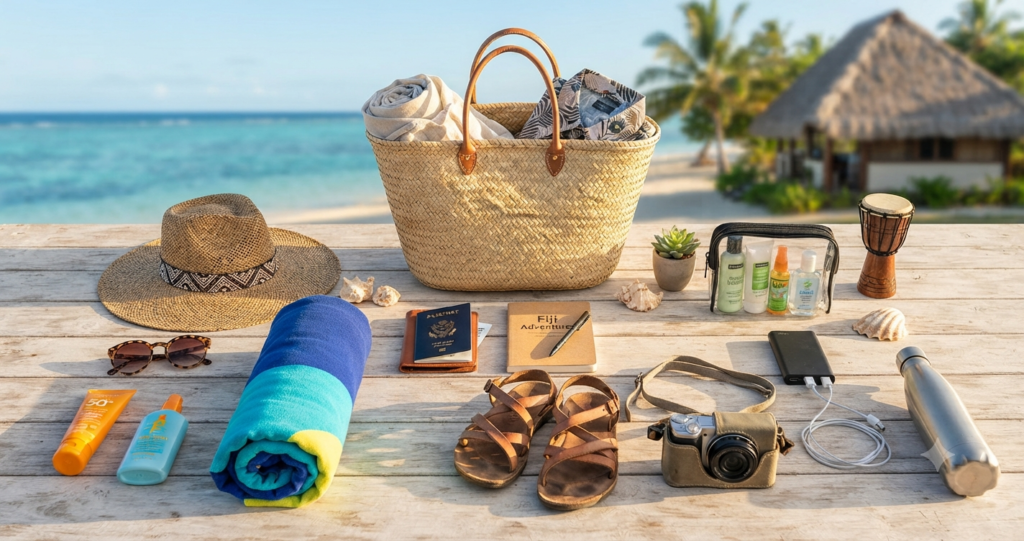
Fiji is one of those destinations that looks effortlessly simple from the outside — island, beach, flip flops — but the reality involves navigating resort culture, village dress codes, serious sun exposure, and potentially a dozen different activities across multiple islands. Get it right and your packing list is lean and versatile. Get it wrong and you’ll either be sweating through the wrong fabrics or, worse, accidentally offending a village elder because your shorts are too short.
Understanding Fiji’s Two Dress Codes
Fiji has a genuine dress code split that trips up many visitors. Resort islands and tourist areas are relaxed — swimwear and beach attire is perfectly fine at pools, beaches, and casual dining. But Fiji is a deeply Christian and traditional society in its villages and rural areas, and the distinction between “resort Fiji” and “village Fiji” is meaningful.
When visiting any Fijian village (even on an organised tour), both men and women should cover their shoulders and knees. For women, this means a sulu (traditional wrap skirt) tied around the waist over shorts or a light dress that falls at least to the knee. Sulus are sold inexpensively throughout Fiji and at resort shops, and wearing one for a village visit is a genuine sign of respect that locals notice and appreciate. Revealing clothing, shorts, or sleeveless tops in a village context are genuinely offensive, not just frowned upon.
What to Wear in Fiji: Activity by Activity
Beach & Pool Days
Fiji’s beaches range from the accessible ones near Nadi to the remote outer-island beaches of the Yasawas and Mamanucas. All are paradise by any measure. A quality swimsuit is your most-worn piece — bring two or three so you always have a dry one. Bikinis are completely fine at any resort beach. Board shorts or bikini bottoms over swimwear are useful for casual snorkelling walks along the beach reef. A wide-brim hat and good polarised sunglasses are non-negotiable: the Fijian sun is intense and the glare off white sand and turquoise water is remarkable.
Snorkelling & Diving
Fiji’s coral reefs are some of the most biodiverse in the world, and snorkelling here is extraordinary. A long-sleeved rash guard (UPF 50+) is worth its weight in this context — you’ll spend 45–60 minutes face-down in direct sun, and a burnt back can ruin the next several days. Most dive operators provide basic wetsuits for diving, but having your own rash guard means you can snorkel off the beach anytime. Water shoes or reef boots (available cheaply in Nadi) are useful for entries over rocky or coral substrate.
Island Hopping & Boat Trips
Island hopping between the Mamanuca or Yasawa islands typically involves open wooden ferry boats or small speedboats. The combination of spray and wind means you’ll want a light layer for the journey even in peak summer — a light linen overshirt or a sarong wrapped around shoulders works perfectly. Bring your swimwear for when you arrive, but start the boat ride covered. A waterproof bag for electronics and your camera is essential on any boat.
Resort Evenings
Most Fiji resorts operate at a “smart casual” to “casual” dress standard for evening dining. This typically means no wet swimwear and no bare feet — a sundress, linen trousers, or a casual but intentional outfit is appropriate. High-end resorts like the Mamanuca liveaboards or the private island resorts of the Lau Group tend toward “resort casual” which means a step above beach wear. A wrap dress is one of the most versatile investments for Fiji evenings — it photographs beautifully at sunset, is suitable for any restaurant level, and packs to almost nothing.
Village Visits
As mentioned above, a sulu (wrap skirt) is the essential piece for any village visit. Buy one at the local market in Nadi, Suva, or your resort shop. Tie it over whatever you’re wearing, and it signals cultural respect immediately. Shoulders should also be covered — a loose short-sleeved top or light overshirt is fine. Remove your shoes when entering any traditional bure (thatched meeting house). These small gestures mean a great deal to Fijian communities.
Fiji Packing List: Women’s Essentials
- Swimwear: 2–3 swimsuits, 1 rash guard (UPF 50+)
- Cover-ups: 1–2 sarongs or light kaftans; 1 sulu (buy on arrival or in resort)
- Dresses: 2–3 sundresses (casual to slightly dressier), 1 wrap dress for evenings
- Modest top & skirt/trousers: For village visits — a loose short-sleeved top + light trousers or long skirt
- Light overshirt: For boat trips and sun protection on excursions
- Footwear: Quality flip flops, dressier sandals for evening, water shoes (optional)
- Accessories: Wide-brim hat, polarised sunglasses, waterproof phone pouch
- Sun care: Reef-safe SPF 50+ sunscreen, after-sun gel, lip balm SPF
- Insect protection: DEET repellent for evenings; some outer Yasawa islands have mosquitoes at dusk
What to Wear on the Plane to Fiji
Flights to Fiji are long (8–10 hours from Australia/New Zealand, much longer from Europe or North America). Wear comfortable clothes that you wouldn’t mind arriving in: linen trousers or lightweight joggers, a breathable long-sleeve top, and slip-on footwear. Bring a pashmina or light scarf for the flight’s aggressive air conditioning. If you have a long layover in Nadi, you can freshen up and change — but arriving in comfortable travel clothes makes the inevitable domestic transfers and boat connections feel manageable.
Common Fiji Packing Mistakes
Forgetting the sulu. The single most common cultural mistake in Fiji is arriving at a village visit without appropriate covering. Pack a light wrap that can double as a sulu, or pick one up immediately in Nadi for a few dollars.
Only bringing bikinis for swimwear. Fiji involves more water activities than most tropical destinations — you’ll snorkel reefs, kayak through mangroves, and swim in inland waterfalls. A one-piece or sporty bikini with a rash guard handles all of these far better than a delicate triangle bikini.
Non-reef-safe sunscreen. Fiji’s reef ecosystems are extraordinary and increasingly protected. Use reef-safe sunscreen — your resort may enforce this, and the right choice helps preserve the very thing you came to see.
Frequently Asked Questions
What is the dress code in Fiji villages?
Shoulders and knees covered for both men and women. Women should wear a sulu (wrap skirt) over shorts or a dress that falls below the knee. Remove shoes when entering a traditional meeting house (bure). Swimwear and revealing clothing are inappropriate in village settings.
Can women wear bikinis in Fiji?
At resort pools and beaches, yes — bikinis are completely fine. On local islands, in villages, in markets, and in any non-resort public space, cover up with at minimum a sarong or shorts and a top. The rule is simple: resort = beach rules apply; anywhere else = cover up.
How hot is Fiji? What fabrics work best?
Fiji sits at around 27–31°C year-round with high humidity. Natural breathable fabrics — linen, cotton, bamboo — are far more comfortable than synthetics. Anything tight-fitting or non-breathable becomes miserable quickly in the humidity. Loose, flowy silhouettes work best both practically and aesthetically in the Fijian environment.
What should I wear for a Fijian kava ceremony?
Kava ceremonies are typically held as welcome rituals at resorts or during village visits. Dress modestly — covered shoulders and knees as a minimum. Sit cross-legged on the ground (shoes off), accept the kava bowl with both hands and a slight bow, and follow the lead of other guests. No specific outfit is required beyond what you’d wear for a general village visit.
Pingback: Fiji Packing List: Everything You Need for a Perfect Island Escape - Vacation Style Guide
Pingback: What to Wear in Tahiti & French Polynesia: Resort, Beach & Island Outfit Guide - Vacation Style Guide