
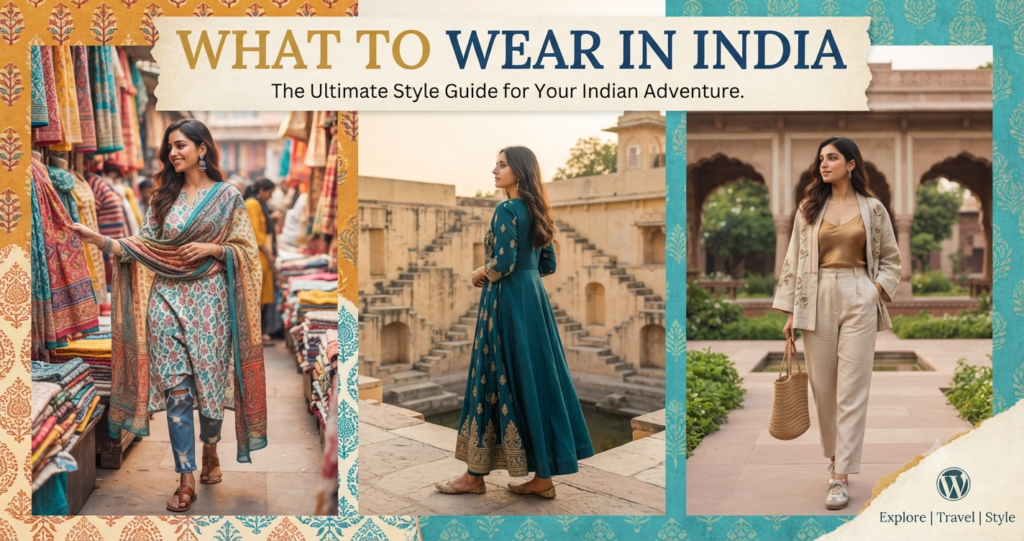
India is one of the most vibrant, diverse, and culturally rich destinations on earth — and knowing what to wear in India can make or break your experience. Between sweltering temperatures in Rajasthan, monsoon humidity in Kerala, and the need to cover up at temples and mosques, packing for India requires careful thought.
This guide covers exactly what to wear in India for every type of trip, from the Golden Triangle to Goa beaches, so you can travel comfortably and respectfully.
Understanding India’s Climate and Dress Culture
India spans multiple climate zones. Northern India (Delhi, Agra, Jaipur) experiences extreme heat in summer (40°C+) and cool winters. Southern India and coastal areas are warm and humid year-round. The Himalayas and hill stations can be quite cold even in summer.
Beyond climate, India is a deeply religious and culturally conservative country in many regions. Covering your shoulders and knees is not just polite — it’s often required to enter temples, mosques, and gurudwaras. However, beach areas like Goa are far more relaxed.
What to Wear in India: The Essential Clothing Pieces
Lightweight Linen or Cotton Tops
Natural fabrics are your best friend in India’s heat. Pack loose-fitting cotton or linen tops that breathe well. Light colors reflect the sun and keep you cooler. Avoid synthetic fabrics that trap heat and moisture.
Loose Trousers or Palazzo Pants
Loose trousers in lightweight fabric cover your legs for temple visits while staying cool. Linen trousers, cotton palazzo pants, or lightweight harem pants are ideal. These also protect against mosquitoes in the evenings.
A Light Scarf or Dupatta
A lightweight scarf is the single most useful item you can pack for India. Use it to cover your head at Sikh temples, drape over your shoulders at mosques, shield from the sun, or even wrap as a makeshift skirt over shorts at sacred sites. Pack two — they’re invaluable.
Salwar Kameez or Kurta
If you want to blend in and stay cool, consider buying a salwar kameez or kurta once you arrive — they’re widely available at markets for $5-15 and are perfectly designed for the Indian climate. You’ll get compliments from locals and feel more at ease in conservative areas.
Modest Summer Dresses
Maxi dresses and midi dresses work beautifully in India, especially with a cardigan or scarf for temples. Flowy dresses in natural fabrics are elegant, comfortable, and appropriate. Avoid anything too form-fitting or revealing.
Comfortable Walking Sandals or Shoes
You’ll remove your shoes frequently at temples and mosques, so pack shoes that slip on and off easily. Comfortable sandals with good arch support work well in the heat. Closed-toe shoes are useful if you’re doing a lot of walking in cities where streets can be dusty.
What NOT to Wear in India
- Very short shorts or skirts — save these for Goa beach resorts only
- Revealing tops, spaghetti straps, or crop tops — cover up in most public areas
- Tight clothing — loose fits are more comfortable and culturally appropriate
- Dark colors in summer — absorb heat and show sweat more
- Brand new leather shoes — you’ll need to remove them constantly
What to Wear in India by Region
Rajasthan (Jaipur, Jodhpur, Udaipur)
Rajasthan is conservative and traditional. Wear loose, modest clothing that covers your shoulders and knees. Bright colors actually fit in beautifully here — think the colorful markets of Jaipur. A shawl is essential for visiting palaces, temples, and entering havelis.
Goa Beaches
Goa is India’s most relaxed destination. Beach resorts and beach shacks are casual — bikinis and swimwear are totally normal at the beach and pool. However, when heading into town or markets, cover up with a light cover-up or kaftan. The beach to restaurant transition is much more casual than elsewhere in India.
Kerala and South India
Kerala’s backwaters, spice plantations, and hill stations are lush and often humid. Breathable cotton or linen is essential. For the famous Kerala Ayurvedic retreats, you’ll often be given traditional clothing. Light, modest layers work well here.
Delhi, Mumbai, and Major Cities
India’s major cities are more cosmopolitan and diverse in their dress standards. You’ll see everything from traditional saris to Western jeans. Still, avoid revealing clothing in markets, religious sites, and local neighborhoods.
Himalayan Regions (Himachal Pradesh, Uttarakhand)
Mountain areas can be surprisingly cold, especially at altitude. Pack a fleece or light down jacket, warm layers, and sturdy walking shoes or hiking boots. Even in summer, evenings can be cool.
India Packing List: Quick Reference
Here’s what to pack for a 2-week India trip:
- 3-4 lightweight cotton or linen tops (loose fit)
- 2 pairs of loose trousers or palazzo pants
- 1-2 maxi or midi dresses (modest neckline)
- 1 light cardigan or shawl (for air conditioning and temples)
- 2 lightweight scarves/dupattas
- Comfortable walking sandals
- 1 pair of closed-toe shoes for city walking
- Swimwear (if visiting Goa or beach areas)
- Light beach cover-up
- Small cross-body bag
Practical Tips for Dressing in India
Buy locally: India has incredible fabric and clothing markets. Buying a salwar kameez or kurta locally is both affordable and practical — you’ll stay cooler and blend in better.
Carry a silk or cotton scarf at all times: This is non-negotiable for visiting sacred sites. Keep one in your day bag.
Dress for air conditioning: Indian shopping malls, train stations, and restaurants are often very cold inside. A light cardigan is useful.
Avoid white: White shows dirt quickly in India’s dusty environments. Opt for colors or prints.
Layer smartly: Temperature differences between outdoor markets, air-conditioned restaurants, and evening boat rides can be significant. Light layers you can add/remove easily are ideal.
✈️ Trip Essentials
Affiliate links — we may earn a small commission at no extra cost to you.
From palace hotels in Rajasthan to beachside resorts in Goa and luxury stays in Mumbai — compare hotels across India.
Skip the tourist traps — book top-rated tours, day trips and experiences in India with instant confirmation.
India Packing List
India is one of the world’s most extraordinary travel destinations — ancient temples carved from single rocks, the Taj Mahal at sunrise, Rajasthan’s desert forts, Kerala’s backwater houseboats, Goa’s beaches, and the overwhelming sensory experience of cities like Varanasi and Mumbai. It’s also a destination that rewards careful packing. The heat is intense, temple dress codes are strict, and the gap between monsoon-ready and safari-ready is significant. This India packing list for women covers everything you need to know.
India Weather: A Vast Country
India is a subcontinent, not a country with a single climate. What to pack depends heavily on where you’re going and when:
- North India (Delhi, Agra, Rajasthan) — cool season October–March: Best time to visit. Delhi in December can be cool (8–18°C) to cold at night; Rajasthan’s desert nights drop to near-freezing. Pack a warm layer alongside summer clothing.
- North India — hot season (April–June): Extreme heat — 40–48°C. The Taj Mahal in May at noon is brutal. Pack only breathable natural fibres (cotton and linen).
- Monsoon (July–September): Heavy rain across most of India. Rajasthan is more manageable; Kerala monsoon is dramatic but beautiful (traditional ayurvedic season). Waterproof layers and quick-dry fabrics essential.
- South India (Kerala, Tamil Nadu, Karnataka): Hot and humid year-round. November–February is the most comfortable with lower humidity. March–May is intensely hot. Two separate monsoon periods (June and October–November).
- Goa: Beach season is October–March. June–September is heavy monsoon; most beach resorts close.
India Packing List for Women
Temple & Religious Site Dress Code
India has some of the world’s strictest temple dress codes. Hindu temples often require removal of shoes and covered shoulders and legs. Sikh Gurdwaras require covered head, arms, and legs, with shoes removed. Mosques require the same coverage. Jain temples are often the most formal. The Golden Temple in Amritsar requires covered head, arms, and legs, and you’ll also wade through a shallow pool of holy water. A lightweight shawl or dupatta (Indian scarf) and loose trousers solve most dress code requirements instantly.
Clothing Strategy
The most experienced India travellers pack almost entirely in loose, breathable natural fabrics in modest styles. This solves three problems simultaneously: heat management, cultural respect, and minimising unwanted attention in more conservative areas.
- 3–4 loose cotton or linen tops (long-sleeved or short-sleeved with a shawl)
- 2–3 loose cotton or linen trousers or harem pants (salwar kameez-style trousers are excellent)
- 2–3 midi or maxi dresses (conservative but cool)
- 1–2 lightweight shawls or dupattas (temple coverage, sun protection, air-conditioned train coverage, head covering)
- 1–2 swimsuits (for Goa, Kerala, and Rajasthan resort hotels)
- 1 packable rain jacket (monsoon season or unexpected rain)
Indian clothing option: Many women find it easiest and most culturally appropriate to buy a salwar kameez (loose tunic over drawstring trousers) from any Indian market or bazaar within the first day or two. They’re incredibly cheap (₹300–800 / £3–8), cool, modest, and immediately understood as respectful by locals.
Shoes
- Flat sandals with easy slip-on/off: You will remove shoes at every temple, gurdwara, and mosque. Flat sandals make this quick; choose ones with a back strap so they don’t fall off on busy temple steps.
- Comfortable walking shoes or trainers: For historical sites like Humayun’s Tomb, Agra Fort, and Jaipur’s Amer Fort — all involve extensive walking on uneven terrain in the heat.
- Flip flops: Goa beaches, guesthouses, and Kerala houseboat decks.
Health Essentials
- DEET insect repellent (dengue and malaria risk vary by region — higher in monsoon, higher in jungle/rural areas)
- Oral rehydration sachets and anti-diarrhoea medication (stomach issues affect the majority of first-time visitors)
- Water purification tablets or filtered water bottle (never drink tap water)
- SPF 50+ sunscreen
- Basic first aid kit including antihistamines (insect bites and dust allergies)
- India uses Type D/M plugs; bring an adaptor
India Activity Guide: What to Wear
Taj Mahal (Agra)
The Taj Mahal is open to all regardless of dress, but modest clothing is culturally appropriate at this Islamic mausoleum. Shoes must be removed or covered with provided shoe covers before entering the inner marble platform. The white marble surface reflects heat intensely — visit at sunrise (opens 30 minutes before) for the best light, fewer people, and cooler temperatures. A full visit takes 2–3 hours; wear comfortable walking shoes or sandals for the approach and light, breathable clothing.
Golden Temple, Amritsar
One of the world’s most moving spiritual sites. Requirements: head covered (free headscarves provided), shoulders and legs covered, shoes removed, feet washed in the shallow pool at the entrance. Plan to visit at dawn for the most atmospheric experience. Bring a clean pair of socks to wear through the complex (the marble can be cold or hot depending on season). Dress modestly and respectfully throughout.
Rajasthan — Jaipur, Udaipur, Jodhpur
Rajasthan’s historic city palaces, desert forts, and havelis are among the world’s most spectacular. For fort visits (Amer Fort, Mehrangarh, City Palace): modest, comfortable clothing — loose trousers and a shawl. The Blue City (Jodhpur), Pink City (Jaipur), and Lake City (Udaipur) reward wandering — wear comfortable flat shoes for the market lanes and old quarters. The desert at sunset (Sam Sand Dunes near Jaisalmer) calls for a warm shawl — temperatures drop significantly after sundown.
Kerala Backwaters
Kerala’s houseboat experience is one of India’s greatest slow travel experiences — drifting through palm-lined canals past rice paddies and fishing villages. Casual, comfortable, relaxed clothing. A swimsuit for the boat deck (some guests swim off the back). Evenings on the water can be surprisingly breezy and insect-heavy — bring a light layer and insect repellent. The humidity in Kerala is significant year-round.
Common India Packing Mistakes
- Packing Western casual summer clothing: Shorts and sleeveless tops are fine at beach resorts and in international hotel areas, but will cause problems at temples, conservative cities, and rural areas. Packing modest, loose clothing solves both the cultural and practical heat management issues simultaneously.
- Overpacking shoes: India has a shoe-removing culture at almost every sacred site. You’ll also find excellent and very affordable sandals in every Indian market. Don’t bring more than three pairs.
- Not planning for stomach issues: Delhi belly is real and common. Travel with rehydration sachets and basic stomach medication. This isn’t a reason to avoid street food (some of India’s best food is street food) but preparation reduces the disruption when it happens.
- Packing light colours for the north: India’s roads and historical sites are dusty — light colours show every mark within an hour. Pack mid-tones or bring fabrics that wash and dry quickly.
India Packing FAQ
Is India safe for female solo travellers?
India requires more preparation and awareness for solo female travellers than many Asian destinations. The main challenges are unwanted attention (staring, verbal approaches) in some areas, particularly in large cities and more conservative northern states. South India and Kerala are generally more relaxed. Staying in reputable accommodation, using pre-booked transport rather than flagging taxis from the street, dressing modestly, and travelling with confidence significantly reduces issues. Millions of women travel India solo every year and have tremendously positive experiences. Join solo female India travel communities (Facebook groups, Reddit) for up-to-date destination-specific advice.
How long should I spend in India?
Two weeks is the minimum for a meaningful India trip. A classic two-week North India Golden Triangle route (Delhi → Agra → Jaipur → Delhi) can be done in 7–10 days. Three to four weeks allows combining the Golden Triangle with Rajasthan’s other cities (Jodhpur, Udaipur, Jaisalmer) or a separate South India trip (Kerala backwaters, Tamil Nadu temples, Goa). India is large enough that you could return annually for a decade and still discover new regions.
Should I buy clothes in India?
Yes — India is excellent for buying clothes and textiles. Jaipur’s markets (Johari Bazaar, Bapu Bazaar) sell beautiful cotton and silk scarves, block-print fabrics, and salwar kameez sets at excellent prices. Delhi’s Dilli Haat craft market has quality from across India’s states. Goa’s flea markets at Anjuna and Mapusa have beach-ready clothing. Packing lighter and buying a salwar kameez on arrival is a genuinely excellent strategy — it provides immediate cultural respect, comfort in the heat, and a beautiful souvenir.
Extending your India trip to Sri Lanka? Our Sri Lanka outfit guide covers what to pack for temples, beaches and the hill country.

Pingback: Asia Travel Guide: Japan, Bali, Thailand, Vietnam and Beyond - Vacation Style Guide