
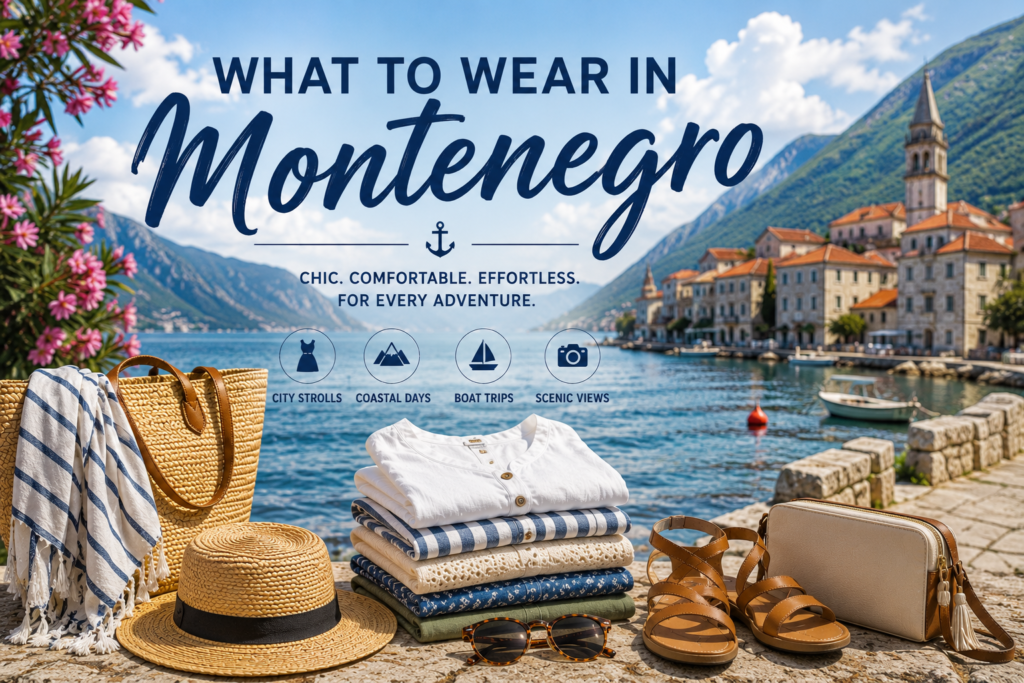
Montenegro is one of Europe’s fastest-rising travel destinations — a tiny Adriatic country that packs in dramatic fjords, medieval walled towns, Orthodox monasteries, and glamorous beach clubs along the Bay of Kotor and Budva Riviera. Knowing what to wear in Montenegro helps you move effortlessly between its wildly varied landscapes and dress codes, from the winding medieval streets of Kotor to the yacht-lined harbour of Porto Montenegro.
Quick Answer: What to Wear in Montenegro
Montenegro blends coastal Mediterranean style with Balkan practicality. Pack smart-casual Mediterranean resort wear for the coast (sundresses, linen separates, swimwear), comfortable walking shoes for historic towns and hikes, and modest clothing for visiting Orthodox monasteries. The climate is hot and sunny on the coast in summer.
Montenegro Weather by Season
The Montenegrin coast has a Mediterranean climate: hot, dry summers (June–August at 80–95°F) and mild winters. The interior (Durmitor mountains) is dramatically cooler year-round. Peak beach season is July–August. Spring (May–June) and autumn (September–October) offer pleasant temperatures of 65–78°F with fewer tourists — ideal for sightseeing.
What to Wear in Montenegro: By Location
Kotor Old Town
Kotor is a UNESCO-listed medieval walled city — one of the most beautifully preserved in the Adriatic. Its narrow stone streets, Venetian palaces, and Orthodox churches create a historic atmosphere that suits polished rather than beach-casual clothing. Wear comfortable walking shoes (the cobblestones are uneven) with a sundress, linen trousers, or a chic co-ord set. If you plan to climb the city walls (1350 steps to the fortress!), wear breathable clothing and proper footwear.
- Sundress or linen midi skirt
- Linen trousers + breezy blouse
- Comfortable walking sandals or sneakers
- Light scarf for church visits
- Small crossbody bag
- Water bottle (the wall climb is steep and hot)
Budva & the Riviera Beaches
Budva is Montenegro’s beach party capital, with a lively mix of sandy beaches and beach clubs. The vibe here is similar to Croatia — bikinis and stylish cover-ups by day, sundresses and heels at night. The nearby Sveti Stefan islet (now a luxury resort) is achingly picturesque for photos; dress accordingly. Beach clubs along the Budva Riviera attract a sophisticated crowd.
- Bikini or stylish one-piece
- Beach cover-up or linen dress
- Flip-flops or sandals for the beach
- Elevated sandals for beach clubs and evening strolls
- Sundress for Stari Grad (Budva’s old town)
Porto Montenegro & Tivat
Porto Montenegro in Tivat is one of the Adriatic’s most exclusive superyacht marinas, lined with luxury boutiques, fine dining, and elegant bars. This is Montenegrin high style — dress accordingly. Smart-casual to elegant outfits are appropriate: maxi dresses, tailored linen separates, or sleek jumpsuits. Leave the flip-flops and casual beachwear for elsewhere.
- Maxi dress or elegant midi dress
- Tailored linen trousers + silk blouse
- Wedge sandals or elegant flat sandals
- Structured bag or clutch
Monastery Visits (Ostrog, Cetinje)
Montenegro has numerous active Orthodox monasteries that are important pilgrimage sites. Modest dress is required: covered shoulders, covered knees, no revealing clothing. Women are sometimes asked to wear skirts rather than trousers at the most traditional monasteries. Carry a scarf to cover your head if required. Ostrog Monastery, carved into a cliff face, is the most visited — and the most sacred.
- Long skirt or loose trousers (below the knee)
- Top with sleeves (or carry a scarf to cover shoulders)
- Comfortable walking shoes (paths to some monasteries are rocky)
- Headscarf (optional but respectful)
Durmitor National Park Hiking
The Durmitor mountains in northern Montenegro are dramatically different from the coast — rugged, green, and cool even in summer. If you’re hiking around Black Lake or tackling Bobotov Kuk peak, dress for mountain conditions: hiking boots, layers, and a waterproof jacket. Temperatures can be 30–40°F cooler than the coast.
- Hiking boots or trail shoes
- Moisture-wicking base layer
- Fleece mid-layer
- Waterproof/windproof jacket
- Hiking trousers or leggings
- Sun hat and warm hat (it can be both)
What NOT to Wear in Montenegro
- Revealing clothing at monasteries — shorts and bare shoulders are disrespectful and may result in being turned away
- Swimwear in Kotor old town — the city prohibits swimwear on its streets and fines tourists
- High heels in Kotor — the cobblestones will defeat you; stick to flat sandals or sneakers
- Beach attire in Porto Montenegro restaurants — this marina has dress standards; smart casual minimum
Montenegro Packing List for Women
- 2–3 swimsuits
- 3–4 sundresses (day to evening)
- 1 maxi dress for elegant evenings
- 2 linen separates (skirt or trousers + tops)
- 1 modest outfit for monastery visits (long skirt + top with sleeves)
- 1 hiking outfit (if visiting Durmitor)
- Light scarf/wrap (for monasteries and evening)
- Comfortable walking sandals or sneakers
- Beach flip-flops
- Elegant sandals for evenings
- Hiking shoes if needed
- Packable rain jacket
Book Your Montenegro Experience
🌟 Browse Montenegro tours on Viator — Bay of Kotor boat trips, Kotor old town walking tours, and more.
🏨 Find hotels in Montenegro on Booking.com — from luxury Kotor hotels to Budva beachfront resorts.
Frequently Asked Questions
Is Montenegro conservative or liberal in terms of dress?
The coastal areas (Kotor, Budva, Tivat) are liberal and modern — beach wear, sundresses, and fashionable outfits are all normal. The interior is more conservative, especially around monasteries and traditional villages. Dress modestly when visiting religious sites anywhere in the country.
What is the dress code for Kotor old town?
Kotor prohibits swimwear on its streets with fines. Beyond that, smart casual is appreciated — the old town has a sophisticated feel. Comfortable shoes are essential for the cobblestones.
What to wear in Montenegro in September?
September is excellent in Montenegro — warm (75–82°F on the coast), less crowded than August, and the sea is still warm. Pack the same summer wardrobe plus a light cardigan for evenings.
Do women need to cover their hair in Montenegrin churches?
In Orthodox churches and monasteries, women are often asked to cover their heads with a scarf. It’s not always mandatory but is considered respectful. Keep a lightweight scarf accessible when visiting religious sites.