
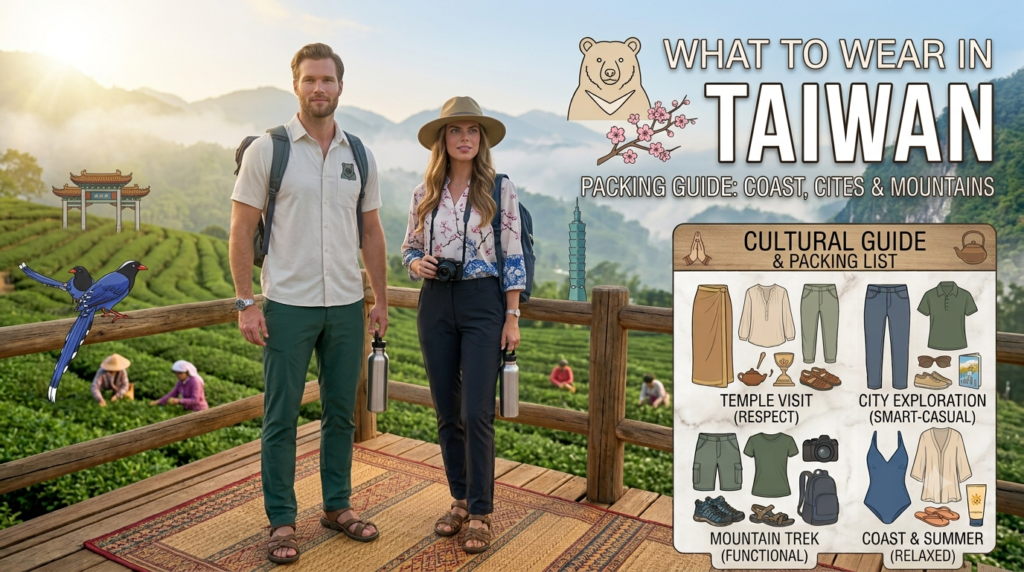
Taiwan is one of Asia’s most underrated travel destinations — a compact, vibrant island packed with ancient temples, dramatic gorges, hot spring towns, sophisticated night markets, and one of the world’s most dynamic street food cultures. It is also a destination with a genuinely challenging climate: subtropical and humid, with dramatic seasonal variation and the constant possibility of rain. This guide tells you exactly what to wear in Taiwan season by season, activity by activity, and city by city.
Understanding Taiwan’s Climate
Taiwan sits in the subtropical zone between the tropics and temperate latitudes, creating a complex, variable climate. The north (Taipei) and south (Tainan, Kaohsiung) experience the country very differently. Taipei’s winters (December–February) are genuinely cool and damp — 12–18°C with persistent grey drizzle. Southern Taiwan stays warm year-round. The summer monsoon season (May–September) brings intense heat (30–36°C), high humidity, and frequent afternoon thunderstorms. Typhoon season runs June–October.
The most important packing lesson: always carry rain protection. Taiwan rains at almost any time of year, and rarely with much advance warning. A compact umbrella or packable rain jacket should never be far from reach.
What to Wear in Taipei
Taipei is a modern, fashion-conscious city with a casual but trend-aware dress culture. Young Taiwanese are plugged into both Japanese and Korean fashion trends, and the city has a distinctly stylish energy. In summer, the combination of 35°C heat and high humidity makes light, breathable clothing absolutely essential. Thin cotton or linen clothing — loose-fitting blouses, linen trousers, flowy midi skirts, lightweight sundresses — is both comfortable and appropriate. The city’s air conditioning is aggressive, so carrying a light cardigan for the indoor-outdoor temperature contrast is worthwhile. In winter, Taipei deserves more respect than many travellers give it — pack a mid-weight jacket, warm knitwear, and closed shoes.
Night Markets: What to Wear
Taiwan’s night markets — Shilin, Raohe, Fengjia, and dozens more — are hot, crowded, bustling environments with uneven ground. The right outfit: comfortable walking shoes or sandals, breathable lightweight top and shorts or a flowy skirt in summer, and clothes you do not mind getting a little splattered. A crossbody bag worn at the front is both practical and secure in the crowds.
Temple Visits and Cultural Sites
Taiwan has hundreds of active temples — Buddhist, Taoist, and Confucian — that are both major cultural sites and living religious spaces. Dress modestly for temple visits: cover shoulders and knees as a mark of respect. Many temples sell or lend lightweight wraps at the entrance for visitors who arrive underprepared. Comfortable flat shoes are practical for the wide stone steps and courtyards.
Taroko Gorge and East Coast Hiking
Taroko Gorge on Taiwan’s east coast is one of Asia’s most dramatic landscapes. For hiking, wear moisture-wicking tops and lightweight trekking shorts or trousers, closed hiking shoes with grip (some trail sections are slippery marble), and a packable rain jacket. A hat and high-SPF sunscreen for exposed sections, and always carry water. The trail surfaces can be treacherous after rain — flip flops are completely unsuitable on any of the major trail sections.
Beach and Hot Spring Outfits
Southern Taiwan (Kenting National Park) and the Penghu archipelago offer excellent beach destinations. Standard resort beachwear is entirely appropriate. For Taiwan’s famous hot springs (Beitou, Jiaoxi, Wulai), note that many onsen facilities require bathing suits rather than allowing naked bathing, so pack a suitable swimsuit. Post-hot-spring, a loose cotton outfit is comfortable for the relaxed atmosphere of hot spring towns.
Taiwan Packing Essentials by Season
- Summer (May–September): Lightweight cotton/linen tops, loose shorts or skirts, breathable dresses, sandals, compact umbrella, light cardigan for AC, SPF 50+
- Autumn (October–November): Light layers — t-shirt with long-sleeved shirt or light cardigan, smart casual jeans or trousers, trainers, packable rain jacket
- Winter (December–February): Mid-weight warm jacket, warm knitwear, light scarf, closed walking shoes
- Spring (March–April): Layering pieces — light jacket over breathable tops, jeans, comfortable walking shoes
Colours for Taiwan Travel Photography
In Jiufen’s red lantern alleys, rich jewel tones (burgundy, forest green, navy, deep orange) photograph magnificently. Against Taroko’s blue-grey marble, white, cream, or sage green outfits create beautiful contrast. In Taiwan’s green tea countryside, earth tones blend elegantly with the landscape. Avoid bright white in temple environments as it has funerary connotations in traditional Chinese culture.
What NOT to Wear in Taiwan
Avoid heavy non-breathable fabrics in summer. Skip tight restrictive clothing for night market evenings. Avoid going completely sleeveless at traditional temples without a cover-up. Very high heels are impractical on Taipei’s occasional uneven pavement and traditional building steps.
Frequently Asked Questions
Is Taiwan conservative about clothing?
Modern Taiwan is a liberal, open society with no significant clothing restrictions in public spaces. The only exception is traditional temple visits, where modest coverage of shoulders and knees is respectful. Shorts, tank tops, and beachwear are all perfectly normal in appropriate contexts.
What shoes are best for Taiwan?
Comfortable walking shoes or trainers for city exploration and markets, flat sandals for casual summer days, and closed hiking shoes for national park trails. Taipei’s public transport is excellent so you will do less walking than in some cities — but still enough to need comfort.
Does Taiwan have a dress code for restaurants?
Taiwan’s dining culture is overwhelmingly casual. Even at upmarket restaurants, smart casual is sufficient. Night markets and local restaurants have no dress requirements at all.
What to Wear for Taipei’s MRT and Rainy-Day Commuting
Taipei’s MRT (subway) is fast, clean, and heavily air-conditioned, often noticeably colder than the humid streets above. A light cardigan or long-sleeve layer that packs down small is worth carrying even in summer, since the temperature swing between platforms and street level can be significant. Taiwan also sees sudden downpours, especially during summer typhoon season (roughly June-October), so a compact umbrella or packable rain shell is more useful day-to-day than a heavy raincoat. Waterproof or quick-dry shoes are worth prioritizing over suede or canvas, since sidewalks and scooter-heavy streets puddle fast during a storm.
Frequently Asked Questions: Taiwan Travel Style
Do I need to dress up for nice restaurants in Taipei?
Taipei’s dining scene ranges from casual night markets to upscale restaurants, and dress codes are generally relaxed even at nicer places. Smart-casual, such as a clean top with trousers or a dress, is appropriate for most restaurants; only the most exclusive fine-dining spots expect anything more formal.
How should I dress for Taiwan’s typhoon season?
If traveling June through October, pack a compact umbrella, a packable rain jacket, and quick-dry or waterproof shoes as a baseline, even on days that start sunny. Typhoons themselves are usually forecast days in advance, so check local weather alerts and be prepared to adjust plans if a storm is approaching.
Final Thoughts on Dressing for Taiwan
Taiwan rewards travellers who dress for practicality while still making an effort to be neat and presentable. Pack light breathable layers, always have rain protection within reach, bring a light jacket for aggressive air conditioning, and choose comfortable footwear for whatever terrain you are exploring.