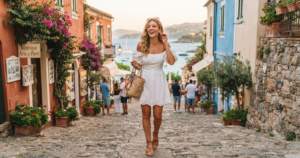
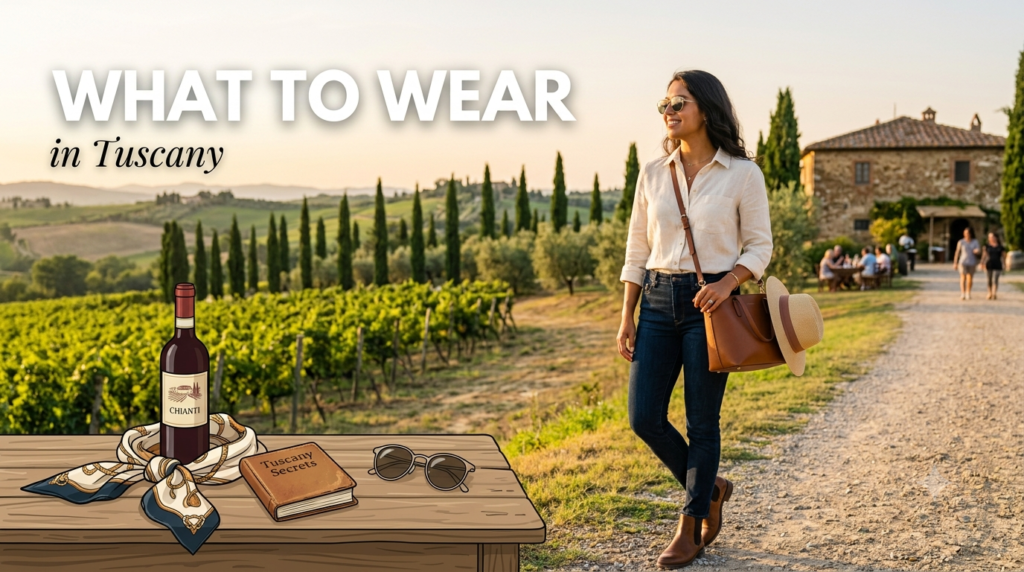
Tuscany rewards understated, quality-over-flash dressing — think Italian countryside elegance rather than resort glamour. What works shifts a bit between Florence’s cobblestones, the vineyards, and the hilltop towns, but the throughline is comfortable walking shoes and breathable natural fabrics.
Florence
Florence is a proper city with proper cobblestones — skip anything with a thin heel. Linen trousers or a midi skirt with a simple top works for museum-hopping by day; add a blazer or structured layer for evening dinners. If you’re visiting churches (the Duomo, Santa Croce) or the Vatican on a side trip, bring a scarf or light layer to cover shoulders.
Vineyards and Wine Country
Vineyard visits in Chianti or Val d’Orcia call for smart-casual with a countryside edge: a linen dress or trousers, flat sandals or espadrilles (you’ll often be walking on gravel or uneven terrain between rows), and a sun hat — tastings often happen outdoors or in open-air spaces with little shade.
Hilltop Towns
Towns like San Gimignano, Montepulciano, and Cortona have steep, uneven cobbled streets — comfortable, supportive walking shoes matter more here than anywhere else in the region. Layer for temperature swings too; hilltop towns are noticeably cooler and windier than the valley floor, even in summer.
Weather by Season
Summer (June-August) is hot and humid, often 85-95°F (29-35°C) in the valleys and noticeably cooler in hilltop towns — pack for both in the same day. Spring and fall are the sweet spot for Tuscany: mild, fewer crowds, and the countryside at its greenest or most golden depending on the month. Winter is cold and often foggy, especially in the Val d’Orcia, and worth a real coat rather than a light layer.
Agriturismo Stays and Cooking Classes
A working farm stay or cooking class is genuinely casual — comfortable trousers or a simple dress you don’t mind getting a little flour or wine on, plus closed-toe shoes if the property has vineyards, olive groves, or animals to walk through. Save the elevated pieces for dinner out in town, not the class itself.
Day Trips to Pisa and Siena
Both towns mean a full day of walking on stone streets and squares — the same walking-shoe rule as Florence applies. Siena’s Piazza del Campo and Pisa’s Field of Miracles are both largely shadeless in summer, so a hat and water matter as much as what you’re wearing.
What Not to Pack for Tuscany
Anything with a thin heel (cobblestones everywhere make them a genuine hazard, not just uncomfortable), shorts for church visits, and a suitcase heavier than you can carry up a flight of stairs — many hilltop-town accommodations and Florence’s historic-center apartments don’t have elevators.
Tuscany Packing List
- Comfortable walking shoes with real support — cobblestones and hill towns are unforgiving on thin soles
- Linen or breathable natural-fiber clothing — Tuscan summers are hot and humid
- A light scarf or wrap for church visits and cooler evenings
- A structured layer (blazer or light jacket) for dinners in Florence
- A sun hat and sunscreen for outdoor vineyard visits
- A crossbody or small daypack — better than a handbag for full days of walking between sites
Frequently Asked Questions
Do I need to dress up for dinner in Tuscany? Not formally, but Italians generally dress a notch more put-together than casual American resort wear — smart-casual (a nice top, real shoes rather than sandals) is the norm for restaurant dinners, especially in Florence.
What shoes are best for Tuscany’s hill towns? Supportive walking shoes or sneakers over sandals — the cobblestones and steep grades in towns like San Gimignano and Cortona are hard on unsupported feet.
Is it hot in Tuscany in summer? Yes, summers (June-August) run hot and humid, especially in Florence’s valley setting — breathable natural fabrics matter more than style here.
What’s the best season to visit Tuscany? Late spring (May-June) and early fall (September-October) offer the best balance of pleasant weather, manageable crowds, and the countryside looking its best.
Do I need a car in Tuscany, and does that change what to pack? Many hilltop towns and vineyards are easiest reached by car — if you’re driving, you can pack slightly heavier and bring an extra pair of shoes than you would on a train-only itinerary.
Is Tuscany dressy or casual overall? Casual-elegant is the norm — quality basics and one or two elevated pieces for dinners in Florence or Siena cover nearly everything; overt resort-wear or beachwear looks out of place here.
What to Wear for a Tuscan Truffle Hunt or Farm Tour
Truffle hunting and working-farm visits, increasingly popular additions to Tuscan itineraries, call for genuinely practical clothing rather than the elevated countryside look suited to a vineyard tasting. Closed-toe boots or sturdy sneakers matter here, since truffle hunts happen in forested, often muddy terrain regardless of the season, and dogs (the actual truffle finders) tend to kick up dirt as they work. Wear clothes you don’t mind getting dirty; a farm tour often includes handling produce, walking through animal enclosures, or helping with a hands-on cooking demonstration afterward, and precious fabrics have no place in that setting.
Packing for Tuscany’s Summer Heat vs. Shoulder Season
July and August bring intense heat to Tuscany, often exceeding 90°F, particularly inland away from any coastal breeze, so breathable linen and cotton are worth prioritizing over anything synthetic during those months. Spring (April-May) and fall (September-October) offer milder, more comfortable temperatures for exploring hilltop towns on foot, but evenings cool down more noticeably than midsummer, so a light jacket or cardigan earns its place in a shoulder-season suitcase. Regardless of season, sun protection matters throughout the region’s open piazzas and vineyard walks, where shade is often sparse.
What to Wear at a Tuscan Vineyard Wedding
Tuscany’s rolling hills and stone villas make it a popular wedding destination, and dressing as a guest calls for a slightly different calculation than a regular vineyard tasting. Choose a dress or suit in breathable fabric that won’t wilt over an outdoor ceremony in summer heat, and avoid pure white or anything too close to bridal territory. Wedge sandals or block heels handle grass and gravel far better than stilettos, which tend to sink into vineyard soil the moment the ceremony moves outdoors for photos or cocktail hour. A light shawl or wrap is worth carrying too, since evening receptions in the hills cool down quickly once the sun sets behind the vineyards.
Tuscany Packing FAQ Continued
Do I need hiking boots for hilltop towns? Not usually — comfortable walking shoes with decent grip handle the cobbled streets and gentle slopes of towns like San Gimignano or Montepulciano fine, real hiking boots are only worth it if you’re planning countryside trails beyond the towns themselves. Is it worth packing an umbrella? A compact one is useful in spring and fall, when short showers are more common; summer months are reliably dry enough that most travelers skip it.