
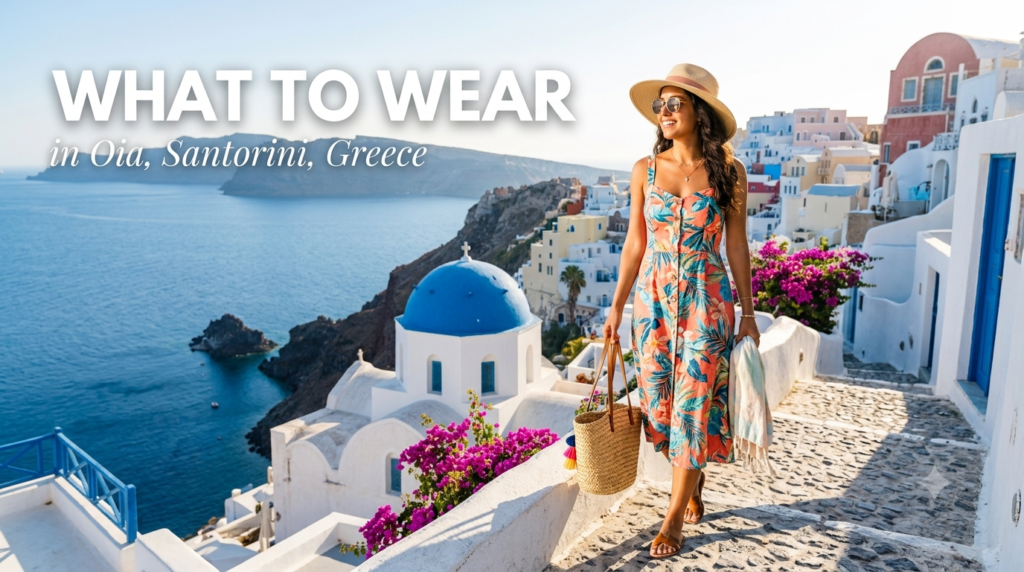
Greece covers a lot of ground stylistically — the whitewashed-and-blue Cycladic islands (Santorini, Mykonos), the greener Ionian islands, and Athens itself all call for slightly different approaches, though the throughline is breathable fabrics, comfortable sandals, and something to cover shoulders for church and monastery visits.
The Greek Islands
Flowy dresses, linen separates, and swimwear cover most island days. White, blue, and neutral tones are the visual cliché for a reason — they look right against the whitewashed architecture and handle the sun well. Flat sandals are essential; cobblestone and pebbled streets in island towns make heels impractical.
Athens
Athens is a proper city — smart-casual daywear (breathable trousers or a midi dress) with real walking shoes for the Acropolis and archaeological sites, which involve genuinely uneven, ancient stone paths. Evenings in Athens’ restaurant districts (Kolonaki, Plaka) lean a bit dressier than the islands.
Monasteries and Churches
Orthodox churches and monasteries (Meteora especially) enforce modesty rules — shoulders and knees covered, and some sites require skirts rather than trousers for women, sometimes provided on-site as a wrap if you show up uncovered. Carry a light scarf or sarong for this even on an otherwise beach-focused trip.
Santorini and Mykonos Nightlife
Santorini’s sunset-view restaurants and Mykonos’s beach clubs and late-night bars call for a step up from daytime linen — a slip dress or an elevated jumpsuit with sandals (or wedges if you don’t mind cobblestones) covers most evenings. Mykonos in particular leans into a more polished, see-and-be-seen look after dark than the rest of the islands.
Island-Hopping by Ferry
Greek ferries mean sun, wind, and sometimes rough water on open decks — a layer you can tie around your waist, sunglasses with a strap, and shoes that won’t slide on a wet deck all earn their space. Cabins and covered seating exist on longer routes, but the top deck views are worth dressing for the wind.
Weather by Season
June through August is peak season — hot, dry, and busy, with temperatures regularly in the 85-95°F (29-35°C) range on the islands. May and September/October are the shoulder-season sweet spot: still warm enough to swim, noticeably less crowded, and cooler evenings that make a light jacket worth packing. Winter (November-March) is mild by northern-European standards but genuinely cool and rainy, especially in Athens and the Ionian islands.
Ancient Sites Beyond Athens
Delphi, Ancient Olympia, and Knossos on Crete involve the same uneven-stone-path reality as the Acropolis — supportive shoes matter more than any outfit choice. Most of these sites have little shade, so a hat and a refillable water bottle are as much a packing decision as clothing.
What Not to Pack for Greece
Heels of any kind (cobblestones and marble-paved streets make them impractical almost everywhere), a full suitcase of shorts-only bottoms (churches and monasteries will turn you away), and heavy suitcases in general — island accommodations often mean stairs, no elevators, and a walk from where the taxi or ferry drops you.
Greece Packing List
- Flowy dresses and linen separates for island days
- Flat sandals — cobblestone and pebbled streets rule out heels almost everywhere
- A scarf or light wrap for church and monastery modesty requirements
- Supportive walking shoes if Athens’ archaeological sites are on the itinerary
- A light jacket for evening sea breezes, even in summer
- Sun protection — Greek summer sun is intense, especially reflected off white buildings
Frequently Asked Questions
Can I wear shorts in Greek churches? Generally no — most churches and monasteries require shoulders and knees covered; some provide wraps at the entrance if you arrive uncovered, but it’s better to bring your own.
Are heels okay on the Greek islands? Not recommended — most island towns have cobblestone or pebbled streets that make heels impractical and uncomfortable; flat sandals are the local standard.
What should I wear at the Acropolis? Comfortable, supportive walking shoes are the priority — the site’s ancient stone paths are genuinely uneven, and it involves real walking and some sun exposure.
What’s the best month to visit Greece for good weather without huge crowds? Late May and September are the classic picks — warm enough for the beach, noticeably quieter and cheaper than July/August.
Do I need a jacket in Greece in summer? A light one, yes — sea breezes on evening ferries and waterfront dinners can be cooler than the daytime heat suggests, especially on the islands.
Is Mykonos dressier than the other islands? Yes — its beach clubs and nightlife scene lean more polished and fashion-forward after dark than the more low-key islands like Naxos or the Ionian side.
Crete: A Different Pace and Wardrobe
Crete is big enough, and distinct enough, to warrant its own packing notes separate from the smaller Cyclades. The south coast around Chania and Rethymno has a more relaxed, less see-and-be-seen dress code than Santorini or Mykonos — linen shirts, simple sundresses, and sandals cover both beach towns and old-town tavernas without needing an evening upgrade. Inland Crete, especially the Samaria Gorge hike, calls for real trail shoes and moisture-wicking layers rather than anything from the beach-day wardrobe; it’s a demanding multi-hour trek through a canyon, not a stroll. Pack for a wider temperature swing here too — mountain villages at elevation can be noticeably cooler in the evening than the coast.
Packing for a Multi-Island Itinerary
Most Greece trips hop between at least two islands, and packing light matters more here than almost anywhere else in Europe — ferry docks and port taxi stands rarely have porters, and many island accommodations involve stairs with no elevator. A capsule of 3-4 dresses or top-and-bottom combinations that mix and match, one pair of flat sandals plus one pair of closed walking shoes, and a single evening upgrade piece (a slip dress or linen jumpsuit) covers a week of island-hopping without overpacking. A packable tote or crossbody bag that converts from beach bag to evening bag saves additional luggage space that a dedicated bag for each purpose would use.
Greece Outfit FAQ Continued
Do I need a swimsuit cover-up beyond a sarong? A sarong or light kaftan generally covers it — it works as a cover-up walking to and from the beach, doubles as a monastery wrap in a pinch, and packs down small, so a dedicated cover-up beyond one is usually unnecessary. Is Wi-Fi reliable enough on the islands to skip an offline map? It’s inconsistent enough on smaller islands and ferries that downloading offline maps before departure is worth the five minutes — not a clothing question, but a common trip-prep gap alongside the packing list.
What to Wear for a Greek Cooking Class or Wine Tasting
Many islands and Athens neighborhoods offer cooking classes or vineyard tastings as a day activity, and the dress code sits between beach-casual and evening-out. A simple sundress or linen trousers with a light top works well, along with closed-toe flats or sandals with a back strap since these are often held in working kitchens or on uneven vineyard terrain rather than a polished dining room. Santorini’s wineries in particular are built into volcanic slopes, so the same cobblestone-friendly flat shoes that work for town sightseeing carry over here too.
✈️ You Might Also Like

Beach Vacation Outfits: What to Wear at the Beach
Beach dresses

Winter Vacation Outfit Ideas: What to Pack for Cold-Weather Travel
Beach dresses

Summer Vacation Outfit Ideas: The Complete Warm-Weather Packing Guide
Beach vacation outfits
Cute Vacation Outfits for Women: 25 Stylish Ideas for Every Trip
Beach vacation outfits
Pingback: Mediterranean Fashion Style: The Complete Chic Dress Code Guide - Vacation Style Guide