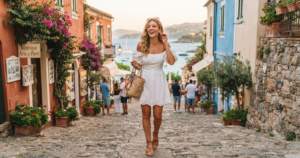
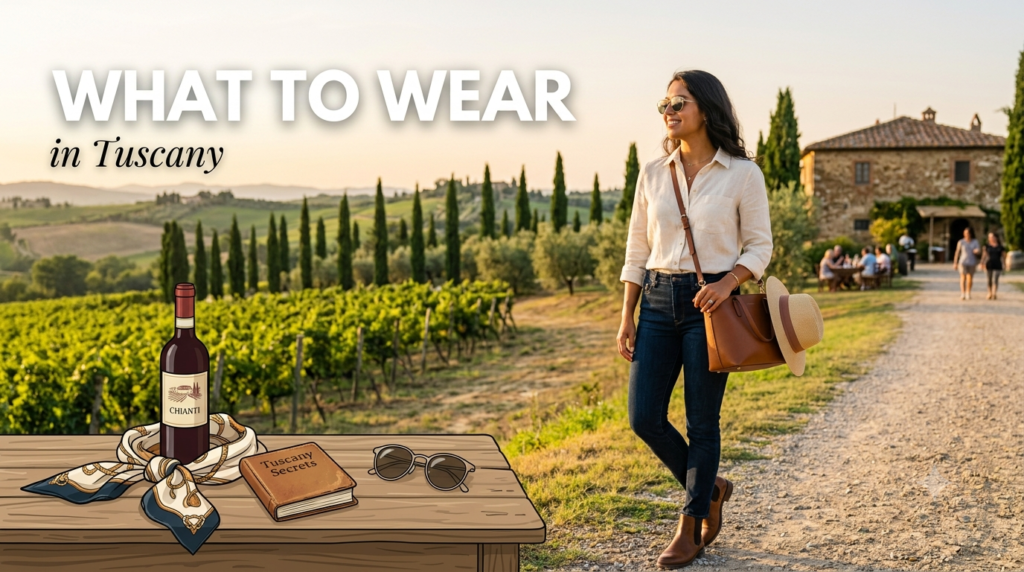
What to wear in Florence Italy?
Wear tailored or smart-casual outfits โ a midi dress, linen trousers, or a wrap dress with leather shoes. Avoid flip flops, sportswear, and overly casual looks. A light blazer is useful for museums and churches.
What shoes are best for Tuscany?
Leather sandals, ballet flats, or comfortable leather-soled shoes are ideal. Florence’s cobblestones are hard on heels, and hilltop towns involve steep uneven paths. Quality flat leather shoes are the most practical and elegant choice.
What should I wear in Tuscany?
Tuscany calls for effortless Italian elegance โ linen dresses, tailored trousers, and quality leather shoes. For church visits, cover shoulders and knees with a scarf. In the countryside, opt for breathable fabrics in warm earth tones like terracotta, olive, and cream.
What to wear in Florence Italy?
Wear tailored or smart-casual outfits โ a midi dress, linen trousers, or a wrap dress with leather shoes. Avoid flip flops, sportswear, and overly casual looks. A light blazer is useful for museums and churches.
What shoes are best for Tuscany?
Leather sandals, ballet flats, or comfortable leather-soled shoes are ideal. Florence’s cobblestones are hard on heels, and hilltop towns involve steep uneven paths. Quality flat leather shoes are the most practical and elegant choice.
Tuscany โ rolling hills, Renaissance art, hilltop towns, and world-class wine โ calls for effortless Italian elegance: understated, quality-focused, and perfect for both city museums and vineyard visits.
What to Wear in Florence
Florence is a style-conscious city. Florentines dress well without being showy:
- Tailored trousers or a midi skirt with a silk or linen blouse
- A smart wrap dress โ versatile for the Uffizi Gallery, lunch, and aperitivo
- Quality leather shoes or ballet flats โ Florence is the world’s leather capital; trainers look out of place
- A light blazer or cardigan โ for churches (shoulders must be covered) and air-conditioned museums
Siena, San Gimignano & Hilltop Towns
Medieval hilltop towns have uneven stone streets and steep climbs. Comfort is essential:
- Comfortable walking sandals or leather trainers
- Breathable linen or cotton dresses and trousers
- A scarf or wrap for churches โ required to cover shoulders and knees
Vineyard Visits & the Chianti Countryside
Wine tours in Chianti, Montepulciano, and Montalcino call for a relaxed-chic aesthetic:
- A flowy midi dress in warm earth tones โ terracotta, olive, cream, or dusty rose
- Low block-heeled sandals or leather mules (vineyards can be gravelly)
- A wide-brim sun hat for outdoor tastings
- A light linen jacket for evening dinners at the estate
Tuscany Colour Palette
Tuscany’s landscape is its own palette โ terracotta rooftops, golden wheat fields, cypress green. Clothes in these shades look stunning:
- Terracotta and burnt orange
- Ivory and warm white
- Sage and olive green
- Dusty rose and blush
- Rich burgundy (perfect for autumn harvest season)
What NOT to Wear in Tuscany
- Shorts in churches โ not permitted. Pack a scarf to cover knees.
- Flip flops in the city โ considered inappropriate in Florence and Siena.
- Activewear as daywear โ Italians don’t wear gym clothes in the city.
Frequently Asked Questions
What should I wear in Tuscany?
Tuscany calls for effortless Italian elegance โ linen dresses, tailored trousers, and quality leather shoes. For church visits, cover shoulders and knees with a scarf. In the countryside, opt for breathable fabrics in warm earth tones like terracotta, olive, and cream.
What to wear in Florence Italy?
Wear tailored or smart-casual outfits โ a midi dress, linen trousers, or a wrap dress with leather shoes. Avoid flip flops, sportswear, and overly casual looks. A light blazer is useful for museums and churches.
What shoes are best for Tuscany?
Leather sandals, ballet flats, or comfortable leather-soled shoes are ideal. Florence’s cobblestones are hard on heels, and hilltop towns involve steep uneven paths. Quality flat leather shoes are the most practical and elegant choice.
What should I wear in Tuscany?
Tuscany calls for effortless Italian elegance โ linen dresses, tailored trousers, and quality leather shoes. For church visits, cover shoulders and knees with a scarf. In the countryside, opt for breathable fabrics in warm earth tones like terracotta, olive, and cream.
What to wear in Florence Italy?
Wear tailored or smart-casual outfits โ a midi dress, linen trousers, or a wrap dress with leather shoes. Avoid flip flops, sportswear, and overly casual looks. A light blazer is useful for museums and churches.
What shoes are best for Tuscany?
Leather sandals, ballet flats, or comfortable leather-soled shoes are ideal. Florence’s cobblestones are hard on heels, and hilltop towns involve steep uneven paths. Quality flat leather shoes are the most practical and elegant choice.
Tuscany โ rolling hills, Renaissance art, hilltop towns, and world-class wine โ calls for effortless Italian elegance: understated, quality-focused, and perfect for both city museums and vineyard visits.
What to Wear in Florence
Florence is a style-conscious city. Florentines dress well without being showy:
- Tailored trousers or a midi skirt with a silk or linen blouse
- A smart wrap dress โ versatile for the Uffizi Gallery, lunch, and aperitivo
- Quality leather shoes or ballet flats โ Florence is the world’s leather capital; trainers look out of place
- A light blazer or cardigan โ for churches (shoulders must be covered) and air-conditioned museums
Siena, San Gimignano & Hilltop Towns
Medieval hilltop towns have uneven stone streets and steep climbs. Comfort is essential:
- Comfortable walking sandals or leather trainers
- Breathable linen or cotton dresses and trousers
- A scarf or wrap for churches โ required to cover shoulders and knees
Vineyard Visits & the Chianti Countryside
Wine tours in Chianti, Montepulciano, and Montalcino call for a relaxed-chic aesthetic:
- A flowy midi dress in warm earth tones โ terracotta, olive, cream, or dusty rose
- Low block-heeled sandals or leather mules (vineyards can be gravelly)
- A wide-brim sun hat for outdoor tastings
- A light linen jacket for evening dinners at the estate
Tuscany Colour Palette
Tuscany’s landscape is its own palette โ terracotta rooftops, golden wheat fields, cypress green. Clothes in these shades look stunning:
- Terracotta and burnt orange
- Ivory and warm white
- Sage and olive green
- Dusty rose and blush
- Rich burgundy (perfect for autumn harvest season)
What NOT to Wear in Tuscany
- Shorts in churches โ not permitted. Pack a scarf to cover knees.
- Flip flops in the city โ considered inappropriate in Florence and Siena.
- Activewear as daywear โ Italians don’t wear gym clothes in the city.
Frequently Asked Questions
What should I wear in Tuscany?
Tuscany calls for effortless Italian elegance โ linen dresses, tailored trousers, and quality leather shoes. For church visits, cover shoulders and knees with a scarf. In the countryside, opt for breathable fabrics in warm earth tones like terracotta, olive, and cream.
What to wear in Florence Italy?
Wear tailored or smart-casual outfits โ a midi dress, linen trousers, or a wrap dress with leather shoes. Avoid flip flops, sportswear, and overly casual looks. A light blazer is useful for museums and churches.
What shoes are best for Tuscany?
Leather sandals, ballet flats, or comfortable leather-soled shoes are ideal. Florence’s cobblestones are hard on heels, and hilltop towns involve steep uneven paths. Quality flat leather shoes are the most practical and elegant choice.
Tuscany โ rolling hills, Renaissance art, hilltop towns, and world-class wine โ calls for effortless Italian elegance: understated, quality-focused, and perfect for both city museums and vineyard visits.
What to Wear in Florence
Florence is a style-conscious city. Florentines dress well without being showy:
- Tailored trousers or a midi skirt with a silk or linen blouse
- A smart wrap dress โ versatile for the Uffizi Gallery, lunch, and aperitivo
- Quality leather shoes or ballet flats โ Florence is the world’s leather capital; trainers look out of place
- A light blazer or cardigan โ for churches (shoulders must be covered) and air-conditioned museums
Siena, San Gimignano & Hilltop Towns
Medieval hilltop towns have uneven stone streets and steep climbs. Comfort is essential:
- Comfortable walking sandals or leather trainers
- Breathable linen or cotton dresses and trousers
- A scarf or wrap for churches โ required to cover shoulders and knees
Vineyard Visits & the Chianti Countryside
Wine tours in Chianti, Montepulciano, and Montalcino call for a relaxed-chic aesthetic:
- A flowy midi dress in warm earth tones โ terracotta, olive, cream, or dusty rose
- Low block-heeled sandals or leather mules (vineyards can be gravelly)
- A wide-brim sun hat for outdoor tastings
- A light linen jacket for evening dinners at the estate
Tuscany Colour Palette
Tuscany’s landscape is its own palette โ terracotta rooftops, golden wheat fields, cypress green. Clothes in these shades look stunning:
- Terracotta and burnt orange
- Ivory and warm white
- Sage and olive green
- Dusty rose and blush
- Rich burgundy (perfect for autumn harvest season)
What NOT to Wear in Tuscany
- Shorts in churches โ not permitted. Pack a scarf to cover knees.
- Flip flops in the city โ considered inappropriate in Florence and Siena.
- Activewear as daywear โ Italians don’t wear gym clothes in the city.
Frequently Asked Questions
What should I wear in Tuscany?
Tuscany calls for effortless Italian elegance โ linen dresses, tailored trousers, and quality leather shoes. For church visits, cover shoulders and knees with a scarf. In the countryside, opt for breathable fabrics in warm earth tones like terracotta, olive, and cream.
What to wear in Florence Italy?
Wear tailored or smart-casual outfits โ a midi dress, linen trousers, or a wrap dress with leather shoes. Avoid flip flops, sportswear, and overly casual looks. A light blazer is useful for museums and churches.
What shoes are best for Tuscany?
Leather sandals, ballet flats, or comfortable leather-soled shoes are ideal. Florence’s cobblestones are hard on heels, and hilltop towns involve steep uneven paths. Quality flat leather shoes are the most practical and elegant choice.
What should I wear in Tuscany?
Tuscany calls for effortless Italian elegance โ linen dresses, tailored trousers, and quality leather shoes. For church visits, cover shoulders and knees with a scarf. In the countryside, opt for breathable fabrics in warm earth tones like terracotta, olive, and cream.
What to wear in Florence Italy?
Wear tailored or smart-casual outfits โ a midi dress, linen trousers, or a wrap dress with leather shoes. Avoid flip flops, sportswear, and overly casual looks. A light blazer is useful for museums and churches.
What shoes are best for Tuscany?
Leather sandals, ballet flats, or comfortable leather-soled shoes are ideal. Florence’s cobblestones are hard on heels, and hilltop towns involve steep uneven paths. Quality flat leather shoes are the most practical and elegant choice.
Tuscany โ rolling hills, Renaissance art, hilltop towns, and world-class wine โ calls for effortless Italian elegance: understated, quality-focused, and perfect for both city museums and vineyard visits.
What to Wear in Florence
Florence is a style-conscious city. Florentines dress well without being showy:
- Tailored trousers or a midi skirt with a silk or linen blouse
- A smart wrap dress โ versatile for the Uffizi Gallery, lunch, and aperitivo
- Quality leather shoes or ballet flats โ Florence is the world’s leather capital; trainers look out of place
- A light blazer or cardigan โ for churches (shoulders must be covered) and air-conditioned museums
Siena, San Gimignano & Hilltop Towns
Medieval hilltop towns have uneven stone streets and steep climbs. Comfort is essential:
- Comfortable walking sandals or leather trainers
- Breathable linen or cotton dresses and trousers
- A scarf or wrap for churches โ required to cover shoulders and knees
Vineyard Visits & the Chianti Countryside
Wine tours in Chianti, Montepulciano, and Montalcino call for a relaxed-chic aesthetic:
- A flowy midi dress in warm earth tones โ terracotta, olive, cream, or dusty rose
- Low block-heeled sandals or leather mules (vineyards can be gravelly)
- A wide-brim sun hat for outdoor tastings
- A light linen jacket for evening dinners at the estate
Tuscany Colour Palette
Tuscany’s landscape is its own palette โ terracotta rooftops, golden wheat fields, cypress green. Clothes in these shades look stunning:
- Terracotta and burnt orange
- Ivory and warm white
- Sage and olive green
- Dusty rose and blush
- Rich burgundy (perfect for autumn harvest season)
What NOT to Wear in Tuscany
- Shorts in churches โ not permitted. Pack a scarf to cover knees.
- Flip flops in the city โ considered inappropriate in Florence and Siena.
- Activewear as daywear โ Italians don’t wear gym clothes in the city.
Frequently Asked Questions
What should I wear in Tuscany?
Tuscany calls for effortless Italian elegance โ linen dresses, tailored trousers, and quality leather shoes. For church visits, cover shoulders and knees with a scarf. In the countryside, opt for breathable fabrics in warm earth tones like terracotta, olive, and cream.
What to wear in Florence Italy?
Wear tailored or smart-casual outfits โ a midi dress, linen trousers, or a wrap dress with leather shoes. Avoid flip flops, sportswear, and overly casual looks. A light blazer is useful for museums and churches.
What shoes are best for Tuscany?
Leather sandals, ballet flats, or comfortable leather-soled shoes are ideal. Florence’s cobblestones are hard on heels, and hilltop towns involve steep uneven paths. Quality flat leather shoes are the most practical and elegant choice.
What should I wear in Tuscany?
Tuscany calls for effortless Italian elegance โ linen dresses, tailored trousers, and quality leather shoes. For church visits, cover shoulders and knees with a scarf. In the countryside, opt for breathable fabrics in warm earth tones like terracotta, olive, and cream.
What to wear in Florence Italy?
Wear tailored or smart-casual outfits โ a midi dress, linen trousers, or a wrap dress with leather shoes. Avoid flip flops, sportswear, and overly casual looks. A light blazer is useful for museums and churches.
What shoes are best for Tuscany?
Leather sandals, ballet flats, or comfortable leather-soled shoes are ideal. Florence’s cobblestones are hard on heels, and hilltop towns involve steep uneven paths. Quality flat leather shoes are the most practical and elegant choice.
Tuscany โ rolling hills, Renaissance art, hilltop towns, and world-class wine โ calls for effortless Italian elegance: understated, quality-focused, and perfect for both city museums and vineyard visits.
What to Wear in Florence
Florence is a style-conscious city. Florentines dress well without being showy:
- Tailored trousers or a midi skirt with a silk or linen blouse
- A smart wrap dress โ versatile for the Uffizi Gallery, lunch, and aperitivo
- Quality leather shoes or ballet flats โ Florence is the world’s leather capital; trainers look out of place
- A light blazer or cardigan โ for churches (shoulders must be covered) and air-conditioned museums
Siena, San Gimignano & Hilltop Towns
Medieval hilltop towns have uneven stone streets and steep climbs. Comfort is essential:
- Comfortable walking sandals or leather trainers
- Breathable linen or cotton dresses and trousers
- A scarf or wrap for churches โ required to cover shoulders and knees
Vineyard Visits & the Chianti Countryside
Wine tours in Chianti, Montepulciano, and Montalcino call for a relaxed-chic aesthetic:
- A flowy midi dress in warm earth tones โ terracotta, olive, cream, or dusty rose
- Low block-heeled sandals or leather mules (vineyards can be gravelly)
- A wide-brim sun hat for outdoor tastings
- A light linen jacket for evening dinners at the estate
Tuscany Colour Palette
Tuscany’s landscape is its own palette โ terracotta rooftops, golden wheat fields, cypress green. Clothes in these shades look stunning:
- Terracotta and burnt orange
- Ivory and warm white
- Sage and olive green
- Dusty rose and blush
- Rich burgundy (perfect for autumn harvest season)
What NOT to Wear in Tuscany
- Shorts in churches โ not permitted. Pack a scarf to cover knees.
- Flip flops in the city โ considered inappropriate in Florence and Siena.
- Activewear as daywear โ Italians don’t wear gym clothes in the city.
Frequently Asked Questions
What should I wear in Tuscany?
Tuscany calls for effortless Italian elegance โ linen dresses, tailored trousers, and quality leather shoes. For church visits, cover shoulders and knees with a scarf. In the countryside, opt for breathable fabrics in warm earth tones like terracotta, olive, and cream.
What to wear in Florence Italy?
Wear tailored or smart-casual outfits โ a midi dress, linen trousers, or a wrap dress with leather shoes. Avoid flip flops, sportswear, and overly casual looks. A light blazer is useful for museums and churches.
What shoes are best for Tuscany?
Leather sandals, ballet flats, or comfortable leather-soled shoes are ideal. Florence’s cobblestones are hard on heels, and hilltop towns involve steep uneven paths. Quality flat leather shoes are the most practical and elegant choice.
Tuscany โ rolling hills, Renaissance art, hilltop towns, and world-class wine โ calls for effortless Italian elegance: understated, quality-focused, and perfect for both city museums and vineyard visits.
What to Wear in Florence
Florence is a style-conscious city. Florentines dress well without being showy:
- Tailored trousers or a midi skirt with a silk or linen blouse
- A smart wrap dress โ versatile for the Uffizi Gallery, lunch, and aperitivo
- Quality leather shoes or ballet flats โ Florence is the world’s leather capital; trainers look out of place
- A light blazer or cardigan โ for churches (shoulders must be covered) and air-conditioned museums
Siena, San Gimignano & Hilltop Towns
Medieval hilltop towns have uneven stone streets and steep climbs. Comfort is essential:
- Comfortable walking sandals or leather trainers
- Breathable linen or cotton dresses and trousers
- A scarf or wrap for churches โ required to cover shoulders and knees
Vineyard Visits & the Chianti Countryside
Wine tours in Chianti, Montepulciano, and Montalcino call for a relaxed-chic aesthetic:
- A flowy midi dress in warm earth tones โ terracotta, olive, cream, or dusty rose
- Low block-heeled sandals or leather mules (vineyards can be gravelly)
- A wide-brim sun hat for outdoor tastings
- A light linen jacket for evening dinners at the estate
Tuscany Colour Palette
Tuscany’s landscape is its own palette โ terracotta rooftops, golden wheat fields, cypress green. Clothes in these shades look stunning:
- Terracotta and burnt orange
- Ivory and warm white
- Sage and olive green
- Dusty rose and blush
- Rich burgundy (perfect for autumn harvest season)
What NOT to Wear in Tuscany
- Shorts in churches โ not permitted. Pack a scarf to cover knees.
- Flip flops in the city โ considered inappropriate in Florence and Siena.
- Activewear as daywear โ Italians don’t wear gym clothes in the city.
Frequently Asked Questions
What should I wear in Tuscany?
Tuscany calls for effortless Italian elegance โ linen dresses, tailored trousers, and quality leather shoes. For church visits, cover shoulders and knees with a scarf. In the countryside, opt for breathable fabrics in warm earth tones like terracotta, olive, and cream.
What to wear in Florence Italy?
Wear tailored or smart-casual outfits โ a midi dress, linen trousers, or a wrap dress with leather shoes. Avoid flip flops, sportswear, and overly casual looks. A light blazer is useful for museums and churches.
What shoes are best for Tuscany?
Leather sandals, ballet flats, or comfortable leather-soled shoes are ideal. Florence’s cobblestones are hard on heels, and hilltop towns involve steep uneven paths. Quality flat leather shoes are the most practical and elegant choice.
What should I wear in Tuscany?
Tuscany calls for effortless Italian elegance โ linen dresses, tailored trousers, and quality leather shoes. For church visits, cover shoulders and knees with a scarf. In the countryside, opt for breathable fabrics in warm earth tones like terracotta, olive, and cream.
What to wear in Florence Italy?
Wear tailored or smart-casual outfits โ a midi dress, linen trousers, or a wrap dress with leather shoes. Avoid flip flops, sportswear, and overly casual looks. A light blazer is useful for museums and churches.
What shoes are best for Tuscany?
Leather sandals, ballet flats, or comfortable leather-soled shoes are ideal. Florence’s cobblestones are hard on heels, and hilltop towns involve steep uneven paths. Quality flat leather shoes are the most practical and elegant choice.
Tuscany โ rolling hills, Renaissance art, hilltop towns, and world-class wine โ calls for effortless Italian elegance: understated, quality-focused, and perfect for both city museums and vineyard visits.
What to Wear in Florence
Florence is a style-conscious city. Florentines dress well without being showy:
- Tailored trousers or a midi skirt with a silk or linen blouse
- A smart wrap dress โ versatile for the Uffizi Gallery, lunch, and aperitivo
- Quality leather shoes or ballet flats โ Florence is the world’s leather capital; trainers look out of place
- A light blazer or cardigan โ for churches (shoulders must be covered) and air-conditioned museums
Siena, San Gimignano & Hilltop Towns
Medieval hilltop towns have uneven stone streets and steep climbs. Comfort is essential:
- Comfortable walking sandals or leather trainers
- Breathable linen or cotton dresses and trousers
- A scarf or wrap for churches โ required to cover shoulders and knees
Vineyard Visits & the Chianti Countryside
Wine tours in Chianti, Montepulciano, and Montalcino call for a relaxed-chic aesthetic:
- A flowy midi dress in warm earth tones โ terracotta, olive, cream, or dusty rose
- Low block-heeled sandals or leather mules (vineyards can be gravelly)
- A wide-brim sun hat for outdoor tastings
- A light linen jacket for evening dinners at the estate
Tuscany Colour Palette
Tuscany’s landscape is its own palette โ terracotta rooftops, golden wheat fields, cypress green. Clothes in these shades look stunning:
- Terracotta and burnt orange
- Ivory and warm white
- Sage and olive green
- Dusty rose and blush
- Rich burgundy (perfect for autumn harvest season)
What NOT to Wear in Tuscany
- Shorts in churches โ not permitted. Pack a scarf to cover knees.
- Flip flops in the city โ considered inappropriate in Florence and Siena.
- Activewear as daywear โ Italians don’t wear gym clothes in the city.
Frequently Asked Questions
What should I wear in Tuscany?
Tuscany calls for effortless Italian elegance โ linen dresses, tailored trousers, and quality leather shoes. For church visits, cover shoulders and knees with a scarf. In the countryside, opt for breathable fabrics in warm earth tones like terracotta, olive, and cream.
What to wear in Florence Italy?
Wear tailored or smart-casual outfits โ a midi dress, linen trousers, or a wrap dress with leather shoes. Avoid flip flops, sportswear, and overly casual looks. A light blazer is useful for museums and churches.
What shoes are best for Tuscany?
Leather sandals, ballet flats, or comfortable leather-soled shoes are ideal. Florence’s cobblestones are hard on heels, and hilltop towns involve steep uneven paths. Quality flat leather shoes are the most practical and elegant choice.
Tuscany โ rolling hills, Renaissance art, hilltop towns, and world-class wine โ calls for effortless Italian elegance: understated, quality-focused, and perfect for both city museums and vineyard visits.
What to Wear in Florence
Florence is a style-conscious city. Florentines dress well without being showy:
- Tailored trousers or a midi skirt with a silk or linen blouse
- A smart wrap dress โ versatile for the Uffizi Gallery, lunch, and aperitivo
- Quality leather shoes or ballet flats โ Florence is the world’s leather capital; trainers look out of place
- A light blazer or cardigan โ for churches (shoulders must be covered) and air-conditioned museums
Siena, San Gimignano & Hilltop Towns
Medieval hilltop towns have uneven stone streets and steep climbs. Comfort is essential:
- Comfortable walking sandals or leather trainers
- Breathable linen or cotton dresses and trousers
- A scarf or wrap for churches โ required to cover shoulders and knees
Vineyard Visits & the Chianti Countryside
Wine tours in Chianti, Montepulciano, and Montalcino call for a relaxed-chic aesthetic:
- A flowy midi dress in warm earth tones โ terracotta, olive, cream, or dusty rose
- Low block-heeled sandals or leather mules (vineyards can be gravelly)
- A wide-brim sun hat for outdoor tastings
- A light linen jacket for evening dinners at the estate
Tuscany Colour Palette
Tuscany’s landscape is its own palette โ terracotta rooftops, golden wheat fields, cypress green. Clothes in these shades look stunning:
- Terracotta and burnt orange
- Ivory and warm white
- Sage and olive green
- Dusty rose and blush
- Rich burgundy (perfect for autumn harvest season)
What NOT to Wear in Tuscany
- Shorts in churches โ not permitted. Pack a scarf to cover knees.
- Flip flops in the city โ considered inappropriate in Florence and Siena.
- Activewear as daywear โ Italians don’t wear gym clothes in the city.
Frequently Asked Questions
What should I wear in Tuscany?
Tuscany calls for effortless Italian elegance โ linen dresses, tailored trousers, and quality leather shoes. For church visits, cover shoulders and knees with a scarf. In the countryside, opt for breathable fabrics in warm earth tones like terracotta, olive, and cream.
What to wear in Florence Italy?
Wear tailored or smart-casual outfits โ a midi dress, linen trousers, or a wrap dress with leather shoes. Avoid flip flops, sportswear, and overly casual looks. A light blazer is useful for museums and churches.
What shoes are best for Tuscany?
Leather sandals, ballet flats, or comfortable leather-soled shoes are ideal. Florence’s cobblestones are hard on heels, and hilltop towns involve steep uneven paths. Quality flat leather shoes are the most practical and elegant choice.
What should I wear in Tuscany?
Tuscany calls for effortless Italian elegance โ linen dresses, tailored trousers, and quality leather shoes. For church visits, cover shoulders and knees with a scarf. In the countryside, opt for breathable fabrics in warm earth tones like terracotta, olive, and cream.
What to wear in Florence Italy?
Wear tailored or smart-casual outfits โ a midi dress, linen trousers, or a wrap dress with leather shoes. Avoid flip flops, sportswear, and overly casual looks. A light blazer is useful for museums and churches.
What shoes are best for Tuscany?
Leather sandals, ballet flats, or comfortable leather-soled shoes are ideal. Florence’s cobblestones are hard on heels, and hilltop towns involve steep uneven paths. Quality flat leather shoes are the most practical and elegant choice.
Tuscany โ rolling hills, Renaissance art, hilltop towns, and world-class wine โ calls for effortless Italian elegance: understated, quality-focused, and perfect for both city museums and vineyard visits.
What to Wear in Florence
Florence is a style-conscious city. Florentines dress well without being showy:
- Tailored trousers or a midi skirt with a silk or linen blouse
- A smart wrap dress โ versatile for the Uffizi Gallery, lunch, and aperitivo
- Quality leather shoes or ballet flats โ Florence is the world’s leather capital; trainers look out of place
- A light blazer or cardigan โ for churches (shoulders must be covered) and air-conditioned museums
Siena, San Gimignano & Hilltop Towns
Medieval hilltop towns have uneven stone streets and steep climbs. Comfort is essential:
- Comfortable walking sandals or leather trainers
- Breathable linen or cotton dresses and trousers
- A scarf or wrap for churches โ required to cover shoulders and knees
Vineyard Visits & the Chianti Countryside
Wine tours in Chianti, Montepulciano, and Montalcino call for a relaxed-chic aesthetic:
- A flowy midi dress in warm earth tones โ terracotta, olive, cream, or dusty rose
- Low block-heeled sandals or leather mules (vineyards can be gravelly)
- A wide-brim sun hat for outdoor tastings
- A light linen jacket for evening dinners at the estate
Tuscany Colour Palette
Tuscany’s landscape is its own palette โ terracotta rooftops, golden wheat fields, cypress green. Clothes in these shades look stunning:
- Terracotta and burnt orange
- Ivory and warm white
- Sage and olive green
- Dusty rose and blush
- Rich burgundy (perfect for autumn harvest season)
What NOT to Wear in Tuscany
- Shorts in churches โ not permitted. Pack a scarf to cover knees.
- Flip flops in the city โ considered inappropriate in Florence and Siena.
- Activewear as daywear โ Italians don’t wear gym clothes in the city.
Frequently Asked Questions
What should I wear in Tuscany?
Tuscany calls for effortless Italian elegance โ linen dresses, tailored trousers, and quality leather shoes. For church visits, cover shoulders and knees with a scarf. In the countryside, opt for breathable fabrics in warm earth tones like terracotta, olive, and cream.
What to wear in Florence Italy?
Wear tailored or smart-casual outfits โ a midi dress, linen trousers, or a wrap dress with leather shoes. Avoid flip flops, sportswear, and overly casual looks. A light blazer is useful for museums and churches.
What shoes are best for Tuscany?
Leather sandals, ballet flats, or comfortable leather-soled shoes are ideal. Florence’s cobblestones are hard on heels, and hilltop towns involve steep uneven paths. Quality flat leather shoes are the most practical and elegant choice.
What should I wear in Tuscany?
Tuscany calls for effortless Italian elegance โ linen dresses, tailored trousers, and quality leather shoes. For church visits, cover shoulders and knees with a scarf. In the countryside, opt for breathable fabrics in warm earth tones like terracotta, olive, and cream.
What to wear in Florence Italy?
Wear tailored or smart-casual outfits โ a midi dress, linen trousers, or a wrap dress with leather shoes. Avoid flip flops, sportswear, and overly casual looks. A light blazer is useful for museums and churches.
What shoes are best for Tuscany?
Leather sandals, ballet flats, or comfortable leather-soled shoes are ideal. Florence’s cobblestones are hard on heels, and hilltop towns involve steep uneven paths. Quality flat leather shoes are the most practical and elegant choice.
Tuscany โ rolling hills, Renaissance art, hilltop towns, and world-class wine โ calls for effortless Italian elegance: understated, quality-focused, and perfect for both city museums and vineyard visits.
What to Wear in Florence
Florence is a style-conscious city. Florentines dress well without being showy:
- Tailored trousers or a midi skirt with a silk or linen blouse
- A smart wrap dress โ versatile for the Uffizi Gallery, lunch, and aperitivo
- Quality leather shoes or ballet flats โ Florence is the world’s leather capital; trainers look out of place
- A light blazer or cardigan โ for churches (shoulders must be covered) and air-conditioned museums
Siena, San Gimignano & Hilltop Towns
Medieval hilltop towns have uneven stone streets and steep climbs. Comfort is essential:
- Comfortable walking sandals or leather trainers
- Breathable linen or cotton dresses and trousers
- A scarf or wrap for churches โ required to cover shoulders and knees
Vineyard Visits & the Chianti Countryside
Wine tours in Chianti, Montepulciano, and Montalcino call for a relaxed-chic aesthetic:
- A flowy midi dress in warm earth tones โ terracotta, olive, cream, or dusty rose
- Low block-heeled sandals or leather mules (vineyards can be gravelly)
- A wide-brim sun hat for outdoor tastings
- A light linen jacket for evening dinners at the estate
Tuscany Colour Palette
Tuscany’s landscape is its own palette โ terracotta rooftops, golden wheat fields, cypress green. Clothes in these shades look stunning:
- Terracotta and burnt orange
- Ivory and warm white
- Sage and olive green
- Dusty rose and blush
- Rich burgundy (perfect for autumn harvest season)
What NOT to Wear in Tuscany
- Shorts in churches โ not permitted. Pack a scarf to cover knees.
- Flip flops in the city โ considered inappropriate in Florence and Siena.
- Activewear as daywear โ Italians don’t wear gym clothes in the city.
Frequently Asked Questions
What should I wear in Tuscany?
Tuscany calls for effortless Italian elegance โ linen dresses, tailored trousers, and quality leather shoes. For church visits, cover shoulders and knees with a scarf. In the countryside, opt for breathable fabrics in warm earth tones like terracotta, olive, and cream.
What to wear in Florence Italy?
Wear tailored or smart-casual outfits โ a midi dress, linen trousers, or a wrap dress with leather shoes. Avoid flip flops, sportswear, and overly casual looks. A light blazer is useful for museums and churches.
What shoes are best for Tuscany?
Leather sandals, ballet flats, or comfortable leather-soled shoes are ideal. Florence’s cobblestones are hard on heels, and hilltop towns involve steep uneven paths. Quality flat leather shoes are the most practical and elegant choice.
Tuscany โ rolling hills, Renaissance art, hilltop towns, and world-class wine โ calls for effortless Italian elegance: understated, quality-focused, and perfect for both city museums and vineyard visits.
What to Wear in Florence
Florence is a style-conscious city. Florentines dress well without being showy:
- Tailored trousers or a midi skirt with a silk or linen blouse
- A smart wrap dress โ versatile for the Uffizi Gallery, lunch, and aperitivo
- Quality leather shoes or ballet flats โ Florence is the world’s leather capital; trainers look out of place
- A light blazer or cardigan โ for churches (shoulders must be covered) and air-conditioned museums
Siena, San Gimignano & Hilltop Towns
Medieval hilltop towns have uneven stone streets and steep climbs. Comfort is essential:
- Comfortable walking sandals or leather trainers
- Breathable linen or cotton dresses and trousers
- A scarf or wrap for churches โ required to cover shoulders and knees
Vineyard Visits & the Chianti Countryside
Wine tours in Chianti, Montepulciano, and Montalcino call for a relaxed-chic aesthetic:
- A flowy midi dress in warm earth tones โ terracotta, olive, cream, or dusty rose
- Low block-heeled sandals or leather mules (vineyards can be gravelly)
- A wide-brim sun hat for outdoor tastings
- A light linen jacket for evening dinners at the estate
Tuscany Colour Palette
Tuscany’s landscape is its own palette โ terracotta rooftops, golden wheat fields, cypress green. Clothes in these shades look stunning:
- Terracotta and burnt orange
- Ivory and warm white
- Sage and olive green
- Dusty rose and blush
- Rich burgundy (perfect for autumn harvest season)
What NOT to Wear in Tuscany
- Shorts in churches โ not permitted. Pack a scarf to cover knees.
- Flip flops in the city โ considered inappropriate in Florence and Siena.
- Activewear as daywear โ Italians don’t wear gym clothes in the city.
Frequently Asked Questions
What should I wear in Tuscany?
Tuscany calls for effortless Italian elegance โ linen dresses, tailored trousers, and quality leather shoes. For church visits, cover shoulders and knees with a scarf. In the countryside, opt for breathable fabrics in warm earth tones like terracotta, olive, and cream.
What to wear in Florence Italy?
Wear tailored or smart-casual outfits โ a midi dress, linen trousers, or a wrap dress with leather shoes. Avoid flip flops, sportswear, and overly casual looks. A light blazer is useful for museums and churches.
What shoes are best for Tuscany?
Leather sandals, ballet flats, or comfortable leather-soled shoes are ideal. Florence’s cobblestones are hard on heels, and hilltop towns involve steep uneven paths. Quality flat leather shoes are the most practical and elegant choice.
What should I wear in Tuscany?
Tuscany calls for effortless Italian elegance โ linen dresses, tailored trousers, and quality leather shoes. For church visits, cover shoulders and knees with a scarf. In the countryside, opt for breathable fabrics in warm earth tones like terracotta, olive, and cream.
What to wear in Florence Italy?
Wear tailored or smart-casual outfits โ a midi dress, linen trousers, or a wrap dress with leather shoes. Avoid flip flops, sportswear, and overly casual looks. A light blazer is useful for museums and churches.
What shoes are best for Tuscany?
Leather sandals, ballet flats, or comfortable leather-soled shoes are ideal. Florence’s cobblestones are hard on heels, and hilltop towns involve steep uneven paths. Quality flat leather shoes are the most practical and elegant choice.
Tuscany โ rolling hills, Renaissance art, hilltop towns, and world-class wine โ calls for effortless Italian elegance: understated, quality-focused, and perfect for both city museums and vineyard visits.
What to Wear in Florence
Florence is a style-conscious city. Florentines dress well without being showy:
- Tailored trousers or a midi skirt with a silk or linen blouse
- A smart wrap dress โ versatile for the Uffizi Gallery, lunch, and aperitivo
- Quality leather shoes or ballet flats โ Florence is the world’s leather capital; trainers look out of place
- A light blazer or cardigan โ for churches (shoulders must be covered) and air-conditioned museums
Siena, San Gimignano & Hilltop Towns
Medieval hilltop towns have uneven stone streets and steep climbs. Comfort is essential:
- Comfortable walking sandals or leather trainers
- Breathable linen or cotton dresses and trousers
- A scarf or wrap for churches โ required to cover shoulders and knees
Vineyard Visits & the Chianti Countryside
Wine tours in Chianti, Montepulciano, and Montalcino call for a relaxed-chic aesthetic:
- A flowy midi dress in warm earth tones โ terracotta, olive, cream, or dusty rose
- Low block-heeled sandals or leather mules (vineyards can be gravelly)
- A wide-brim sun hat for outdoor tastings
- A light linen jacket for evening dinners at the estate
Tuscany Colour Palette
Tuscany’s landscape is its own palette โ terracotta rooftops, golden wheat fields, cypress green. Clothes in these shades look stunning:
- Terracotta and burnt orange
- Ivory and warm white
- Sage and olive green
- Dusty rose and blush
- Rich burgundy (perfect for autumn harvest season)
What NOT to Wear in Tuscany
- Shorts in churches โ not permitted. Pack a scarf to cover knees.
- Flip flops in the city โ considered inappropriate in Florence and Siena.
- Activewear as daywear โ Italians don’t wear gym clothes in the city.