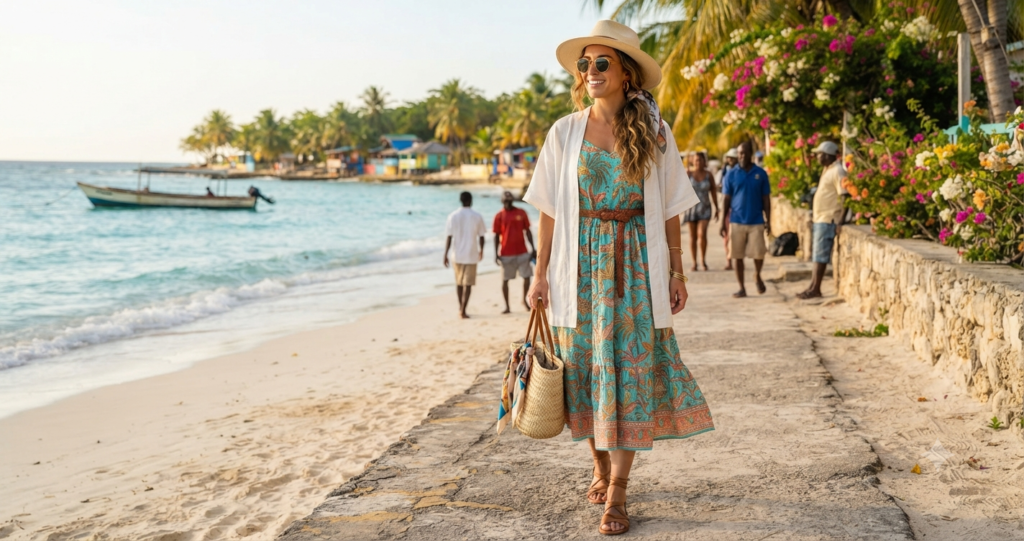
Jamaica is the Caribbean’s most vibrant island — a destination where reggae floats from open bars, jerk chicken perfumes the air on every roadside, and the Blue Mountains rise dramatically above a coastline of extraordinary turquoise water. Whether you’re staying at an all-inclusive resort in Montego Bay, exploring the waterfalls of Ocho Rios, or doing a boutique hotel in Negril’s cliffs, Jamaica has a relaxed, sun-soaked dress code that rewards colour, confidence, and reef-safe swimwear. Here’s your complete guide to what to wear in Jamaica.
Jamaica Weather & When to Visit
Jamaica has a tropical climate with warm temperatures year-round. Dry season (December to April): the best time to visit — temperatures 24–29°C, low humidity, minimal rain, and crystal-clear water. Peak season brings higher prices and more tourists, but the conditions are ideal. Wet season (May to November): warmer (26–32°C) with higher humidity and regular afternoon rain showers. Hurricane season runs June to November, with September and October being highest risk. Early summer (May to June) and late autumn (November to early December) can offer good weather with lower prices before and after peak hurricane months. The water is warm year-round (26–29°C), making Jamaica an excellent swimming destination in any season.
Jamaica Packing List: Clothing
Beach & Resort Days
- 2–3 swimsuits or bikinis — you’ll be in the water or pool every day
- Crocheted or knit beach cover-up dresses in tropical prints (the Jamaica aesthetic is bold colour and reggae-inspired pattern)
- High-waisted beach shorts or linen beach pants
- Sarong or pareo for beach-to-restaurant transitions at resort properties
- Rashguard or surf shirt if spending long days snorkelling or on water excursions
Day Outfits & Sightseeing
- Flowy sundresses in tropical prints or bold colours — works for everything from Dunn’s River Falls to Blue Mountain Coffee farm tours
- Linen shorts and a cotton top for casual exploring
- Lightweight trousers for excursions that involve hiking (Blue Mountains, Cockpit Country)
- A light cardigan or linen layer for air-conditioned tour buses and restaurants
Evening & Dining Out
- A colourful maxi dress or sundress for resort dining — many resort restaurants have a “smart casual” dress code (no beachwear at dinner)
- A dressier option if attending a beach club event or live reggae night
- Wedge sandals or flat strappy sandals for evening — most Jamaica dining is outdoor and on uneven ground
Shoes
- Flip-flops or slide sandals for beach and pool
- Water shoes or grippy sandals for Dunn’s River Falls and waterfall climbing
- Comfortable flat sandals for day excursions and markets
- Wedge sandals or block heels for evening (flat surfaces on resort properties make these manageable)
- Trainers or hiking shoes if visiting the Blue Mountains
Essentials
- Reef-safe SPF 50 sunscreen — Jamaica’s tropical sun is intense; reef-safe formulas protect the marine ecosystems around coral reefs
- Insect repellent (DEET-based for evenings, particularly in garden resort areas)
- Wide-brim hat and UV-protection sunglasses
- Reusable water bottle — stay hydrated in Jamaica’s heat
- Small crossbody bag for excursion days
- Waterproof dry bag for Dunn’s River Falls or river tubing excursions
- Jamaican dollars (JMD) for local markets and roadside jerk stands (USD is widely accepted but JMD gives better rates at markets)
- Portable power bank
- Travel insurance
What to Wear in Jamaica: By Destination
Montego Bay: Resorts, Hip Strip & Rose Hall
Montego Bay (MoBay) is Jamaica’s tourism capital — the arrival hub for most international visitors and the location of many of Jamaica’s most famous all-inclusive resorts (Sandals, Iberostar, Secrets). The Hip Strip (Gloucester Avenue) is the main tourist street: beach bars, souvenir shops, and restaurants facing Doctor’s Cave Beach. Rose Hall Great House, Jamaica’s most famous plantation great house with ghost tour lore, is a short drive east. Dress here is classic Caribbean resort: swimwear at the beach, cover-ups for the strip, and casual-smart for resort dinners.
Negril: Seven Mile Beach & Cliff Diving
Negril is Jamaica’s most relaxed destination — the famous Seven Mile Beach stretching along the west coast, and the dramatic limestone cliffs of the West End where Rick’s Café hosts nightly cliff-diving shows and sunset watching. The atmosphere is laid-back and bohemian compared to Montego Bay’s resort sprawl. Negril’s dress code is the most casual in Jamaica: beach cover-ups, sundresses, and flip-flops are appropriate for virtually every daytime venue. Rick’s Café has a casual dress code; the crowds at sunset make it lively but informal.
Ocho Rios: Dunn’s River Falls & Island Village
Port Antonio: Rafting, Blue Lagoon & Beaches
Port Antonio in northeastern Jamaica is the island’s most beautiful and least-visited destination — a lush, rainy, colonial-era town surrounded by extraordinary natural scenery. The Blue Lagoon (a vivid turquoise inland cove connected to the sea) and the Reach Falls are spectacular. Rio Grande river rafting (bamboo raft, not whitewater) is the classic Port Antonio experience. This area is more off-the-beaten-path and receives more rainfall — pack a lightweight rain jacket alongside your beach wear.
Kingston: Culture, Bob Marley & Blue Mountains
Kingston is Jamaica’s complex, vibrant capital — home to the Bob Marley Museum (his former home and rehearsal studio on Hope Road), the National Gallery, Emancipation Park, and the gateway to the Blue Mountains. Kingston is more urban and less tourist-oriented than the north coast; dress more modestly and practically here. The Blue Mountains (Blue Mountain Peak at 2,256m) require proper hiking gear — moisture-wicking layers, a warm layer for the summit (it’s cold at altitude), and good hiking boots.
One thing that catches visitors off guard: if a Kingston trip includes the Blue Mountains (coffee farm tours, the Blue Mountain Peak hike), pack a warm layer. At 7,000+ feet, pre-dawn starts for the summit hike can be genuinely cold — long sleeves, a light fleece, and closed-toe hiking shoes are worth carrying even though you’ll be sweating in shorts and a tank top down at sea level the same day.
Common Packing Mistakes in Jamaica
- Not packing water shoes: Dunn’s River Falls requires grippy footwear — the rocks are slippery and the climb is steep. Rental shoes are available but worn; bringing your own water shoes ensures comfort and hygiene.
- Forgetting reef-safe sunscreen: Jamaica’s coral reefs are ecologically important and sensitive; standard sunscreen chemicals cause bleaching. Reef-safe formulas are both environmentally responsible and increasingly required or expected at snorkelling sites.
- Wearing jewellery on excursion days: Leave expensive jewellery at your hotel safe on excursion days. Lightweight fashion pieces work well for resort dinners; valuables are unnecessary risk during waterfall climbs or market visits.
- Not accounting for evening mosquitoes: Jamaica’s garden resorts and outdoor restaurants attract mosquitoes at dusk. DEET repellent applied before evening outdoor dining prevents bites and keeps the experience enjoyable.
- Underpacking modest clothing for Kingston: Jamaica’s beach resorts are extremely casual, but Kingston is a city where conservative dress is more appropriate and respectful. Pack at least one outfit of modest trousers and a non-beach top if visiting the capital.
Jamaica FAQ
Is Jamaica safe for tourists?
Jamaica’s resort areas — Montego Bay’s Hotel Zone, Negril’s Seven Mile Beach, and Ocho Rios’s tourist strip — are safe for tourists and well-patrolled. Outside these areas, exercise more caution, particularly in downtown Kingston, certain Montego Bay neighbourhoods, and anywhere at night outside resort property. Stick to organised tours for excursions, use licensed taxis (JUTA), and follow local advice about areas to avoid. The resort areas represent the Jamaica most visitors experience and are genuinely enjoyable and safe.
What is the dress code at Jamaican restaurants?
Most resort restaurants enforce a “smart casual” dress code for dinner — cover-ups, sarongs, and swimwear are not permitted in dining rooms. A sundress, linen trousers with a nice top, or a casual but not beachwear outfit meets this standard. Beach bars and roadside jerk stands have no dress code beyond footwear. For evening dining in Negril or Montego Bay’s better restaurants, a pretty dress and sandals are appropriate.
What Jamaican food should I try?
Jerk chicken and pork (the real deal comes from roadside jerk stands, not resort buffets), ackee and saltfish (the national dish), festival (sweet fried dough served alongside jerk), bammy (cassava flatbread), pepper pot soup, and Blue Mountain coffee (among the world’s finest). Fresh tropical fruits — papaya, mango, star apple — from local markets are extraordinary. For rum, Appleton Estate in the Nassau Valley offers excellent tours and tastings.
What currency is used in Jamaica?
Jamaican dollars (JMD), though USD is widely accepted in tourist areas. Paying in USD is convenient but you’ll typically get a worse rate than exchanging to JMD first. Local markets, roadside food stalls, and small businesses prefer or require JMD. ATMs are available in major tourist areas and dispense JMD. Resort and tourist area prices are almost always quoted in USD.
What should I wear for the Dunn’s River Falls climb?
A swimsuit plus water shoes or old sneakers you don’t mind getting wet — the falls are climbed barefoot-unfriendly wet rock, and flip-flops will come off. Guides sometimes rent water shoes at the entrance, but bringing your own is more comfortable and guaranteed to fit.
Can I wear a bikini off the resort in Jamaica?
Save swimwear for the beach and resort itself. Walking through Montego Bay’s Hip Strip, Negril’s town centre, or any town in a bikini or swim trunks alone reads as very out of place — throw a cover-up, shorts, or a light dress over it once you leave the sand.
Loving the tropical vibe? Check out our tropical vacation outfit ideas for more warm-weather inspiration, or if you are island-hopping the Caribbean, see our Puerto Rico outfit guide too.
Pingback: Jamaica Packing List: Everything You Need for the Perfect Caribbean Holiday - Vacation Style Guide
Pingback: What to Wear in Turks and Caicos: The Ultimate Outfit Guide - Vacation Style Guide
Pingback: What to Wear in Turks and Caicos: Style Guide + Packing Tips
Pingback: What to Wear in Aruba: Outfit Ideas & Packing Tips