
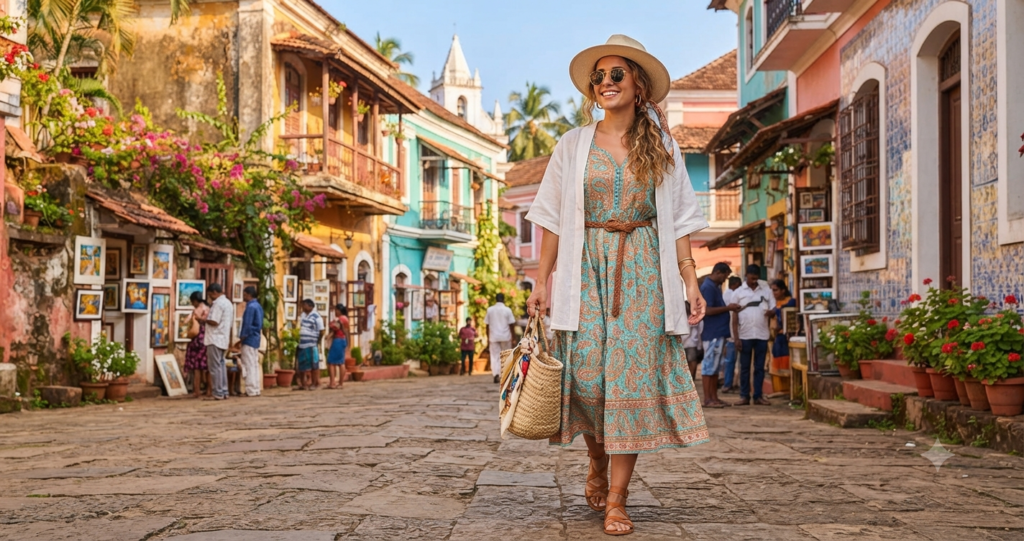
Goa is India’s smallest state and its most famous holiday destination — a place where Portuguese-colonial whitewashed churches stand alongside Hindu temples, where the beaches stretch from the bustling party strips of the north to the tranquil coves of the south, and where the food blends Konkani spice with Portuguese influence in ways that exist nowhere else. Packing for Goa means embracing beach life while respecting India’s cultural context — and knowing which beach belongs to which vibe.
Goa Weather & When to Visit
Goa has two distinct seasons. November to March is peak season — warm (27–32°C), sunny, and dry, with the best beach conditions and an international party atmosphere. This is when Goa is at its most vibrant and most expensive. April to May is shoulder season — increasingly hot and humid before the monsoon arrives. June to September is monsoon season — heavy daily rain, rough seas, many beach shacks and tourist facilities closed, but dramatically beautiful green landscapes and significantly lower prices. October is transitional — rain tapering off, facilities reopening, and the best value of any time to visit.
What to Wear in Goa: Clothing
- 3–4 swimsuits — bikinis are widely worn on tourist beaches (north Goa especially); more conservative swimwear suits south Goa’s quieter beaches
- 4–5 casual sundresses or beach dresses in lightweight cotton or linen
- 2–3 breezy shorts and tops for beach day transitions
- 1–2 long-sleeve linen shirts or blouses for visiting churches, temples, and local markets (cultural modesty)
- 1 pair of linen trousers or a maxi skirt (required for Hindu temples and more conservative inland areas)
- Light evening outfit for beach shack dinners or Panjim restaurant evenings
- Sarong or scarf (multi-purpose: temple entry, beach cover-up, modesty in towns)
- Light rain jacket or packable poncho if visiting October or during shoulder season
Shoes
- Flip-flops or beach sandals (you’ll wear these constantly on north Goa’s beaches)
- Comfortable walking sandals with straps for Panjim (Panaji), Old Goa churches, and market days
- Slip-on sandals or shoes for temple and church visits (shoes removed at Hindu temples)
- Closed-toe shoes or trainers for motorbike riding (strongly advised if renting a scooter)
Essentials
- SPF 50+ sunscreen (Goa’s equatorial sun is intense; reapply constantly)
- Insect repellent with DEET (mosquitoes are active at dusk; malaria risk exists in rural and forested areas)
- After-sun aloe gel
- Anti-nausea medication and stomach remedies (Delhi Belly extends to Goa)
- Water purification tablets or filter bottle (never drink tap water)
- Reusable water bottle
- Portable power bank
- Small anti-theft crossbody for market days and town exploration
- Cash in rupees (beach shacks, local transport, and many restaurants are cash-only)
- Travel insurance with medical cover
What to Wear in Goa: By Area
North Goa: Baga, Calangute & Anjuna
North Goa’s beaches are the most energetic and tourist-focused — beach clubs, water sports, flea markets, and a lively party scene. Bikinis are entirely normal on tourist beaches in north Goa and nobody will bat an eye. Cover up with a casual dress or shorts when leaving the beach for local restaurants and shops — the beach-to-beach-shack transition is fine in a cover-up, but wandering into local markets or town centres in just a swimsuit is culturally inappropriate. Anjuna’s famous Wednesday Flea Market calls for comfortable clothes, flat sandals, and a bag large enough for your purchases.
South Goa: Palolem, Agonda & Colva
South Goa is dramatically quieter than the north — calmer beaches, fewer tourist facilities, and a more relaxed atmosphere. Palolem’s crescent bay is arguably Goa’s most beautiful beach. The south is more conservative than the north; while swimwear is still fine on the beach itself, dress more modestly when walking through local villages and markets. Agonda is particularly quiet and family-oriented — a one-piece or high-waisted bikini blends in better than a micro-bikini at this end of the coast.
Panjim (Panaji) & Old Goa
Panjim is Goa’s capital — a charming, manageable city with Portuguese-heritage architecture in the Fontainhas Latin Quarter, good restaurants, and the famous Goa Carnival parade in February. Dress modestly for Panjim’s streets: a casual sundress or linen blouse with shorts is appropriate. Old Goa’s UNESCO-listed churches (Basilica of Bom Jesus, Se Cathedral) are active Catholic churches; cover shoulders and knees. The Basilica of Bom Jesus houses the preserved remains of St. Francis Xavier — a major pilgrimage site that deserves respectful attire.
Hindu Temples (Mangeshi, Shanta Durga)
Goa’s Hindu temples are beautiful and relatively accessible to visitors. Remove shoes before entering (a sign or row of shoes marks the threshold). Cover shoulders and knees; a cotton sarong tied around the waist is appreciated. Photography rules vary — ask before photographing inside temple sanctuaries. The Mangeshi Temple near Ponda and Shanta Durga Temple are the most accessible for day trippers from the coast.
Scooter & Motorbike Rental
Renting a scooter is the classic way to explore Goa’s coast and hinterland. Wear a helmet (provided by rental operators), closed-toe shoes or sandals with straps (not flip-flops — your feet drag on Indian roads), and trousers or jeans rather than a short skirt for safety. Goa’s roads are generally manageable but require full attention — potholes, cows, and other scooters are constant hazards. International visitors need a valid driving licence and ideally international driving permit.
Common Packing Mistakes for Goa
- Wearing swimwear off the beach in local areas: Tourist beach areas are tolerant of beachwear; local markets, temples, and inland villages are not. Always carry a cover-up and change out of your swimsuit before exploring away from the beach.
- Not packing insect repellent: Mosquitoes are active at dusk throughout Goa. Malaria risk exists in forested and rural areas, especially during and after monsoon. DEET-based repellent applied every evening is essential.
- Drinking tap water: Never drink tap water in Goa. Use bottled water, a filter bottle, or water from sealed dispensers at your accommodation. This extends to ice in drinks — only accept ice from tourist-facing establishments with purified water systems.
- No cash in rupees: Beach shacks, autorickshaws, local markets, and many restaurants are cash-only. ATMs are available in tourist areas but can run out on busy weekends — carry a day’s worth of rupees at all times.
- Overpacking shoes: In Goa, you live in flip-flops. Sandals for temples and towns, trainers if you’re scootering. Three pairs covers everything.
Goa FAQ
Is bikini-wearing acceptable in Goa?
On tourist beaches in north and south Goa — yes, bikinis are entirely normal and widely worn. The key is to cover up when leaving the beach area: wear a sundress or shorts for beach shacks, local restaurants, and markets. In local villages, inland areas, and around temples and churches, dress modestly with covered shoulders and knees.
Is Goa safe for solo female travellers?
Goa is generally considered one of India’s safer destinations for solo female travellers, due to its long history of international tourism and more relaxed cultural attitudes than many other Indian states. That said, standard precautions apply: avoid walking alone after dark on deserted beaches, use registered taxis or apps rather than unmarked autos at night, and stay in well-reviewed accommodation. Goa has also had incidents of drink spiking in clubs — be cautious with drinks in party venues.
What’s the dress code at Goa’s churches?
Goa’s Catholic churches (Basilica of Bom Jesus, Se Cathedral) are active places of worship — cover shoulders and knees. Many are also UNESCO World Heritage Sites; the combination of religious respect and cultural significance makes modest dress particularly important here.
North Goa or South Goa — which is better for first-timers?
It depends entirely on what you want. North Goa for party atmosphere, beach clubs, flea markets, and social scenes (Baga, Anjuna, Vagator). South Goa for peaceful beaches, natural beauty, and a slower pace (Palolem, Agonda). Many visitors split their time between both — 3–4 nights north, 3–4 nights south gives you the best of each.


Pingback: Goa Packing List: Everything You Need for India's Beach Paradise - Vacation Style Guide