
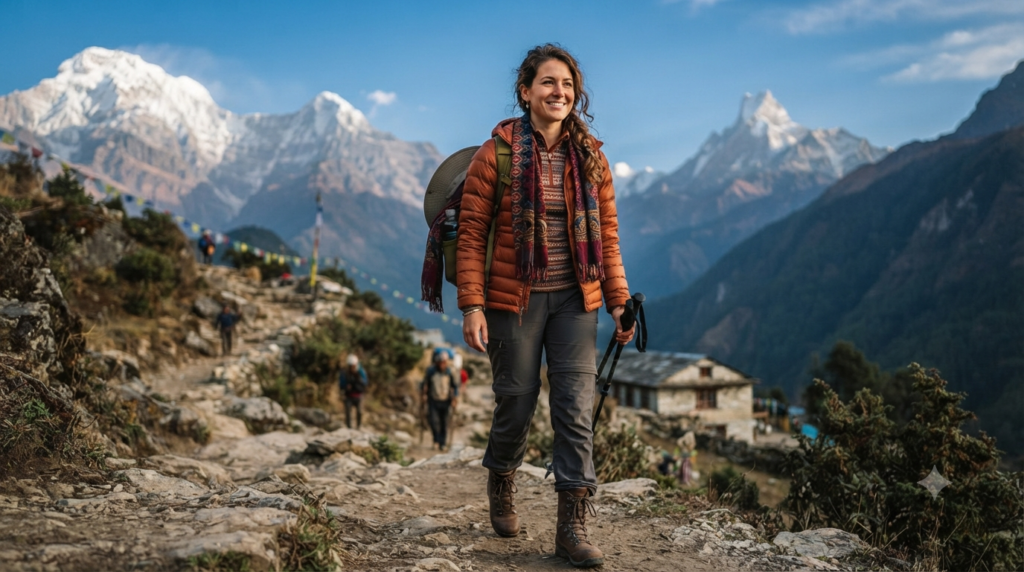
Nepal is a land of extraordinary contrasts — ancient Hindu temples, towering Himalayan peaks, lush subtropical jungles, and vibrant festival culture. Knowing what to wear in Nepal means preparing for everything from bustling Kathmandu streets to high-altitude trekking, hot lowland jungles, and culturally conservative religious sites. This guide covers it all.
Nepal’s Climate & Regions
Nepal’s climate varies enormously by altitude and season. Kathmandu Valley (1,400m) has warm days and cool nights; spring (March–May) and autumn (September–November) are ideal with clear skies. The Terai lowlands (Chitwan, Bardia) are hot and humid. The Himalayas experience extreme cold, particularly above 4,000m. Monsoon season (June–August) brings heavy rain to most of Nepal except the rain-shadow areas north of the Himalayas (Upper Mustang, Dolpo).
What to Wear in Kathmandu
Kathmandu is a culturally conservative city steeped in Hindu and Buddhist tradition. While it’s increasingly modern and tourist-friendly, respectful attire makes a positive impression and is required at many temples.
- Everyday wear: Lightweight trousers, jeans, or midi skirts paired with tops that cover the shoulders. Nepal produces beautiful handwoven cotton clothing — picking up local garments in Thamel is both ethical and practical.
- At temples and stupas (Pashupatinath, Boudhanath, Swayambhunath): Shoulders and knees must be covered. Carry a lightweight scarf to wrap around bare shoulders if needed. Remove shoes before entering temple interiors.
- Layering: Kathmandu mornings and evenings can be cold (10°C in October). A medium-weight jacket or cardigan is useful year-round.
- Footwear: Comfortable walking shoes — Thamel’s cobblestone streets and the steep paths around stupas demand supportive footwear. Sandals that slip on/off easily are useful for repeated shoe removal at temples.
💡 Book temple tours, cultural experiences, and day trips from Kathmandu through Viator’s Nepal experiences.
What to Wear Trekking in Nepal (Everest Base Camp, Annapurna)
Nepal’s Himalayan treks are among the world’s most famous. The Everest Base Camp trek reaches 5,364m; the Annapurna Circuit crosses passes above 5,400m. Layering is your best friend.
- Base layer: Moisture-wicking thermal top and bottoms. Merino wool is ideal — warm when wet, odour-resistant, and comfortable over long days.
- Mid-layer: A warm fleece or insulated jacket for evenings at teahouses, which can get very cold at altitude.
- Outer shell: Waterproof, windproof rain jacket and waterproof trousers. Mountain weather changes rapidly.
- Trekking trousers: Convertible zip-off trousers for variable temperatures. Avoid heavy denim — it takes too long to dry.
- Down jacket: For above 3,500m and at night. A packable 600-800 fill down jacket is essential for EBC and Annapurna treks.
- Trekking boots: Waterproof, ankle-supporting, already broken in. This is not a place to test new footwear.
- Warm hat and gloves: Above 4,000m you’ll need both even in spring. Woollen or fleece hat; windproof gloves.
- Thermal socks: Merino wool, at least 4 pairs. Blisters end treks prematurely.
- Trekking poles: Dramatically reduce knee impact on Nepal’s steep descents.
- Sunglasses: CE-rated UV400 glacier glasses — snow reflection at altitude causes snow blindness.
- Sun protection: High-altitude sun is intense. SPF 50+ sunscreen, UV-protective lip balm.
What to Wear in Chitwan and the Terai
Chitwan National Park (jungle safaris, rhino spotting, elephant encounters) is hot, humid, and buggy — particularly from May to September. Dress accordingly.
- Lightweight long trousers and long-sleeved shirts in neutral colours (olive, khaki, grey)
- DEET insect repellent is essential — mosquitoes carry malaria and dengue in the Terai
- Waterproof sandals or light jungle boots for canoe trips and walking safaris
- Quick-dry fabric — you’ll sweat and may get caught in monsoon downpours
What to Wear in Pokhara and the Annapurna Foothills
Pokhara has a completely different feel from Kathmandu. It’s a laid-back lakeside town built around Phewa Lake, with a much more relaxed dress code in the tourist strip around Lakeside. Shorts, tank tops, and swimwear near the lake are common and unremarkable, though it’s still polite to cover up a bit more if you wander into the older residential streets away from the tourist area. Pack a light dress or breathable trousers for evenings at the lakeside restaurants, plus sandals you can slip on and off easily for the many small guesthouses and cafes.
Pokhara is also the launch point for the Annapurna Circuit and Annapurna Base Camp treks, so most visitors pass through twice: once in trekking gear on the way up, and again in far more casual clothes on the way back down. It’s worth packing one “reward outfit” — something comfortable and non-technical — to change into once the trek is over, since laundering trekking clothes right away is one of the first things most people want to do in Pokhara.
Tea House Trekking Etiquette and Packing Tips
If your trek includes overnight stays in tea houses (the family-run lodges along routes like Everest Base Camp and Annapurna), a few packing habits make the experience smoother. Laundry service is rare and expensive above lower elevations, so pack enough base layers and socks to go several days between washes, and bring a small bag of travel detergent if you plan to hand-wash anything in a sink. Tea house dining rooms are shared spaces, often heated by a single stove, so a warm layer you can throw on over trekking clothes in the evening is more useful than a full change of outfit.
Bedrooms in tea houses are usually unheated, even at high altitude, so a warm set of sleepwear (thermal top and bottoms) makes a real difference to sleep quality. Slip-on shoes or sandals are worth packing separately from your trekking boots, since boots come off at the door in most lodges and you’ll want something easy for trips to the shared bathroom at night. Finally, pack a headlamp rather than a phone flashlight — tea houses often run on limited solar or generator power, and hallways and outdoor bathrooms are typically unlit after dark.
Nepal Packing Essentials
- Lightweight scarf (temple modesty cover, sun protection, dust mask)
- High-SPF sunscreen — essential at altitude
- Insect repellent (for Terai and lowland areas)
- Altitude sickness medication (Diamox) — consult your doctor
- Trekking poles (rentable in Kathmandu)
- Reusable water bottle with filter (reduce plastic waste on trails)
- Headlamp (for early summit starts and teahouse power cuts)
- Dry bags for electronics (unexpected rain, river crossings)
Also see: What to Wear in Japan, What to Wear in India, and What to Wear in Bhutan.
Frequently Asked Questions: What to Wear in Nepal
Is there a dress code for visiting temples in Nepal?
Yes. At Hindu temples, you must cover shoulders and knees. Women may be required to cover their heads at some temples. Non-Hindus are not permitted inside certain inner sanctuaries (such as Pashupatinath’s main temple). Always remove shoes before entering any temple or monastery.
What should I wear for the Everest Base Camp trek?
A full layering system: moisture-wicking base layers, fleece mid-layer, down jacket, and waterproof hardshell. Waterproof trekking boots, warm hat, gloves, and UV-protective sunglasses. Many items can be rented or bought cheaply in Kathmandu’s Thamel district if you want to travel light.
Can I buy trekking gear in Kathmandu?
Yes — Thamel is packed with trekking gear shops selling both genuine brands and local replicas at low prices. If you’re doing a serious high-altitude trek, invest in quality gear (base layers and boots especially), but budget items work fine for lower-altitude teahouse treks.
What is appropriate to wear in Nepal as a woman?
Loose, comfortable clothing that covers shoulders and knees for city and temple visits. For trekking, standard trekking attire (trousers, long-sleeved shirts) is perfectly acceptable. Very revealing clothing is inappropriate and may attract unwanted attention, particularly outside tourist areas.
What is the best time of year to visit Nepal for trekking?
October to November and March to April are considered the best trekking seasons. Skies are clearest in autumn (October-November) with stable weather and good mountain views, while spring (March-April) brings blooming rhododendrons and milder temperatures at lower elevations. The monsoon season (June-September) brings heavy rain and leech-prone trails at lower altitudes, and December-February treks require serious cold-weather gear due to snow at higher elevations.
Do I need different clothes for Kathmandu versus Pokhara?
Not dramatically different, but Pokhara’s Lakeside area is more relaxed than most of Kathmandu, so you can get away with more casual, revealing clothing there. Kathmandu, especially around temples and in the older parts of the city, calls for more coverage. Packing versatile pieces that work for both — like lightweight trousers and layerable tops — means you won’t need to pack separately for each city.
Pingback: Nepal Packing List: Kathmandu, Everest Base Camp & Trekking Essentials - Vacation Style Guide