
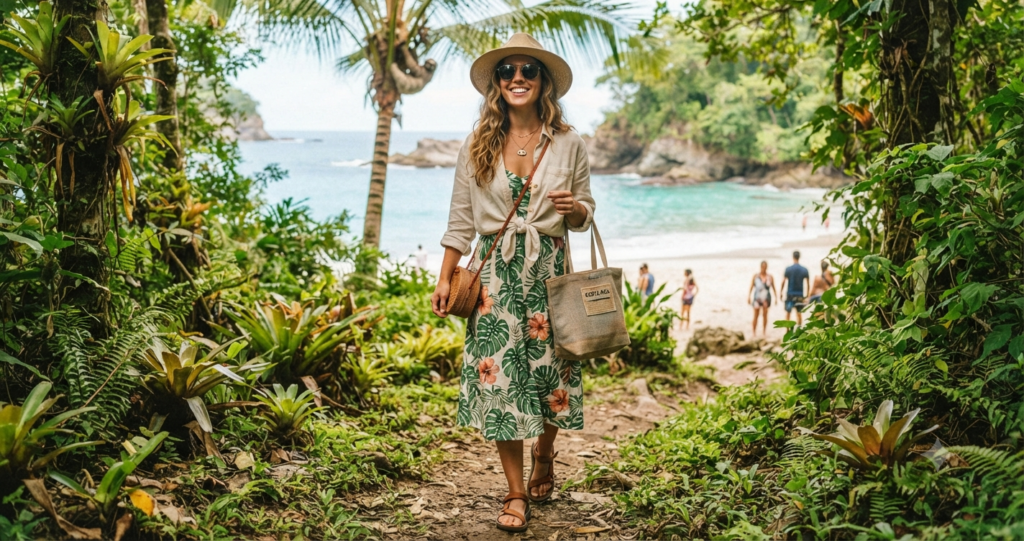
Costa Rica packs more ecosystems into a single trip than almost anywhere else on the planet. In one week you might hike volcanic rainforest in Arenal, walk canopy suspension bridges in Monteverde’s cloud forest, surf the Pacific swell in Tamarindo, and snorkel off the white-sand beaches of Manuel Antonio. Each environment demands genuinely different clothing — and getting this wrong is the most common mistake first-time visitors make.
This guide breaks down exactly what to wear in Costa Rica by region, activity, and season, so you pack the right things and leave everything unnecessary at home.
Understanding Costa Rica’s Climate Zones
- Pacific Coast (Tamarindo, Nosara, Manuel Antonio, Jacó): Hot and sunny in dry season (December–April). Hot, humid, and rainy in green season (May–November). Temperatures 28–35°C year-round.
- Caribbean Coast (Puerto Viejo, Cahuita, Tortuguero): Warm and rainy almost year-round. Humidity consistently high. Temperatures 25–30°C.
- Arenal Volcano / La Fortuna: Hot near the lake (30°C), but rain arrives reliably most afternoons year-round. A waterproof layer is essential regardless of season.
- Monteverde Cloud Forest: At 1,440 metres elevation, Monteverde averages 16–18°C with persistent mist and frequent rain. Pack accordingly — this is the most common Costa Rica packing mistake.
- Guanacaste / Nicoya Peninsula: The driest region in Costa Rica. Hot and sunny in dry season. Ideal beach and surfing conditions.
What to Wear at Costa Rica’s Beaches
Everyday Beach Outfits
- Bikinis and swimwear — fully accepted at all beach towns and resorts
- Board shorts or bikini bottoms with a rash guard for surfing — the Pacific sun is intense and a rash guard prevents serious sunburn and chafing from the surfboard
- Lightweight sundresses, shorts, and casual tops for beach towns like Tamarindo and Santa Teresa
- A sarong or linen cover-up for transitioning between beach and restaurant
Beach Town Evenings
Beach towns in Costa Rica are laid-back but people do dress up slightly for dinner. A simple midi dress, linen trousers with a top, or a breezy jumpsuit is perfect. Flip-flops are fine for most restaurants; only the most upscale resort dining rooms expect closed-toe shoes.
What to Wear in the Rainforest (Arenal, La Fortuna)
- Moisture-wicking long-sleeve shirt — Doubles as sun protection and insect protection in the jungle. A lightweight synthetic or bamboo fabric dries quickly.
- Quick-dry hiking trousers or shorts — Quick-dry ripstop trousers are ideal.
- Waterproof hiking boots with ankle support — Trails near Arenal can be steep, slippery, and wet. Sandals are not appropriate.
- Packable waterproof jacket — Keep this accessible at all times. Arenal rain comes quickly and heavily.
- Swimwear underneath everything — You’ll likely visit the hot springs in the evening. Wearing your swimsuit under your clothes means you’re ready without needing to change.
What to Wear in Monteverde Cloud Forest
Failing to pack for Monteverde is the most common Costa Rica packing mistake. Every year, tourists arrive in tropical beach clothes and spend two miserable days in the cold mist. Monteverde needs:
- A midweight fleece or down jacket — Essential. Not a light fleece — something that would keep you warm on a cool autumn evening at home.
- Long-sleeve base layers — Worn under your fleece for morning suspension bridge walks when it’s coldest.
- Full-length quick-dry trousers — Not shorts. The temperature and mist make bare legs uncomfortable.
- Waterproof hiking boots — The suspension bridges and forest trails are consistently damp.
- Waterproof outer jacket — The mist and light rain in the cloud forest are near-constant in the morning.
What to Wear for Costa Rica’s Adventure Activities
Zip-Lining
Closed-toe shoes are mandatory (sandals are prohibited), clothing must fit snugly enough to be safely harnessed, and long hair must be tied back securely. Wear fitted quick-dry shorts or trousers, a secure sports bra, and trainers or hiking boots.
White Water Rafting
On the Pacuare River or the Reventazón, you will get completely soaked. Wear quick-dry shorts and a rash guard or moisture-wicking t-shirt. Footwear must have a heel strap. Bring a dry bag for your phone, camera, and spare clothes.
Waterfall Hiking (La Fortuna, Nauyaca, Montezuma)
Wear waterproof hiking boots — trails to Costa Rica’s best waterfalls involve river crossings and slippery rock. Quick-dry shorts or trousers, a moisture-wicking top, and a waterproof layer in your pack. You’ll likely swim in the pool at the base of the falls, so wear your swimsuit underneath.
Snorkelling and Diving (Manuel Antonio, Drake Bay, Caño Island)
A rash guard with UV50+ protection is valuable here. Tour operators usually provide wetsuits for cooler Pacific diving spots. Wear quick-dry shorts and a rash guard as your base layer.
ATV and Horseback Tours
Closed-toe shoes are required. Long trousers protect your legs. A light waterproof jacket is useful as ATV tours often cover varied terrain.
Wet Season vs Dry Season: What Changes
Dry Season (December–April): Pacific Coast
Peak tourist season with reliably sunny and warm weather. Bring your full beach wardrobe, but don’t skip the rain jacket — Arenal and Monteverde still need it. Prioritise breathable fabrics and SPF.
Green / Wet Season (May–November)
Mornings are often sunny; rain typically arrives in the afternoon. The landscape is vivid emerald green and the crowds are smaller. Pack a packable waterproof jacket as a daily carry. Quick-dry everything becomes even more important.
What NOT to Wear in Costa Rica
- Cotton for hiking or outdoor activities — Cotton absorbs moisture and takes hours to dry in humidity. Use synthetics or bamboo fabrics.
- Sandals on jungle trails — Roots, rocks, slippery mud, and insects make open footwear genuinely risky on most Costa Rica trails.
- All-beach wardrobe for a mixed itinerary — If your trip includes Monteverde, cloud forest clothing is not optional.
- Bright colours in wildlife areas — For wildlife spotting tours, neutral, muted colours (olive, khaki, beige, dark green) help you blend into the environment.
- Expensive or fragile items — Humidity, rain, mud, and salt water all take their toll.
Costa Rica Essentials
- DEET insect repellent (30%+) — Essential everywhere, critical in lowland jungle areas.
- Reef-safe SPF 50+ sunscreen — Required near Caño Island and other protected reefs.
- Dry bags (multiple sizes) — A large dry bag for your daypack contents and a smaller waterproof phone case are essential.
- Microfibre towels — Quick-drying and compact. You’ll use them constantly.
- Reusable water bottle — Tap water is safe to drink in most Costa Rican cities and towns.
Frequently Asked Questions: What to Wear in Costa Rica
What should women wear in Costa Rica?
Costa Rica is relaxed and casual with no religious dress codes. At the beach, swimwear is completely acceptable in town and at restaurants near the coast. For inland adventures, prioritise quick-dry, moisture-wicking fabrics over cotton. Pack a fleece and waterproof jacket if your itinerary includes Monteverde — the temperature difference from the coast is dramatic.
Do I need waterproof hiking boots for Costa Rica?
Yes, if your itinerary includes any jungle trails, waterfall hikes, volcano hikes, or Monteverde. Trails are frequently wet, rooted, and slippery. Regular trainers soak through quickly. Waterproof hiking boots with grip soles will protect your feet and dramatically improve your experience.
Is Costa Rica conservative about dress?
No — Costa Rica is a secular country with no significant religious dress codes for tourists. Bikinis and beach attire are fully acceptable in all beach towns. The only dress considerations are practical: cover up for jungle activities (bugs and sun), and dress slightly smarter for upscale resort restaurants in the evenings.
What should I wear zip-lining in Costa Rica?
Wear closed-toe shoes (trainers or hiking boots — sandals are prohibited), fitted clothing that can be safely harnessed, and tie long hair back securely. A light moisture-wicking shirt and quick-dry shorts or trousers are ideal.
What is the best month to visit Costa Rica?
December to April (dry season) on the Pacific Coast for the most predictable sunshine. May to November (green season) has lush landscapes, fewer tourists, and lower prices — morning weather is often still good.
See our complete Costa Rica packing list for women for the full checklist of everything to bring.
💡 Book Costa Rica zip-lining, volcano tours, and rafting adventures through Viator Costa Rica, and compare eco-lodges and beach resorts on Booking.com.
Doing Costa Rica solo? Our solo travel outfits guide for women has adventure-ready packing lists and practical outfit tips for solo female travellers exploring nature destinations.
Costa Rica Packing List
Costa Rica is one of the world’s great ecotourism destinations — active volcanoes, cloud forests, Pacific and Caribbean coastlines, sloths, sea turtles, and some of the most biodiverse jungle on earth. Packing for Costa Rica means dressing for intense heat and humidity on the coast, cooler cloud forest temperatures at altitude, and activities that range from surfing to zip-lining to wildlife night walks. This Costa Rica packing list covers every scenario.
Costa Rica Weather: Dry vs Green Season
- Dry Season (December–April): 26–32°C on the Pacific coast. The most popular time to visit — sunny, clear skies, easier road access. Peak season December–January.
- Green Season (May–November): 26–32°C with daily rainfall. The jungle is lush and vibrant. Prices are significantly lower, crowds thinner, and the green season is the best time to see certain wildlife (sea turtles nesting August–October). Rain is usually afternoon showers rather than all-day downpours.
- Cloud Forests (Monteverde, Santa Elena): Cool and misty year-round, 15–22°C. Always pack warm layers for cloud forest visits regardless of when you travel.
Costa Rica Packing List for Women
Clothing
- 3–4 lightweight moisture-wicking tops (quick-dry fabrics are more practical than linen for activities)
- 1–2 casual sundresses (for beach days and relaxed evenings)
- 1 pair of lightweight hiking or walking trousers (convertible zip-off styles are practical)
- 1 pair of shorts
- 1 long-sleeved lightweight layer (sun protection for activities; warmth at higher altitudes)
- 1 mid-layer fleece or warm sweatshirt (essential for Monteverde cloud forest and cooler mountain areas)
- 1 waterproof rain jacket (non-negotiable — rain can happen any time)
- 2–3 swimsuits (for Pacific beaches, Caribbean coast, waterfall swims, and hotel pools)
- Swimsuit cover-up
Shoes — Pack for Multiple Terrains
- Waterproof hiking sandals (Chacos or similar): The Costa Rica essential. They handle muddy jungle trails, river crossings, and rocky beach entries. Many experienced Costa Rica travellers swear by waterproof sandals over hiking boots for lower-altitude trails.
- Waterproof hiking shoes or boots: For muddy cloud forest trails (Monteverde gets seriously muddy) and multi-day trekking. Ankle support matters on uneven terrain.
- Flip flops: For beach and hostel use only — not for jungle walks.
Activity & Wildlife Essentials
- DEET insect repellent (essential — mosquitoes, sand flies, and no-see-ums are present; dengue, Zika, and chikungunya risk exists)
- SPF 50+ sunscreen (reef-safe for snorkelling and beach areas)
- Dry bag or waterproof backpack (river crossings, boat rides, and sudden downpours make waterproofing essential)
- Head torch or small torch for night wildlife walks
- Binoculars (wildlife spotting — toucans, monkeys, sloths, and birds are everywhere)
- Reusable water bottle with filter
- Lightweight quick-dry towel
What to Wear: Costa Rica Activity Guide
Arenal Volcano & La Fortuna
Hiking trails around Arenal require good waterproof footwear (the paths can be muddy after rain) and layers for potential afternoon showers. The Arenal hot springs (Baldi, Tabacon) are a highlight — bring a swimsuit and a quick-dry towel. Evening temperatures at Arenal drop to 18–22°C — a light layer for the evening is needed.
Monteverde Cloud Forest
Always bring warm layers here — the cloud forest is cool (15–20°C), misty, and can feel very different from the lowland coast. A waterproof jacket is non-negotiable; the forest is wet. Waterproof hiking boots with good grip for muddy trails. A head torch for early morning and evening wildlife walks (quetzals are most active at dawn).
Manuel Antonio National Park
This is Costa Rica’s most visited park and combines jungle wildlife with beautiful white-sand beaches. Swimsuit under lightweight clothing — you’ll swim between wildlife watching. Waterproof sandals for the beach entrances and river crossings. Apply insect repellent before the trail and sun protection for the beach.
Pacific Beaches (Tamarindo, Nosara, Santa Teresa)
Surf-casual: swimsuits, board shorts, sundresses, and sandals. Costa Rica’s beach towns are relaxed and the beach-to-restaurant transition happens in cover-ups. Surfing requires a rash guard for sun protection; rentable at every beach town.
Common Costa Rica Packing Mistakes
- Not bringing a waterproof jacket: Even in dry season, afternoon showers can arrive. A quality packable rain jacket is the single most useful item in Costa Rica.
- Packing regular hiking shoes for cloud forest: Ordinary hiking shoes become waterlogged and useless in Monteverde mud within an hour. Waterproof trail shoes or rubber boots (rentable in Monteverde) are the answer.
- Forgetting insect repellent: Costa Rica’s insects are numerous and some carry disease. DEET-based repellent is the most effective option; apply to all exposed skin before outdoor activities.
- Overpacking: Costa Rica’s activities make lighter travel essential. You’ll be moving between destinations on bumpy roads with bag-in-bag-out transfers. A 40L pack handles two weeks in Costa Rica more comfortably than a suitcase.
Costa Rica Packing List FAQ
Do I need hiking boots for Costa Rica?
It depends on your itinerary. For cloud forest and multi-day trekking: yes, waterproof hiking boots with ankle support are valuable. For beach and lower-altitude jungle trails: waterproof hiking sandals (Chacos, Keens) handle most terrain. Rubber boots can be rented at most adventure parks and cloud forest entrances for $2–5.
What vaccinations do I need for Costa Rica?
No mandatory vaccinations, but Hepatitis A, Typhoid, and up-to-date routine vaccines are recommended. Yellow fever vaccine is required if arriving from a yellow fever country. Malaria prophylaxis may be recommended for the Caribbean lowlands and Osa Peninsula; consult a travel health clinic before departure.
Is Costa Rica expensive?
Costa Rica is one of Central America’s more expensive destinations — higher than neighbouring Nicaragua or Guatemala, comparable to parts of Europe for mid-range travel. Eco-lodges, tour costs, and national park entrance fees add up. Green season prices are 20–40% lower than dry season. Cooking your own food and staying in local guesthouses rather than eco-lodges significantly reduces costs.


Pingback: Costa Rica Packing List for Women: What to Pack for Costa Rica - Vacation Style Guide
Pingback: Solo Travel Outfits for Women: The Complete Packing Guide - Vacation Style Guide