
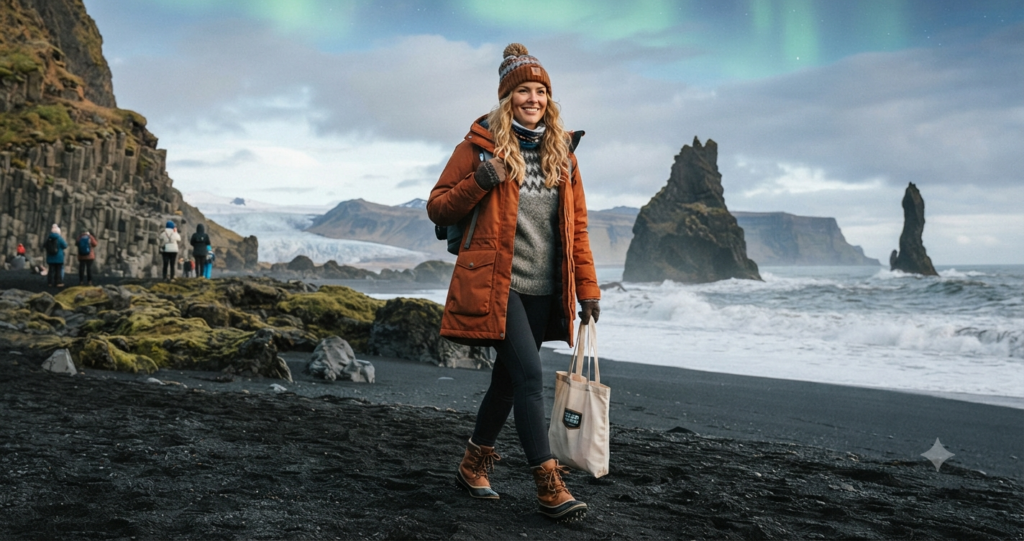
Wear thermal base layers, a waterproof insulated jacket, wool sweaters, waterproof hiking boots, and waterproof trousers. Layering is essential — Iceland’s weather changes rapidly. Pack gloves, a warm hat, and a buff or neck gaiter year-round.
Iceland has one of the most unpredictable climates on Earth — and that’s exactly what makes packing for it such a challenge. On a single summer day in Reykjavik, you might wake up to sunshine, get caught in horizontal sleet by lunchtime, and find yourself sweating through a fleece by afternoon. I’ve watched first-time visitors shiver through whale watching tours in cotton hoodies and sandals because they underestimated just how ruthlessly the wind can cut across an open lava field.
The good news? Once you understand Iceland’s layering logic, packing becomes straightforward — and you’ll be comfortable no matter what the weather throws at you.
Iceland’s Climate by Season
Summer (June–August) averages 10–15°C, occasionally hitting 20°C on rare sunny days. The midnight sun means 24 hours of daylight, which is magical but disorienting — pack a sleep mask. Reykjavik in July actually feels quite pleasant if you stay sheltered from the wind, but the moment you drive out to the highlands or stand on a black sand beach like Reynisfjara, the temperature drops noticeably and the wind picks up.
Autumn (September–October) brings your first real Northern Lights opportunities and dramatic waterfalls fed by melting glaciers. Temperatures hover between 5–10°C, rain is frequent, and the days shorten quickly. This is one of the most beautiful times to visit — the moss turns golden, puffins are still around in September — but you’ll need properly waterproof gear, not just a rain jacket that says “water resistant.”
Winter (November–March) is peak Northern Lights season and the most dramatic time visually. Expect -5 to 5°C, possible snow, icy roads, and only 4–5 hours of daylight. Thermal base layers become non-negotiable. The upside is that Iceland is far less crowded and significantly cheaper.
Spring (April–May) sits at 5–10°C with snow still on the highlands but cities thawing. Waterfalls are at maximum power from snowmelt. Layer up — you’ll peel off as the day warms but you’ll be glad of that extra mid-layer at dawn.
The Three-Layer System: Your Iceland Uniform
Every experienced Iceland traveler builds their wardrobe around three distinct layers. Skip any one of them and you’ll be uncomfortable at best, in genuine danger at worst on exposed trails.
Layer 1: The Base Layer
Merino wool is the gold standard — it regulates temperature naturally, resists odor (crucial when you’re rewearing outfits), and stays warm even when wet. Smartwool and Icebreaker make excellent base layer tops and leggings. Avoid cotton entirely: wet cotton against skin in cold wind is a recipe for rapid heat loss. I pack two merino tops — one to wear, one drying — plus one pair of merino thermal leggings for cold days or hikes.
Layer 2: The Mid Layer
A fleece pullover, lightweight down jacket, or quilted gilet goes here. This is your insulation layer — you’ll add or remove it throughout the day as the weather swings. A packable down jacket is ideal because it compresses into almost nothing in your day bag. For winter visits, I’d recommend a mid-weight fleece over the down because fleece retains warmth when wet in a way that traditional down doesn’t (though hydrophobic down is fine if that’s what you have).
Layer 3: The Outer Shell
This is your most important piece and where people most often get it wrong. Your outer layer must be fully waterproof — not “water resistant,” not “showerproof.” You need a jacket with sealed seams and a proper waterproof rating (at least 10,000mm hydrostatic head). Gore-Tex is the benchmark. Arc’teryx, Patagonia, and The North Face all make excellent options. Bring the same in trouser form if you’re planning any hikes — waterproof over-trousers pack flat and can go over jeans or leggings in minutes when a squall rolls in.
What to Wear for Specific Activities
Northern Lights Watching
Standing still in a field at 2am waiting for the aurora means you’ll feel the cold far more intensely than when you’re moving. Add a thermal base layer under your mid layer, wear your warmest hat (one that covers your ears fully), and bring hand warmers in your pockets. A balaclava sounds extreme until you’re on a exposed hillside at midnight — pack one. If you’re driving the Ring Road and stopping at dark spots, you may be standing for 30–60 minutes at a time.
Glacier Hiking
Tours like Skaftafell or Sólheimajökull provide crampons and helmets, but your clothing is your responsibility. Wear your full layering system, bring waterproof trousers, and crucially: waterproof hiking boots with ankle support. The guides are quite emphatic that sneakers are not safe on ice. Gaiters are a bonus for keeping slush out of your boot tops. Gloves that let you use your phone touchscreen (or a separate thin glove under a waterproof mitten) are worth having for photos.
Hot Spring Visits (Blue Lagoon, Secret Lagoon)
The geothermal water is warm but the walk from changing rooms to the pool is often outdoors in cold air. Wear flip flops (provided at Blue Lagoon) and bring a light robe or wrap for that transition. The silica-rich water bleaches hair and fabrics over time — wear a swimsuit you don’t mind potentially discolouring, and keep your hair out of the water or condition it heavily beforehand. The Blue Lagoon sells its own conditioning mask in-pool. Bring your warmest coat to throw on at the end — wet hair in cold wind is brutal.
Iceland Packing List: Women’s Essentials
Here’s what I’d pack for a 7-day Iceland trip across shoulder season (or adjust quantities for longer trips):
- Base layers: 2 merino wool thermal tops, 1 pair thermal leggings
- Mid layers: 1 fleece pullover, 1 packable down jacket
- Outer layer: 1 waterproof, windproof shell jacket (mandatory)
- Waterproof trousers: 1 pair (packs flat over jeans)
- Everyday tops: 2-3 lightweight long-sleeve tops
- Jeans/trousers: 1-2 pairs (dark wash so they work for evening)
- Footwear: Waterproof hiking boots (ankle support), casual trainers for city, flip flops for hot springs
- Socks: Merino wool hiking socks (3-4 pairs), everyday socks (2-3 pairs)
- Accessories: Warm hat, neck gaiter, gloves (waterproof preferred), sunglasses
- Evening wear: One slightly dressier top for restaurants — Reykjavik has excellent dining
- Swimsuit: Essential for hot springs (and more discreet than bikinis for pool etiquette)
Common Iceland Packing Mistakes
Packing “water resistant” instead of waterproof. There’s a meaningful difference. A showerproof jacket soaks through in sustained Icelandic rain in minutes. Check the specifications before you travel — sealed seams and a waterproof membrane are non-negotiable.
Prioritising style over warmth. I’ve seen women in Reykjavik in October wearing light cardigans and immediately regretting it. The city looks like any European capital in photos, but the wind comes straight off the North Atlantic. You can absolutely look stylish in Iceland — a well-cut puffer coat is fashionable right now — but warmth has to come first.
Forgetting sunglasses. In summer, the midnight sun reflecting off snow or glaciers is genuinely blinding. A good pair of polarised sunglasses is as important as a warm hat.
Only packing sneakers. Sneakers are fine for Reykjavik but dangerous on icy paths, lava fields, or trails. At least one pair of waterproof hiking boots is essential if you’re leaving the city.
Frequently Asked Questions
Is Iceland cold in summer?
Compared to most European summers, yes. Average temperatures in July are 10–15°C. You can have warm, sunny days but they’re not guaranteed. Always pack a waterproof layer even in July — you’ll likely need it at least once.
What should I wear to the Blue Lagoon?
A one-piece swimsuit or bikini is ideal. Bring a cover-up for the walk between changing rooms and pool (or use the robes provided). Avoid wearing anything you love — the silica and minerals can affect fabric over time. Your warmest coat for leaving is essential since your hair will be wet and it’s cold outside.
Can I wear jeans in Iceland?
For city days, yes. But jeans are terrible for outdoor activities — they’re heavy, slow to dry, and offer no warmth when wet. If you’re hiking or spending time in nature, wear waterproof trousers over base layer leggings instead.
Do I need to buy anything special before visiting Iceland?
If you don’t own a proper waterproof shell jacket, that’s the one item worth investing in before you go — it will serve you for years beyond this trip. Merino base layers are also worth purchasing ahead of time as they’re considerably more expensive in Reykjavik’s shops. Everything else (crampons, helmets) is provided by tour operators.
What shoes should I wear in Iceland?
Waterproof hiking boots with ankle support for any outdoor activity. In winter, look for ones with decent traction. For the city, clean trainers or ankle boots work well. Never wear heels on Reykjavik’s old lava-stone pavements — they’re notoriously uneven.
What to Wear in Iceland by Month
Iceland’s weather doesn’t follow a simple seasonal pattern — conditions can shift dramatically even within the same week. Here’s what to expect month by month so you can pack precisely for your travel dates.
January & February
The coldest, darkest months — temperatures range from -5°C to 4°C. Snow is common in Reykjavik and guaranteed in highland areas. Pack your heaviest base layers, a down mid-layer, and the most robust waterproof shell you own. Insulated waterproof boots rated to -15°C or lower are worth it. Daylight is limited to 4–5 hours, so you’ll be outdoors in darkness — pack a headlamp and high-vis accessories if you’re doing any hiking. Best for: Northern Lights (long nights = maximum aurora viewing time).
March & April
Still cold (0–7°C), but days are lengthening rapidly — from 12 to 16 hours of daylight by late April. Snow is still common, especially in March. The layering system remains essential. April can produce beautiful clear skies alternating with blizzards. Pack as for winter but add a slightly lighter fleece option for warmer afternoons. Crampons or ice grippers for boots are worth packing for icy footpaths.
May
Temperatures begin to climb (5–12°C) and highland roads start reopening. May is one of the most underrated months — longer days, fewer crowds, and occasional warm sunny spells. Still pack full waterproofs and warm layers, but you can leave the heaviest down jacket at home. A mid-weight fleece and a good shell is the winning formula.
June
The midnight sun arrives and temperatures average 10–15°C. June is peak season and the weather is the most reliable, though rain remains constant. This is the closest Iceland gets to warm — on good days, a T-shirt and light fleece outdoors is genuinely comfortable. Still always carry your shell jacket; no day in Iceland is reliably rain-free. Light gloves and a hat remain worth packing.
July & August
Peak summer — 12–18°C, occasionally hitting 20°C. The most forgiving months for packing, but don’t be fooled: waterproofs remain mandatory. Lightweight waterproof trousers, a merino tee, fleece, and shell will handle anything July and August throw at you. These months are ideal for highland F-roads and glacier hikes. A swimsuit is essential — Blue Lagoon, Myvatn Nature Baths, and natural hot pools are all accessible.
September
Many travellers consider September the sweet spot — Northern Lights return, autumn colours appear on the tundra, and tourist crowds drop. Temperatures fall to 6–12°C. Pack as for May: full waterproof shell, warm mid-layers, merino base. Evenings get cold quickly, so a light down jacket becomes useful again.
October
Autumn proper — 3–9°C, frequent storms, and spectacular aurora conditions. October is when you need to be most prepared for sudden weather changes. Thermal base layers, a heavyweight fleece, full waterproof shell, and insulated gloves are non-negotiable. The upside: fewer tourists and extraordinary skies.
November & December
Dark, cold (0–5°C), and stormy — but magical for Northern Lights and Christmas atmosphere in Reykjavik. Pack essentially the same as January/February: maximum insulation, fully waterproof outerwear, and boots rated for genuine cold. The city itself is well-lit and festive; you’ll be comfortable in the standard winter layering system for Reykjavik streets even if highland hiking is largely off the table.
What to Wear in Reykjavik
Reykjavik is a small, walkable capital with a genuinely stylish café and restaurant scene. While you’ll never look out of place in full hiking gear (even locals wear it), the city rewards packing one or two smarter pieces for evenings out.
- Daytime city exploring: Waterproof hiking boots, dark jeans or chinos, a merino long-sleeve, and your shell jacket. This combination works for everything from the Harpa concert hall to the Laugavegur shopping street.
- Evening dining: Reykjavik’s restaurants are relaxed but food is taken seriously. Swap the hiking boots for clean leather ankle boots or trainers, add a mid-layer knit or lightweight blazer over your merino, and you’ll look perfectly appropriate anywhere in the city.
- Museum and gallery visits: Same as city daytime — comfort over formality. Indoor spaces are well-heated, so you’ll be removing layers frequently.
- Hallgrímskirkja and viewpoints: These exposed spots catch every bit of wind. Always have your hat and gloves accessible even in summer.
Iceland Outfit Ideas for Women
Iceland has a thriving fashion scene (Reykjavik has its own fashion week), but practicality comes first. The good news: functional and stylish are increasingly the same thing. Here are the outfit formulas that actually work for women travelling Iceland.
The Practical-Chic Day Outfit
Merino wool thermal leggings + waterproof hiking trousers over the top + fitted merino long-sleeve + fleece zip-up + Gore-Tex shell. For footwear: Merrell or Salomon waterproof trail shoes for summer, insulated waterproof boots for other seasons. This combination keeps you warm, dry, and completely mobile for any activity Iceland throws at you.
The Northern Lights Viewing Outfit
When you’re standing still in a frozen field at midnight waiting for the aurora, cold penetrates faster than any other activity. Layer up more than you think necessary: thermal base + fleece mid + insulated down jacket + waterproof shell over everything. Thermal leggings under waterproof trousers. Hand warmers in your pockets. A balaclava under your hood. You can always remove layers; you can’t add ones you didn’t pack.
The Hot Springs Outfit
For the Blue Lagoon, Secret Lagoon, or Myvatn Nature Baths: a one-piece swimsuit or bikini (one-piece is easier in the dressing rooms), a microfibre towel (many pools now charge for towels), and waterproof flip flops or sandals for the locker rooms and poolside. Post-soak, you’ll need to re-layer quickly — the contrast between the warm pool and cold air can be shocking. Have your warm layers immediately accessible in your bag.
The Reykjavik Evening Outfit
Dark slim-fit jeans or wool trousers, a silk or fine-knit blouse, a structured blazer or leather jacket, and ankle boots with a low block heel (navigable on uneven cobblestones). Keep your waterproof jacket in your bag — you’ll need it for the short walk between venues. Reykjavik’s nightlife is vibrant and Icelanders dress up; don’t feel you need to be minimal about it.
What to Wear on the Golden Circle & Ring Road
The Golden Circle (Þingvellir, Geysir, Gullfoss) and the Ring Road are Iceland’s two signature itineraries — and they require slightly different packing mindsets.
Golden Circle Day Trip
You’ll be moving between your car (warm), outdoor sites (exposed and potentially wet), and tourist cafés (heated). The key is easy layering on-and-off. Wear your base and mid-layers, carry your shell in your day bag, and have your hat and gloves accessible in your jacket pocket. At Gullfoss waterfall you will get spray — a waterproof shell is not optional. At Geysir the ground is wet and steaming. Good waterproof boots throughout.
Ring Road Road Trip (Multiple Days)
The Ring Road covers 1,332km of dramatically varied terrain — conditions in the Westfjords or East Fjords can be completely different from Reykjavik. Pack the same clothing system, but multiply your merino base layers (merino dries overnight and resists odour, so 2 base layers can serve a 7-day trip). Add an extra pair of waterproof socks. Pack your swimsuit prominently — you’ll pass hot springs you won’t want to miss. A compact packable down jacket is invaluable for flexibility: use it as a mid-layer when it’s very cold, wear it alone when it’s mild, or squash it into your bag when you don’t need it.
For the complete Iceland packing checklist and affiliate links to our recommended gear, visit Iceland Packing List for Women — it covers every item you need for any season and any activity.
Planning a solo Iceland trip? See our solo travel outfits guide for women for independent travel packing tips, safety-smart clothing choices, and outfit formulas for solo adventures in remote destinations.
Pingback: Iceland Packing List for Women: What to Pack for Iceland (Any Season) - Vacation Style Guide