
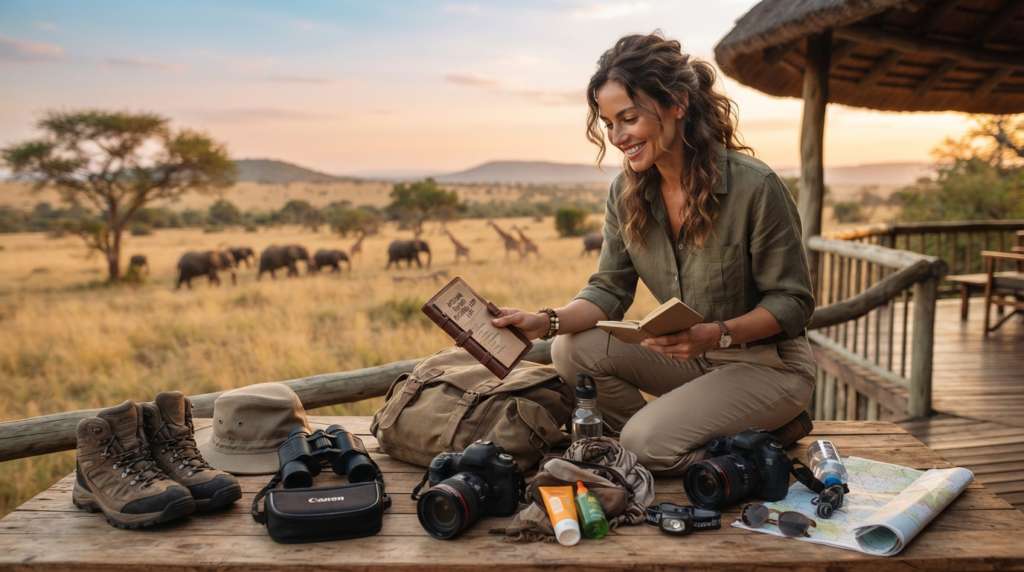
An African safari is one of the most transformative travel experiences in the world — watching elephant herds cross the savanna at sunset, tracking lion prides at dawn, witnessing wildebeest migrations that stretch to the horizon. It’s also one of the most specific packing challenges in travel. The gear you choose directly affects your comfort, safety, and even your wildlife viewing success. Here’s the complete African safari packing list for women.
Safari Packing: The Most Critical Rules
- Neutral colors only — Khaki, olive, beige, tan, and brown. Bright colors (especially white, red, and blue) are clearly visible to wildlife and can affect animal behavior. Many guides and lodges actively request neutral-colored clothing.
- No camouflage patterns — Camouflage clothing is restricted or illegal in several African countries (Zimbabwe, Zimbabwe, Zambia, Kenya). Never pack camo for safari.
- Layers for temperature swings — African mornings can be surprisingly cold (5–10°C on early game drives), warming to 30–35°C by midday. Your layering system needs to cover both extremes.
- Mosquito protection is critical — Malaria is present in most safari destinations. Insect-repellent clothing and DEET are non-negotiable.
African Safari Packing List: Clothing
- 3–4 lightweight long-sleeve shirts in neutral tones — Long sleeves protect against sun and mosquitoes. Moisture-wicking fabrics are ideal.
- 2–3 pairs of safari trousers or convertible pants — Lightweight, quick-dry, and ideally insect-repellent treated. Beige, khaki, or olive.
- A fleece or mid-layer for cold early morning game drives
- A windproof and waterproof light outer layer
- 2–3 neutral t-shirts for lodge relaxation
- 1–2 smart-casual outfits for lodge dinners (some luxury lodges have a relaxed dress standard for evenings)
- Comfortable shorts or capris for lodge days (not for game drives where insects are present)
African Safari Packing List: Footwear
- Closed-toe walking shoes or trail runners — For bush walks and game drives. Lightweight and comfortable.
- Ankle boots if doing significant trekking (gorilla trekking in Rwanda/Uganda requires serious hiking boots)
- Comfortable sandals for lodge relaxation and casual evenings
- Never: open-toe shoes in the bush (snakes, scorpions, thorns)
African Safari Packing List: Health & Protection Essentials
- DEET insect repellent (50%+ concentration) — Apply to all exposed skin at dusk and dawn. This is not optional in malaria zones.
- Antimalarial medication — prescribed before travel. Start taking before departure as directed by your doctor.
- Permethrin-treated clothing (or spray your clothes with permethrin before you pack — it remains effective through many washes)
- SPF 50+ sunscreen — open-top game drive vehicles provide zero shade
- Prescription medications in sufficient supply
- Basic first aid kit
African Safari Packing List: Gear & Accessories
- Binoculars — One of the most valuable safari items. 8×42 or 10×42 are ideal for wildlife. The difference between a great sighting and a frustrating one can be your binoculars.
- A wide-brimmed hat or cap (essential sun protection during open-vehicle drives)
- Sunglasses with UV protection
- A dust-proof camera bag if bringing camera equipment (dust is a major issue on dirt roads)
- A small daypack for game drives
- Headlamp or torch for nighttime camp walks
African Safari Practical Essentials
- Yellow fever vaccination certificate (required for entry to many African countries)
- Passport with at least 6 months validity
- Travel insurance with medical evacuation cover (essential — medical facilities are limited in remote areas)
- US dollars in small denominations for tipping guides, trackers, and lodge staff
- Type D/G/N power adapter (varies by country)
What NOT to Pack for an African Safari
- Bright colors — Especially white, red, orange. They disturb wildlife and mark you out as a tourist in the bush.
- Camouflage — Illegal in several countries.
- Perfume or strong-scented products — Scents attract insects and can disturb wildlife.
- Impractical footwear — Safari involves uneven terrain, dust, and possible wildlife encounters. Style takes a back seat to function.
For detailed outfit ideas and safari style guidance, read our full What to Wear on an African Safari guide.
✈️ You Might Also Like
Mexico City Packing List for Women: What to Pack for Mexico City
Carry-on packing list
Kyoto Packing List for Women: What to Pack for Kyoto
Comfortable walking shoes
Havana Packing List for Women: What to Pack for Cuba
Caribbean vacation outfits
Positano Packing List for Women: What to Pack for Positano
Caribbean vacation outfits