
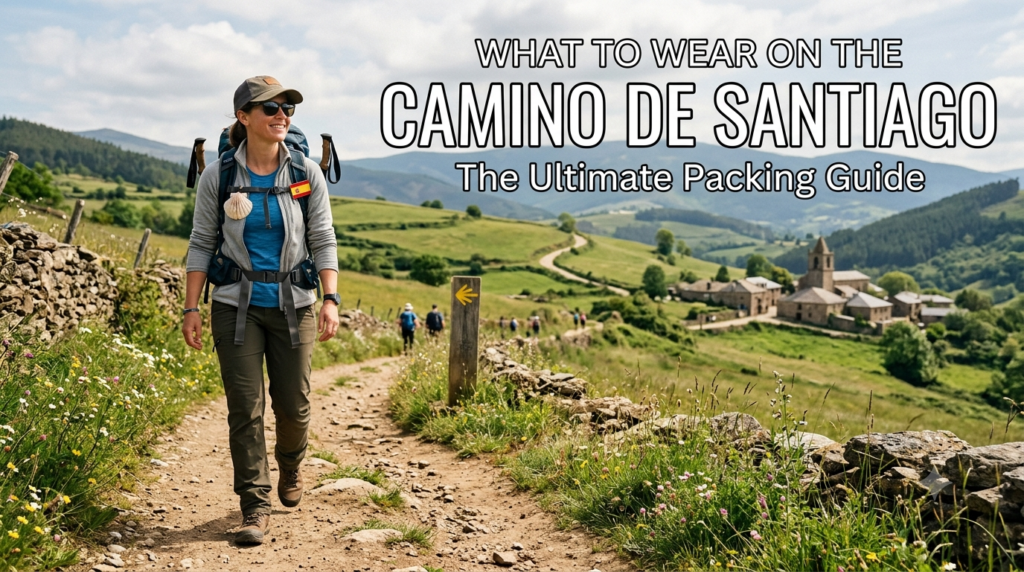
The Camino de Santiago is one of the world’s great walking pilgrimages — hundreds of kilometres of ancient trails through Spain’s landscapes, finishing at the magnificent cathedral of Santiago de Compostela in Galicia. Whether walking the Camino Francés from St Jean Pied de Port, the Camino Português from Lisbon, or one of the many other routes, what you wear on the Camino is arguably the most important logistical decision you will make. This guide covers what to wear on the Camino de Santiago in comprehensive detail.
The Fundamental Principle: Pack Light
Every 100 grams you add to your backpack translates to real physical strain over 800 kilometres of walking. Camino veterans universally advise packing less than feels adequate. The goal: a backpack weighing 7-10% of your body weight maximum, which for most people means under 8-kg total including the pack itself. This means ruthless editing of clothing choices.
The Layering System
Wea ther on the Camino varies dramatically – freezing early mornings on the Pyrenees, heat of the Meseta at midday in summer, Galicia’s wet climate in the final days. A layering system handles this range more efficiently than bringing separate garments. The three layers: a moisture-wicking base layer; a mid-layer (fleece or lightweight down) for insulation; and a windproof, waterproof outer shell.
Base Layer: The Foundation
Merino wool is the superior choice: it regulates temperature in both cold and warm conditions, is naturally antimicrobial (reducing odour between washes), and feels comfortable against the skin even when damp. Avoid cotton base layers – cotton holds moisture against the skin, causing chafing and failing to dry overnight. Pack 2 base layer tops: one to wear, one drying.
Trekking Trousers and Shorts
Lightweight convertible trekking trousers (Zip-off) are the ideal Camino bottom layer. Avoid jeans entirely – they are heavy, take days to dry, and cause severe chafing when wet.
The Walking Sock: The Most Important Item
Blister prevention on the Camino is primarily a sock issue. Merino wool hiking socks with reinforced heel and toe padding are the essential choice. Pack at least 3 pairs. Never walk in cotton socks.
Boots vs. Trail Runners
Modern Camino experience increasingly favours lightweight trail running shoes. The critical factor: footwear must be completely broken in before you start – new shoes on Day 1 of the Camino is a serious mistake.
Rain Gear: Non-Negotiable
A lightweight waterproof shell jacket that packs small is essential. A pack cover for your backpack is equally important. Galicia receives significant rainfall – a proper fitted waterproof shell performs better than a poncho in real Camino conditions.
Evening and Albergue Wear
Comfortable lightweight casual clothes for evenings – a pair of lightweight shorts and a t-shirt – allow you to wash your walking kit and have something to wear while it dries. Lightweight sandals or flip flops for albergue showers and casual walking.
Blister Prevention
More Camino days end early from blisters than from any other single cause — break in boots or trail runners for at least 100km before you fly out, not the week before. Two-layer or toe-sock systems reduce friction significantly, and a small kit (blister plasters, needle, alcohol wipes) treated at the first hot spot, not after a blister forms, saves entire days of walking.
Choosing a Route: Weight and Terrain Considerations
The French Way is the most infrastructure-rich route, with albergues and pharmacies every few kilometers, so you can pack slightly lighter and resupply as needed. The Portuguese Coastal Way involves more road and beach walking, favoring trail runners over boots. The Primitivo is the most physically demanding, with real mountain terrain, and rewards the same layering and footwear seriousness as the Pyrenees crossing on the French Way.
Laundry on the Camino
Packing light on the Camino only works because laundry is a daily part of the routine, not an afterthought. Most albergues have a sink and a line for hand-washing, and many larger towns have a lavanderia offering a same-day wash-and-dry service for a few euros. Quick-dry synthetic or merino fabrics matter here specifically because cotton takes far too long to dry overnight — a cotton t-shirt washed in the evening is often still damp at 6am departure time, while merino or synthetic blends are reliably dry. Packing a small squeeze bottle of travel detergent and a few clothespins or a bit of cord saves relying on an albergue having supplies on hand.
Seasonal Packing: Summer vs. Spring and Autumn
Summer on the Camino (June-August) means heat, especially on the exposed meseta stretch through central Spain, where shade is scarce for hours at a time — sun protection becomes as important as the layering system covered above. Spring and autumn walkers face a wider temperature swing between a cold pre-dawn start and a warm midday, plus a meaningfully higher chance of rain, which is why the waterproof shell in the packing list below isn’t optional even outside the wettest months. Winter Camino walking is possible but adds real cold-weather gear (insulated layers, warmer sleeping options) beyond the scope of a typical summer or shoulder-season packing list.
Camino Packing List
- 2 merino wool base layer tops
- 3 pairs merino hiking socks + liner socks
- 1 pair convertible zip-off trekking trousers
- 1 pair lightweight hiking shorts
- 1 fleece or lightweight insulated mid-layer
- 1 waterproof windproof outer shell jacket
- Trail running shoes or hiking boots (completely broken in)
- 1 pair lightweight sandals or flip flops
- Sun hat or cap
- 1 lightweight casual evening outfit
- Merino wool underwear x 2
- Pack cover (waterproof)
Frequently Asked Questions
Do I need hiking poles for the Camino?
Not essential but strongly beneficial for knee protection on descents. Many peregrinos buy traditional wooden Camino staff at the start.
What should I wear on the Pyrenees crossing?
Full layering system – base layer, mid-layer, and waterproof shell. Gloves, hat, and waterproof trousers. Appropriate clothing is safety-critical on this stage.
How many pairs of socks do I actually need?
Three to four pairs of proper hiking or merino wool socks is the standard recommendation — enough to rotate through daily hand-washing without ever starting a day in a still-damp pair, which is one of the most common causes of blisters.
Can I wear the same boots every day for weeks?
Yes, and you should — switching footwear mid-Camino, even to a second pair you’ve also broken in, changes pressure points enough to risk new blisters. One well broken-in pair of boots or trail runners plus the lightweight evening sandals covers the entire route.
Final Thoughts
Packing for the Camino is a meditation in itself – pack light, prioritise foot care above all else, bring excellent socks, and trust that the Camino provides everything else.
How many pairs of socks should I bring? At least 3-4 pairs of proper hiking or trekking socks — enough to rotate while a pair dries overnight, since damp socks are the single biggest blister risk.
Can I do laundry along the way? Yes — most albergues have sinks or washing machines, which is exactly why the Camino works with so little packed clothing; plan on hand-washing every 2-3 days.