
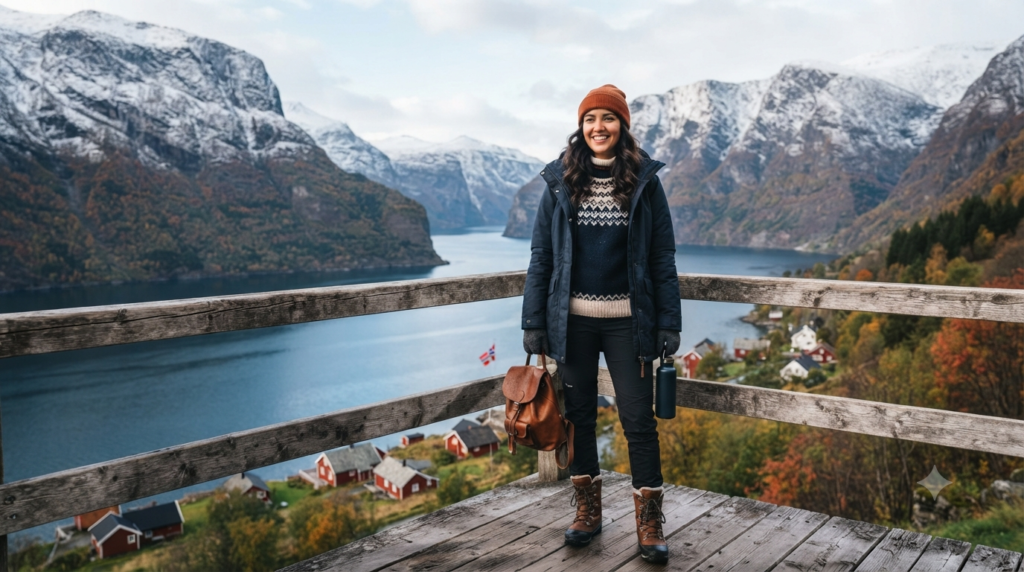
Norway is a destination of extraordinary natural drama — fjords cutting deep into mountain ranges, the midnight sun blazing at 2am in summer, the Northern Lights dancing across winter skies, and some of Europe’s most spectacular hiking terrain. Knowing what to wear in Norway is critical for both safety and comfort, as the weather can be demanding and the outdoor activities genuinely challenging.
Norway’s Climate: What to Expect
Norway’s climate varies dramatically by region and season. Bergen on the west coast is one of Europe’s rainiest cities, receiving around 2,250mm of rain annually. Oslo in the east has a more continental climate with warm summers and cold, snowy winters. The far north in Tromsø experiences polar nights in winter (November–January) and the midnight sun in summer (May–July). Temperatures range from -15°C (5°F) in northern winters to a comfortable 25°C (77°F) in Oslo summers. Layering is always essential — weather changes rapidly, particularly in the fjord regions.
What to Wear in Norway: The Essential Wardrobe
Technical Waterproof Jacket
Norway is the home of outdoor brand Helly Hansen, and for good reason — the country’s weather demands serious waterproof gear. A quality hardshell jacket with taped seams and a helmet-compatible hood is essential for any visit. For summer hiking in the fjords, a lighter waterproof shell works. For winter in Tromsø or a Northern Lights trip, you need an insulated, windproof, waterproof parka rated for extreme cold.
The Three-Layer System
Norwegian outdoor culture is built on the three-layer principle. A merino wool or synthetic moisture-wicking base layer manages sweat. A fleece or lightweight down insulating mid-layer traps body heat. A waterproof and windproof outer shell protects against the elements. This system is adaptable — remove or add layers as conditions change throughout the day.
Merino Wool Base Layers
Merino wool is a Norwegian outdoor tradition. It regulates temperature brilliantly, wicks moisture, resists odour, and feels soft against the skin even when wet. Merino wool long-sleeve tops, thermal leggings, and socks are worth every penny for Norway travel. Norwegian brand Devold and Woolpower are excellent, alongside international brands like Icebreaker.
Hiking Boots and Trail Footwear
Waterproof hiking boots with ankle support are essential for any trail walking in Norway. The famous Trolltunga, Preikestolen (Pulpit Rock), and Kjeragbolten hikes all require proper footwear. Mid-height boots with GORE-TEX lining handle most Norwegian terrain. For city stays in Oslo and Bergen, clean waterproof ankle boots work well on urban streets.
Warm Accessories
A warm wool or fleece hat, insulated gloves, and a snug scarf are year-round accessories in northern Norway and essential from September through May everywhere in the country. Hand and foot warmers (chemical heat packs) are excellent additions for winter Northern Lights photography sessions where you’ll stand still in extreme cold for hours.
Thermal Underlayers for Winter
Winter Norway visits require thermal base layers for every day out. Merino wool or high-quality synthetic thermals, thermal socks, and insulated trousers or ski pants for outdoor Northern Lights viewing are non-negotiable in Tromsø from November through March. Temperatures regularly drop to -10 to -20°C (-14 to -4°F) in the north.
What to Wear in Norway by Season
Spring (March–May)
Norwegian spring is unpredictable — snow can persist into April in the mountains while Oslo enjoys mild temperatures in May. Pack merino base layers, a warm fleece, and a waterproof jacket. Waterproof walking boots are essential. Temperatures range from 2–14°C (36–57°F). Days lengthen dramatically, with late April bringing 15+ hours of daylight in Oslo.
Summer (June–August)
Norway’s best season for most visitors. Temperatures of 18–25°C (64–77°F) in the south, with the midnight sun creating extraordinary 24-hour daylight in northern regions. Pack lightweight layers — T-shirts, light fleece, and a packable waterproof jacket. Hiking conditions are excellent, but altitude can still bring cold even in July. An eye mask for sleeping during the midnight sun is surprisingly important.
Autumn (September–November)
Autumn brings spectacular foliage and the return of Northern Lights visibility in the far north (from late September). Pack full cold-weather layers: thermal base, fleece mid-layer, and insulated waterproof jacket. Temperatures drop from 10°C (50°F) in September to near freezing by November. Waterproof boots and warm accessories become essential.
Winter (December–February)
Norway’s most dramatic season — and the best for Northern Lights and snow activities. Dress for extreme cold in the north: heavy thermal base layers, insulated ski-style trousers, a down parka, fleece hat, insulated gloves, and snow boots rated to at least -20°C. Oslo winters are milder but still cold (around -5 to -10°C). Bring hand warmers, thermal socks, and quality cold-weather face protection.
What to Wear for Key Norway Activities
Fjord Hiking (Trolltunga, Preikestolen)
These iconic hikes require full technical hiking gear. Waterproof hiking boots, technical hiking trousers (avoid cotton), moisture-wicking base layers, a fleece mid-layer, and a waterproof jacket. Bring a daypack with emergency rain cover. Hiking poles help significantly on steep, wet trails. Start early — weather can deteriorate rapidly at altitude.
Northern Lights Viewing (Tromsø)
Northern Lights chasing involves standing outdoors for extended periods in Arctic cold — often -10 to -20°C. This requires the most serious cold-weather dressing of any travel activity: heavy thermal base layers, insulated trousers, a heavyweight down parka, a fur-lined hat, expedition-grade gloves, and waterproof boots rated for extreme cold. Chemical hand warmers and toe warmers are extremely helpful.
Oslo City Exploring
Oslo is a sophisticated, design-forward city. Smart casual works well for city exploration, museum visits, and restaurant dining. In summer, light layers with a packable waterproof jacket suit Oslo’s active outdoor culture. In winter, full cold-weather gear on the streets transitions to normal indoor clothing in Oslo’s well-heated interiors.
Fjord Cruise (Flåm, Geirangerfjord)
Fjord cruises expose you to wind and spray even in summer. Bring a windproof waterproof jacket, warm layers, and gloves. The temperature on the water can be 5–8°C lower than on land. Non-slip footwear is important on boat decks. Binoculars and a camera with weather protection are ideal accessories.
What NOT to Wear in Norway
Avoid cotton as a base layer for any outdoor activity — “cotton kills” is a genuine Nordic outdoor principle, as wet cotton loses all insulating properties and can lead to hypothermia. Don’t wear fashion trainers on hiking trails — they lack waterproofing and ankle support. Avoid overly formal or high-fashion attire for outdoor activities. Skip light summer-only packing even in July if heading to the mountains.
Norway Packing List
- Waterproof hardshell jacket (essential year-round)
- Merino wool base layers (top and bottom)
- Fleece or down mid-layer
- Waterproof hiking boots with ankle support
- Wool thermal socks
- Insulated gloves and warm hat
- Scarf or neck gaiter
- Hiking trousers or waterproof leggings
- Thermal base layers (winter: heavyweight)
- Down parka (for winter/Northern Lights)
- Snow boots rated to -20°C (winter)
- Hand and toe warmers (winter)
- Eye mask (for midnight sun in summer)
- Lightweight packable daypack
Final Style Notes for Norway
Norway is a destination where functional dressing genuinely matters — not as a style consideration but as a safety and comfort requirement. The country’s extraordinary landscapes are accessible only to those dressed for them. Invest in quality technical gear, embrace the layering system, and let the landscape be the spectacle. Norwegians themselves are masters of the outdoor wardrobe — “friluftsliv” (open-air life) is a national philosophy, and the clothing culture reflects it perfectly. Come prepared and Norway’s grandeur becomes completely and safely yours to explore.
📌 Related: Planning a Scandinavian adventure beyond Norway? Check out our complete guide on what to wear in Iceland — another dramatic northern destination with equally unpredictable weather.