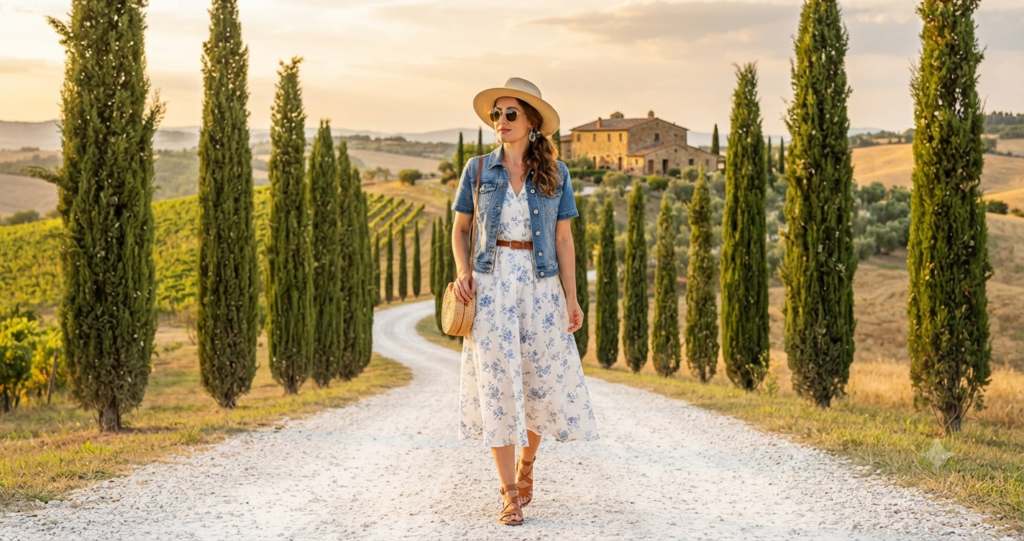
Tuscany — rolling hills, Renaissance art, world-class wine, and effortlessly stylish Italians. If you’re planning a trip to Florence, Siena, Cinque Terre, or the Tuscan countryside, knowing what to wear in Tuscany will help you fit right in. Italians take fashion seriously, and dressing well is a form of respect here. This guide covers everything from church dress codes to vineyard-touring outfits and summer festival style.
Tuscany’s Climate: When to Visit
Tuscany enjoys a Mediterranean climate with hot summers (June–August, 28–35°C/82–95°F), warm springs and autumns (April–May, September–October, 16–24°C/61–75°F), and mild winters (November–March, 5–12°C/41–54°F) with occasional rain. The most pleasant time to visit is April–June and September–October, when the heat is manageable, crowds are smaller, and the Tuscan landscape is at its most beautiful.
The Golden Rule: Dress Like the Italians
Italians — especially in Tuscany — are known for their impeccable sense of style. The key is looking put-together without trying too hard. Think quality over quantity: a well-cut linen shirt, tailored trousers, and elegant leather shoes over a t-shirt and trainers. Avoid loud logos, overly casual outfits, and athletic wear outside of sports contexts. Even casual Tuscan style has an inherent elegance.
What to Wear in Tuscany by Season
Spring (April–May)
Spring is perfect Tuscany season. Pack light layers — tailored trousers or midi skirts, lightweight knits, linen blouses, and a smart trench coat or blazer for cooler evenings. Comfortable walking shoes are essential for Florence’s cobblestone streets. Spring flowers mean the Tuscan countryside is at its most stunning for vineyard tours and agriturismo stays.
Summer (June–August)
Tuscany summers can be scorching, especially in Florence and Siena. Opt for breathable linen, cotton, or silk in light colors. Linen dresses, lightweight trousers, and silk blouses are ideal. Evenings call for a light layer — carry a chic cardigan or blazer as restaurants can be air-conditioned. Comfortable leather sandals are perfect for city exploration, but pack something more supportive for long sightseeing days.
Autumn (September–October)
Autumn is harvest season in Tuscany — vineyards turn golden and the weather is divine. Smart-casual layering works perfectly: silk blouses with tailored trousers, lightweight merino sweaters, and ankle boots. This is the season to embrace earth tones that mirror the stunning Tuscan landscape.
Winter (November–March)
Tuscany winters are mild but can be rainy and chilly. Pack a wool coat, warm knits, and waterproof ankle boots. Florence in winter is a joy — fewer tourists and museum access without queuing for hours. Smart, elegant cold-weather layers will serve you perfectly.
What to Wear at Tuscan Churches & Basilicas
Florence alone has hundreds of stunning churches — the Duomo, Santa Croce, Santa Maria Novella. All require covered shoulders and knees. Carry a light scarf or shawl in your bag to drape over bare shoulders when entering. Many churches provide disposable covers at the door, but having your own is more stylish. Sleeveless tops and shorts will get you turned away at the door.
Shoes for Tuscany: The Cobblestone Challenge
Tuscany’s beautiful medieval towns — Siena, San Gimignano, Volterra — are paved with uneven cobblestones. This is not the place for high heels. Invest in quality leather flat sandals, low-block heels, or comfortable walking shoes with a cushioned sole. Italians wear chic leather sneakers or loafers, which work beautifully on cobblestones while looking polished. Save your heels for dinner at a fancy Florentine restaurant where you won’t be walking far.
Tuscany Packing List
- Quality linen or cotton trousers/chinos (2 pairs)
- Silk or linen blouses and button-down shirts
- Midi or maxi dress (summer) or wool knit dress (winter)
- Tailored blazer or elegant cardigan for evenings
- Lightweight scarf for church visits
- Comfortable leather walking shoes or quality flats
- Leather flat sandals (summer)
- Ankle boots (autumn/winter)
- Light trench coat or smart wool coat (shoulder season/winter)
- Quality leather handbag or tote
[booking_cta destination=”Tuscany”]
Tuscany Style: What to Avoid
Avoid athletic wear, flip-flops in cities, baseball caps, and fanny packs — these immediately identify you as a tourist and are considered poor style in Tuscany. Avoid overly tight or revealing clothing at cultural sites. Skip shorts in Florence’s historic churches. And please — never tie a sweater around your waist. Italians simply don’t do it.
Related Guides
Love Italy? Read our comprehensive guide on what to wear on the Amalfi Coast, our Positano style guide, and tips for what to wear in Rome.
Frequently Asked Questions: What to Wear in Tuscany
Do I need to cover up in Tuscan churches?
Yes — shoulders and knees must be covered to enter Tuscan churches and basilicas. Carry a lightweight scarf or shawl to cover up when needed.
Can I wear jeans in Tuscany?
Yes, well-fitted dark jeans are perfectly acceptable in Tuscany for casual sightseeing and dining. Avoid ripped or very casual jeans for nicer restaurants.
What shoes are best for Florence’s cobblestones?
Comfortable flats, leather loafers, or quality walking shoes with cushioned soles are best. Avoid high heels for extended walking — cobblestones are uneven and slippery.
Is Tuscany a dressy destination?
Tuscany is smart-casual to elegant — Italians dress well and appreciate others doing the same. You don’t need formal gowns, but looking polished and put-together is appreciated everywhere.