
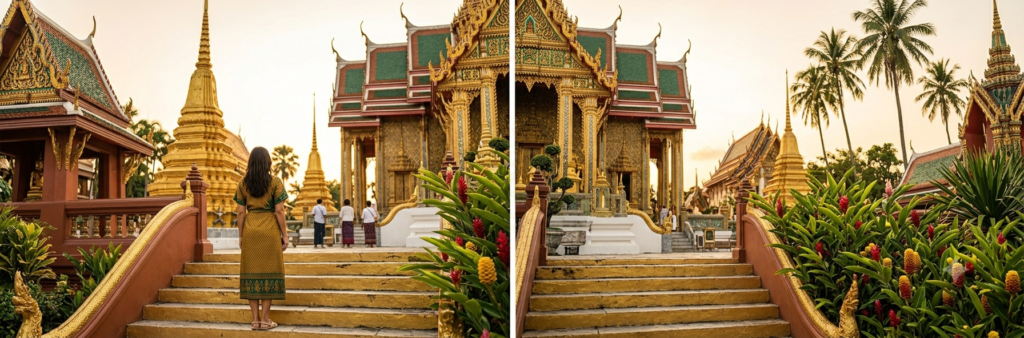
3 zones — Thailand’s distinct dress environments — temples, cities, and beach islands
Covered — Shoulders and knees required at all major Thai Buddhist temples without exception
35°C — Average Bangkok temperature making breathable natural fabrics essential
Islands — Koh Samui, Phuket, Krabi — most relaxed dress environments in Thailand
Lightweight — The defining fabric requirement across all of Thailand’s year-round heat
Thailand’s Three Distinct Dress Environments
Thailand spans environments that require genuinely different wardrobes — Bangkok’s urban temples and markets, Chiang Mai’s cooler northern culture, and the beach islands of the south each have their own dress culture and practical demands. Understanding these three zones is the foundation of packing well for Thailand, regardless of how long your trip is.
Bangkok: Temples, Markets, and Urban Heat
Bangkok’s combination of intense heat, important Buddhist temples, and vibrant street markets creates the most challenging packing scenario in Thailand. The Grand Palace and Wat Pho have strict dress codes enforced at the entrance — covered shoulders and knees are required, and staff turn away visitors not meeting the standard. Lightweight cotton trousers or a midi skirt with a sleeved top handle both the dress code and the heat better than heavier fabrics.
Bangkok’s markets and shopping areas are far more relaxed, but the city’s humidity makes natural fabrics consistently more comfortable than synthetics regardless of the dress code at any specific venue.
Chiang Mai: The North’s Cooler, Cultural Pace
Chiang Mai runs noticeably cooler than Bangkok and the southern islands, particularly in the evenings and during the cooler season months. The city’s strong temple culture means modest dressing remains important, but the slightly cooler climate means a light cardigan or layer for evening is actually useful here — something unnecessary in most of the rest of Thailand. The Sunday Walking Street and Night Bazaar have a relaxed, artisan-market atmosphere where flowing linen or cotton pieces in earthy tones feel most fitting.
Southern Islands: Phuket, Krabi, Koh Samui, Koh Tao
Thailand’s beach islands are the most relaxed dress environment in the country — swimwear and cover-ups dominate, beach clubs are casual, and the only dress code consideration is when visiting any of the temples or shrines that exist even on beach-focused islands like Phuket. A swimsuit rotation, a few breathable cover-ups, and one simple evening dress covers most island itineraries without overpacking.
The Thailand Capsule That Works Everywhere
| Item | Works For |
|---|---|
| Lightweight cotton midi skirt | Temples + markets + evening dining |
| 2 sleeved cotton tops | Temple coverage + general city wear |
| 2 swimsuits + 2 cover-ups | All beach and island days |
| 1 maxi dress (modest cut) | Covers temples and dinner in one piece |
| Slip-on flat sandals | Easy removal for temple entry |
| Light cardigan | Chiang Mai evenings + air-conditioned restaurants |
A Detail Most Guides Miss: The Air Conditioning Factor
Thailand’s shopping malls, restaurants, and long-distance buses are often heavily air-conditioned to the point of feeling genuinely cold. A light cardigan or scarf that packs flat is worth including in your daily bag — not for outdoor temperatures, but for indoor escapes from the heat that sometimes swing too far in the opposite direction.
Frequently Asked Questions
Do I need to remove shoes at Thai temples?
Yes — shoes must be removed before entering the main temple buildings at virtually all Thai Buddhist temples. Slip-on sandals or shoes without laces make this significantly less inconvenient across multiple temple visits in a day.
Can I wear shorts in Bangkok?
Yes in most commercial areas, markets, and restaurants — but not for temple visits. Lightweight linen or cotton shorts that fall just above or at the knee are acceptable in non-temple Bangkok settings.
Is Thailand’s beach dress code similar to Bali’s?
Thailand’s beach islands are generally more relaxed than Bali — the beach club culture exists but is less intense, and the expectation to cover up away from the immediate beach area is slightly less enforced than in Bali’s more culturally prominent inland areas.
What should I wear on a Thai overnight train or long bus journey?
Comfortable, loose cotton clothing — the air conditioning on overnight trains and long-distance buses can run very cold, so having a light layer to add is important for overnight comfort.
Can I buy suitable clothing in Thailand rather than packing it?
Yes — Thailand’s markets sell excellent lightweight cotton clothing, elephant-print trousers, and simple cover-ups at very low prices. Many travellers pack minimal clothing and fill in gaps at Chatuchak Market in Bangkok or local island markets.
Pack for the Zone, Not the Country
Thailand’s diversity means no single outfit formula covers the whole trip. Building around the temple-ready modest core pieces and layering beach and island wear on top creates a genuinely functional wardrobe for the full range of experiences Thailand offers.
✈️ Trip Essentials
Affiliate links — we may earn a small commission at no extra cost to you.
✈️ Trip Essentials
Affiliate links — we may earn a small commission at no extra cost to you.
Beach resorts in Phuket, boutique hotels in Chiang Mai and rooftop stays in Bangkok.
Skip the tourist traps — book top-rated tours, day trips and experiences in Thailand with instant confirmation.
✈️ You Might Also Like
Thailand Packing List for Women: What to Pack for Thailandpi
Bangkok outfits
What to Wear in Southeast Asia: Thailand, Bali, Vietnam Packing Guide 2026
Asia travel clothing
What to Wear in Phuket: Beach, Temple & Nightlife Outfit Guide
Thailand
Bali Packing List: What to Wear in Bali (Complete Outfit Guide)
Bali