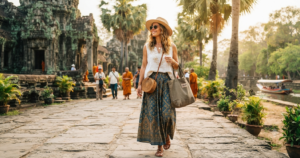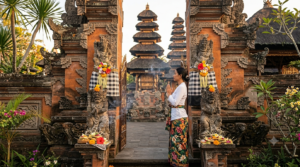
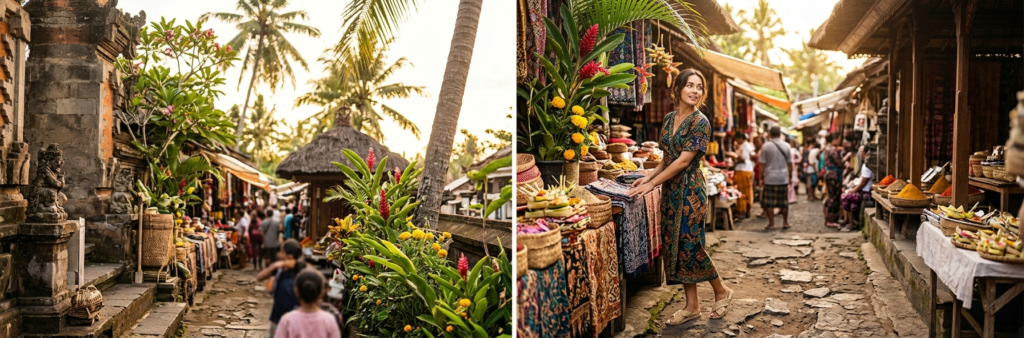
Wear lightweight fabrics like linen and cotton — flowy dresses, shorts, and loose tops are ideal. Always pack a sarong for temple visits (required at most temples), and light layers for cooler evenings in Ubud. A light rain jacket is essential during rainy season (November–March).
Bali is one of the most magical destinations on earth — a place where ancient temples rise through rice terraces, pristine beaches meet jungle waterfalls, and the air hums with incense and creativity. But knowing what to wear in Bali can make or break your trip. Dress too casually at a sacred temple and you’ll be turned away. Wear the wrong fabrics and the tropical humidity will leave you miserable by noon.
This guide covers everything you need to pack for Bali, from beachside sarongs to chic sunset-bar looks — so you can focus on soaking in the magic instead of sweating through the wrong outfit.
Understanding Bali’s Climate: What to Expect
Bali has two main seasons: the dry season (April–October) and the wet season (November–March). Even in the dry season, temperatures hover between 26–32°C (79–90°F) with high humidity. Rain showers can pop up anytime during wet season, often in the afternoon.
The key takeaway: light, breathable fabrics are non-negotiable year-round. Think linen, cotton, and lightweight rayon — not synthetics that trap heat and moisture.
What to Wear at Bali’s Temples (Essential Dress Code)
Bali is home to over 20,000 Hindu temples, and visiting them is one of the highlights of any trip. However, temples have a strict dress code you must follow:
- Sarong: Both men and women must wear a sarong (a wrap-around fabric skirt) that covers the knees. Many temples lend them for free or a small fee, but bringing your own is more hygienic and stylish.
- Sash (selendang): A fabric belt tied around your waist, symbolising respect. Also provided at most temples.
- Covered shoulders: A light shawl or kimono cover-up over your tank top works perfectly.
- No revealing clothing: Shorts, short skirts, and crop tops must be covered before entering.
Pro tip: Buy a beautiful batik sarong from Ubud Market for around $5–$10. It doubles as a beach towel, blanket, or impromptu picnic mat.
Must-visit temples include Tanah Lot, Uluwatu (famous for its cliff-top sunset kecak fire dance), Besakih (the Mother Temple), and Tirta Empul. Book guided temple tours in advance — GetYourGuide has excellent Bali temple tours that include local guides who can explain the cultural significance of each site.
Best Outfits for Bali’s Beaches
Bali’s beaches range from the surf-pumping shores of Kuta and Seminyak to the dramatic black sand beaches of Lovina and the serene coves of Nusa Dua. Here’s what to wear:
Beach Daywear
- Swimwear: Bikinis and boardshorts are totally fine on Bali’s tourist beaches. However, going topless is illegal and considered deeply disrespectful — keep your top on.
- Cover-up: A flowy linen beach dress or a crochet cover-up looks effortlessly chic and protects you from the strong equatorial sun.
- Rash guard: If you’re surfing or snorkelling, a lightweight rash guard protects against sunburn and reef scrapes.
- Flip flops or sandals: Easy on/off for the sand, but bring comfortable walking sandals for exploring nearby areas.
Beach Club Attire
Bali has some of the world’s most iconic beach clubs — Potato Head, Ku De Ta, and Finns Beach Club draw international crowds. For these venues, step it up slightly:
- A stylish two-piece swimsuit with a linen oversized shirt or a sundress
- Wedge sandals or strappy flat sandals
- A wide-brim hat and oversized sunglasses — these are practically required accessories
What to Wear in Ubud (The Cultural Heart of Bali)
Ubud is Bali’s arts and wellness hub — think yoga retreats, rice terrace walks, artisan markets, and cooking classes. The vibe here is bohemian but thoughtful.
- Flowy linen trousers or palazzo pants: Comfortable for walking, appropriate for temples, and effortlessly stylish for café-hopping.
- Maxi dresses: A lightweight maxi dress in a botanical print is the ultimate Ubud outfit. It covers your shoulders and knees (temple-appropriate) while looking beautiful.
- Kimono or sheer cover-up: Perfect layered over a tank top for morning rice terrace walks when it’s cooler.
- Comfortable walking sandals: Ubud’s streets and rice paddies demand sturdy, comfortable footwear. Birkenstocks, Tevas, or similar strappy sandals work well.
Don’t miss the Tegalalang Rice Terrace and the Sacred Monkey Forest. Explore Ubud’s best experiences on GetYourGuide — from sunrise rice terrace treks to traditional batik-making workshops.
Evening & Nightlife Outfits in Bali
Bali’s nightlife is legendary, especially in Seminyak and Kuta. For sunset cocktails and dinner, elevate your daytime look:
- Women: A slip dress or wrap dress in silk or satin, strappy heeled sandals, and minimal gold jewellery. The tropical heat means less is more — one statement piece (earrings or a necklace) over heavy layering.
- Men: Linen trousers with a short-sleeve linen or cotton shirt (untucked is fine). Clean leather sandals or loafers.
- Avoid: Very casual flip flops and swimwear cover-ups at upscale restaurants and sky bars.
Fabrics to Pack (and What to Leave at Home)
Best Fabrics for Bali
- Linen — breathable, lightweight, wrinkle-texture looks intentional
- Cotton — classic, comfortable, absorbs sweat
- Rayon/viscose — drapes beautifully, great for dresses
- Bamboo fabric — moisture-wicking and eco-friendly
Fabrics to Avoid
- Polyester — traps heat and causes sweat patches
- Denim — heavy and dries slowly; leave your jeans at home
- Thick wool or fleece — only if you’re going to Mount Batur before dawn (temperatures up there drop to around 10°C)
Accessories You’ll Actually Use in Bali
- Wide-brim sun hat: Essential sun protection and doubles as a great photo prop among the rice terraces.
- Sunglasses: Go for polarised lenses — the tropical sun is intense.
- Light scarf or shawl: For temple visits, air-conditioned restaurants, and chilly morning drives.
- Reusable tote bag: Many shops in Bali have banned plastic bags. A stylish tote carries your market finds.
- Waterproof sandals: Handy for rice paddy walks and waterfall hikes where you’ll get your feet wet.
- Small crossbody bag: Keeps your valuables secure while exploring busy markets.
What NOT to Wear in Bali
A few things to leave out of your suitcase:
- Heavy jeans and boots — far too hot and heavy for the climate
- Overly revealing clothes in non-beach areas — Bali’s local culture is conservative outside tourist zones
- High heels (unless you’re sticking to paved beach clubs) — Bali’s uneven streets, temple steps, and rice paddy paths will destroy your ankles
- Black clothing exclusively — black absorbs heat; it’s not practical in 30°C+ weather
- Clothing with offensive prints or slogans — Bali is a deeply spiritual destination; show respect
Bali Packing List: The Essentials
- 2–3 lightweight maxi dresses or linen sets
- 2–3 swimsuits/bikinis
- 2–3 beach cover-ups (kimono or linen shirt)
- 1–2 pairs of linen or cotton trousers
- 4–5 lightweight tops (tank tops, breathable tees)
- 1 elegant dress for evenings
- 1 light cardigan or shawl
- 2 sarongs (doubles as temple wrap + beach towel)
- Comfortable walking sandals
- Flip flops for the beach
- 1 pair of nice sandals for evenings
- Wide-brim hat + sunglasses
- SPF 50 sunscreen
- Insect repellent (dengue mosquitoes are active in Bali)
Where to Shop for Clothes in Bali
One of the best parts of visiting Bali is that you can buy beautiful, affordable clothing once you arrive:
- Ubud Art Market (Pasar Seni Ubud): Sarongs, batik fabrics, boho dresses, and handmade accessories at bargain prices. Always negotiate.
- Seminyak Square and Bintang Supermarket area: Boutique shops selling resort wear, swimsuits, and stylish separates.
- Kuta Art Market: Affordable souvenirs, sarongs, and casual clothing.
- Deus Ex Machina (Canggu): Stylish surf-inspired clothing if you’re after something more premium.
Seasonal Outfit Guide: Dry Season vs Wet Season
Dry Season (April–October)
This is peak Bali season. Days are sunny, evenings are warm, and the beaches are at their best. Stick to light, breezy outfits — sundresses, linen shirts, and shorts. Mornings can be slightly cooler, especially at altitude in Ubud, so one light layer is handy.
Wet Season (November–March)
Rain usually comes in heavy but short afternoon bursts. Pack a light, packable rain poncho or waterproof jacket rather than a heavy umbrella. The landscape turns intensely green and beautiful, and there are far fewer tourists. Continue wearing your lightweight clothes — the rain cools things down pleasantly.
Book Your Bali Accommodation
Bali has accommodation for every budget, from $10 guesthouses in Ubud to $1,000-a-night private villas in Seminyak. Book early for the best prices, especially during peak season (July–August and Christmas). Search and book Bali hotels on Booking.com for the widest selection and flexible cancellation options.
Final Thoughts: Dressing for Bali
The golden rule for dressing in Bali is respectful, light, and versatile. A well-chosen wardrobe of flowing linen pieces, a couple of sarongs, and one elevated evening outfit will take you from sunrise yoga to sunset temples to late-night cocktails without a suitcase crisis.
Bali rewards those who dress thoughtfully — both practically (surviving the heat) and culturally (showing respect at sacred sites). Pack smart, buy a few beautiful pieces once you arrive at the markets, and you’ll look like you were born to be there.
Ready to explore Bali? Browse the best Bali tours and experiences on GetYourGuide — from rice terrace treks to volcano sunrises and traditional cooking classes.
✈️ Trip Essentials
Affiliate links — we may earn a small commission at no extra cost to you.
Jungle retreats in Ubud, beach villas in Seminyak and clifftop hotels in Uluwatu.
Discover top-rated tours and experiences worldwide. Instant booking, free cancellation on most activities.
Traveling to Bali solo? Our solo travel guide has tips on packing light and staying safe while exploring on your own.
Frequently Asked Questions
Bali Packing List
Bali is one of the world’s most beloved destinations for a reason — a place where emerald rice terraces cascade down volcanic hillsides, Hindu temples stand at the edge of the ocean, and every sunset seems to be designed specifically for photography. Whether you’re staying in a Seminyak beach club villa, doing a week of yoga in Ubud, surfing the breaks in Canggu, or exploring the rice fields of Tegallalang, your Bali packing list needs to balance beach-perfect with culturally respectful and practical for the tropical climate. Here’s exactly what to pack.
Bali Weather & When to Visit
Bali has two seasons. April to October is the dry season — the best time to visit, with clear sunny days, lower humidity, and ideal conditions for surfing, hiking, and temple exploring. November to March is the wet season — daily rain (usually in the afternoons), lush green scenery, fewer tourists, and lower prices. The rain is typically short and heavy rather than all-day drizzle; you can absolutely visit in wet season and have a wonderful trip. Temperatures are warm year-round — 27–32°C during the day, 22–25°C at night.
Bali Packing List: Clothing
- 3–4 swimsuits — bikinis and a one-piece (you’ll wear them almost every day; invest in quality pieces that survive saltwater)
- 4–5 sundresses or casual beach dresses in linen or cotton (beach to dinner staples)
- 2–3 lightweight blouses or tops for Ubud sightseeing and casual evenings
- 1–2 linen co-ord sets or elevated beach sets for Seminyak beach clubs and upscale restaurants
- Sarong and a lightweight scarf (mandatory for Balinese Hindu temples — provided at many gates but bring your own)
- Long-sleeve UV rash guard for surf lessons, boat trips, and snorkeling
- 1 pair of linen trousers or a maxi skirt for temple visits and conservative areas
- Light cardigan for air-conditioned restaurants and Ubud’s cooler evenings
- Packable rain jacket or poncho for wet season travel and Ubud jungle walks
Shoes
- Quality flip-flops or beach sandals (you’ll wear these constantly — invest in ones that won’t break)
- Comfortable walking sandals with straps for Ubud, Tegallalang, and temple hopping
- Hiking shoes or trail trainers for Mount Batur sunrise trek and Campuhan Ridge Walk
- Water shoes for snorkeling at Nusa Penida and rocky beach entries
Essentials
- SPF 50+ sunscreen (apply before leaving your accommodation — Bali’s UV is intense)
- Insect repellent with DEET (dengue fever cases are reported regularly in Bali; mosquitoes are active at dusk)
- After-sun aloe gel or lotion
- Dry bag for boat trips to Nusa Islands and beach excursions
- Small crossbody bag for markets and sightseeing
- Reusable water bottle (never drink tap water; hotels and warungs provide filtered water)
- Portable power bank
- Water purification tablets for remote trekking areas
- Travel insurance with emergency medical cover (Bali’s private hospitals are expensive)
- Basic first aid kit — antiseptic wipes, blister plasters, stomach medication (Bali Belly is a real risk)
What to Wear in Bali: By Area
Seminyak & Kerobokan (Beach Clubs & Restaurants)
Seminyak is Bali’s most fashionable area — designer boutiques, world-class beach clubs (Potato Head, La Planque, Ku De Ta), and restaurants that wouldn’t look out of place in any global city. The beach club culture here is stylish and social; a beautiful swimsuit with a quality cover-up is standard poolside. Evenings in Seminyak trend smart-casual to dressy — a linen co-ord, silk slip dress, or elevated sundress works for the many excellent restaurants. The streets are uneven — choose sandals over heels for dinner walks.
Canggu (Surf & Digital Nomad Vibes)
Canggu is Bali’s surf and café capital — Echo Beach, Batu Bolong Beach, and a strip of excellent coffee shops, vegan cafes, and surf schools. The dress code is effortlessly casual: surf-inspired shorts and tees, casual sundresses, or yoga wear. Surfing means UV rash guards and quick-dry board shorts or swimsuits. Black sand beaches look striking in photo — bright swimwear colours photograph particularly well against Canggu’s dark sand. Evenings are laid-back — casual dresses or beach-chic outfits are perfectly appropriate at most Canggu restaurants and bars.
Ubud (Culture, Yoga & Rice Terraces)
Ubud is Bali’s cultural and spiritual heart — the Monkey Forest, Tegallalang Rice Terraces, yoga retreats, traditional dance performances, and the best food in Bali. Ubud is more conservative than the beach areas; dress modestly for temples and town walking. A linen dress or trousers with a covered-shoulder top is appropriate. Bring a sarong for any temple visit — it’s tied around your waist to enter Pura Dalem and the many smaller temples throughout the area. The Campuhan Ridge Walk (early morning is best) requires comfortable walking shoes. Evening yoga or retreat activities call for lightweight yoga wear.
Balinese Hindu Temples (Tanah Lot, Uluwatu, Besakih)
Bali has thousands of Hindu temples — Tanah Lot at sunset, the cliff-edge Uluwatu with its kecak fire dance, and the sacred Besakih “Mother Temple” on the slopes of Mount Agung. All temples require: a sarong tied around the waist, covered shoulders, and respectful behaviour. Sarongs are provided or rented at the entrance gates of major temples (a small donation is expected), but bringing your own cotton sarong is more hygienic and avoids the gate queue. Remove shoes when asked. Long dresses or maxi skirts make temple dressing effortless.
Nusa Penida, Nusa Lembongan & Nusa Ceningan
The Nusa Islands (a 30–45 minute fast boat from Sanur) are spectacular — Kelingking Beach’s T-Rex cliff viewpoint, Crystal Bay’s snorkeling, and the Blue Lagoon on Nusa Ceningan. Pack your swimsuit, water shoes (the beach entries on Nusa Penida’s famous spots are steep and rocky), a dry bag for the fast boat crossing (expect spray), a rash guard for snorkeling, and reef-safe sunscreen. The roads on Nusa Penida are rough and hilly — renting a scooter requires confident riding skills; consider hiring a driver-guide instead.
Mount Batur Sunrise Trek
The Mount Batur volcano trek (1,717m) starts at 2–3am and takes 2 hours to the summit. Temperatures at the crater rim at sunrise are genuinely cold — 10–15°C with wind chill. Pack a warm fleece or light down jacket, a headlamp, proper hiking shoes with grip, leggings or hiking trousers, and gloves. The return descent is in full daylight and can be warm — layers that pack small into a daypack are ideal. Guides are mandatory and arranged through your accommodation.
Common Packing Mistakes for Bali
- Not packing a sarong: You cannot enter any Balinese Hindu temple without a sarong tied around your waist. Packing one (or buying one from a local market for a few dollars) is non-negotiable if you plan any temple visits — and you will.
- Cheap sandals that break: Bali’s cobblestone streets, rice terrace paths, and beach rock entries destroy cheaply made sandals. Invest in quality sandals with proper straps and soles.
- Forgetting insect repellent: Dengue fever is present in Bali. Apply DEET-based repellent at dusk every evening, especially in garden restaurants and rice terrace areas.
- Not bringing reef-safe sunscreen: Many of Bali’s snorkeling sites and dive operators now require reef-safe sunscreen. Chemical sunscreen harms coral reefs; mineral (zinc oxide) sunscreen is the responsible choice.
- Overpacking clothes: Bali’s markets and boutiques sell beautiful, affordable clothing — linen dresses, handmade jewellery, swimwear, and beach cover-ups. Many travellers pack light and buy locally, which is both practical and supports local businesses.
Bali Packing List FAQ
Do I need a sarong in Bali?
Yes — a sarong is required to enter any Balinese Hindu temple. They’re available at temple gates for a small donation, but bringing your own cotton or silk sarong is more hygienic and avoids the rental queue. A sarong also doubles as a beach cover-up, overnight flight blanket, and light layer for cool restaurant air conditioning — one of the most versatile items in your Bali packing list.
How many swimsuits should I pack for Bali?
At least 3. You’ll wear a swimsuit almost every day — at hotel pools, beach clubs, and snorkeling excursions. Saltwater and sun degrade swimwear quickly, and humid tropical air slows drying. Three lets you rotate without wearing damp swimwear. Many Bali boutiques sell excellent swimwear if you need to supplement.
Is Bali safe for solo female travellers?
Generally yes — Bali is one of Southeast Asia’s most solo-female-friendly destinations. The island is well-set-up for independent travel with good infrastructure, English-speaking locals, and a large international community of solo and group travellers. The main concerns are traffic (Bali’s roads are chaotic — only rent a scooter if you’re an experienced rider), petty theft in markets, and stomach illness (Bali Belly is common — eat at clean establishments and always drink filtered water).
What’s the dress code for Seminyak beach clubs?
Swimwear or stylish beach wear at the pool and beach; cover up with a sundress, shorts, or a quality cover-up for dining areas and bar areas. Top beach clubs like Potato Head and Ku De Ta attract a fashion-conscious crowd — your swimsuit and cover-up should be something you feel good in. Ripped beach shorts and faded tees look out of place at Seminyak’s upscale venues.
What’s the best area to stay in Bali?
Seminyak for beach clubs and shopping, Canggu for surf and café culture, Ubud for culture and nature, Uluwatu for dramatic clifftop views and world-class surfing, Nusa Dua for family-friendly resort luxury. Most travellers divide their Bali trip between at least two areas — 3–4 nights beach-side (Seminyak or Canggu) and 3–4 nights in Ubud covers the island’s highlights well.