
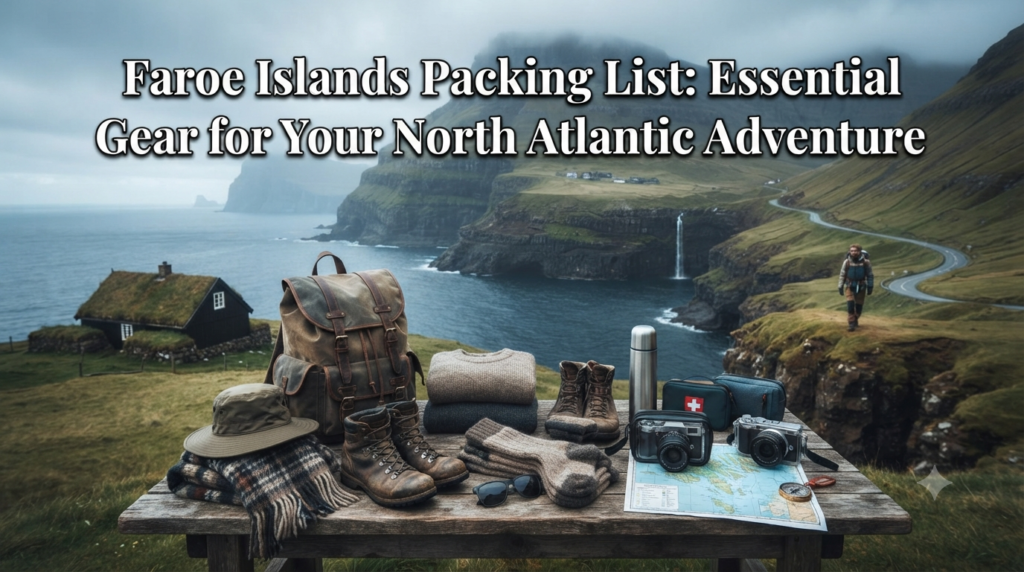
The Faroe Islands are 18 volcanic islands in the North Atlantic, halfway between Norway and Iceland, and they offer some of the most dramatically beautiful scenery in Europe — vertiginous cliffs plunging into the ocean, waterfalls tumbling directly into the sea at Gásadalur, puffin colonies on green hillsides, and a silence and remoteness that feels increasingly rare. They also have some of the most unpredictable and challenging weather for dressing in the world.
“If you don’t like the weather in the Faroe Islands, wait five minutes” is something locals say — and it’s not far from the truth. This Faroe Islands packing list tells you exactly how to dress for a destination where sun, rain, wind, and hail can all occur on the same afternoon walk.
The Faroe Islands Climate: What You’re Actually Dealing With
The Faroese climate is classified as oceanic — cool, wet, and extraordinarily windy year-round. Key things to know:
- Temperature: Mild year-round, but cool — July (the warmest month) averages 11–14°C. January averages 4–6°C. The temperature range is surprisingly small, but the wind chill and persistent rain make it feel much colder.
- Wind: The Faroe Islands are one of the windiest inhabited places in Europe. Coastal viewpoints and cliff edges regularly experience gale-force winds — strong enough to push you off-balance. Wind-resistant outer layers are not optional.
- Rain: Tórshavn receives about 1,200mm of rain annually (similar to Bergen, Norway, or twice the rainfall of London). Expect rain on most days, often arriving suddenly even from a clear sky.
- Best season: June–August for the longest days (the midnight sun grazes the islands), best hiking conditions, and the puffin season. September–October for fewer crowds and dramatic autumn light. Winter is challenging but atmospheric.
The Faroe Islands Layering System
As with Iceland and other North Atlantic destinations, the three-layer system is your foundation:
- Base layer: Merino wool or synthetic moisture-wicking. Keeps you warm when damp and dry more quickly than cotton. Never wear cotton next to skin in the Faroes.
- Mid layer: A heavyweight fleece or wool sweater. The Faroese are famous for their traditional knitted sweaters, and there’s genuine functional wisdom behind the tradition.
- Outer layer: A fully waterproof and windproof shell jacket. This is the most important item in your Faroe Islands packing list. A jacket that is merely “water-resistant” will be defeated within the first hour of Faroese weather.
Complete Faroe Islands Packing List: Clothing
Essential Layers
- 2–3 merino wool thermal long-sleeve base layers
- 2–3 merino wool or synthetic t-shirts
- 1–2 heavyweight fleece pullovers or thick wool sweaters
- 1 packable down jacket or insulated mid-layer (for particularly cold and windy days)
- 1 fully waterproof, windproof shell jacket (GORE-TEX or equivalent) — the single most critical item
- 1 pair of waterproof over-trousers (essential for cliff-edge walks and rainy hiking days)
- 2–3 pairs of quick-dry hiking trousers
- 1 pair of casual trousers for Tórshavn evenings
- Merino wool socks (3–4 pairs)
- Moisture-wicking underwear (merino wool preferred)
Accessories
- Waterproof, windproof gloves — The wind chill makes your hands cold remarkably quickly, even in July. Inner insulating gloves + waterproof outer shell is ideal.
- Warm beanie or wool hat — Bring two: one for hiking, one clean one for evenings
- Neck gaiter or balaclava — For cliff-edge viewpoints and exposed headland walks where the wind is at its most brutal
- Polarised sunglasses — For the occasional brilliant blue-sky Faroese day, and for wind protection on cliff edges
Faroe Islands Footwear
This is possibly the most critical packing decision for the Faroe Islands. The terrain involves steep grass slopes (which become treacherously slippery when wet), rocky trails, muddy paths, and stone steps often running with water. Poor footwear significantly limits where you can safely go.
- Waterproof hiking boots with aggressive grip soles — Non-negotiable for any serious hiking or cliff-top walking. Look for GORE-TEX waterproofing and Vibram or similar soles with deep lugs. Mid-calf height provides useful ankle support on uneven terrain.
- Waterproof trail running shoes — A lighter alternative for shorter hikes and day walks, though less warm than full hiking boots.
- Comfortable shoes for Tórshavn — Trainers or casual shoes for the capital city, which is walkable and relatively paved.
- Crampons / microspikes — For winter travel only, when trails to viewpoints like Sørvágsvatn and the Kallur lighthouse can be icy.
What NOT to bring: Regular trainers (they’ll be soaked within an hour on wet grass), sandals (too cold and slippery), heels of any kind (the terrain makes them dangerous).
What to Wear at the Faroe Islands’ Iconic Locations
Sørvágsvatn (Lake above the Ocean)
The most-photographed Faroese viewpoint, where a lake appears to float above the ocean. The trail involves a guided walk across open moorland and exposed cliff edges. Wind at this location can be very strong — wear your full layering system, windproof gloves, hat, and waterproof boots. The walk takes approximately 2.5–3 hours guided (mandatory).
Gásadalur Waterfall (Múlafossur)
The waterfall that plunges directly into the sea is the Faroe Islands’ signature image. The village of Gásadalur is reached via a tunnel from Sørvágur. The viewpoint involves a short but steep walk from the village. On windy days the waterfall literally blows upward — a spectacular and very Faroese phenomenon. Wear waterproofs.
Kallur Lighthouse (Kalsoy Island)
The dramatic lighthouse hike on Kalsoy island is one of the Faroes’ best walks — and one of the most exposed. The 2.5km trail to the lighthouse involves steep ascent to an exposed headland with significant wind. Full waterproof clothing, warm layers, and solid hiking boots are essential. Check weather carefully before undertaking this hike.
Tórshavn (Capital)
Tórshavn is a charming, small capital with turf-roofed historic buildings, good restaurants, and some genuinely excellent Faroese knitwear shops. For city days: comfortable waterproof shoes or trainers, your full layering system, and a waterproof jacket always within easy reach. The city is compact and walkable.
What NOT to Pack for the Faroe Islands
- Cotton clothing — Cotton loses insulating properties when wet and dries slowly. In Faroese conditions, wet cotton clothing creates a genuine cold risk on exposed hillsides.
- Non-waterproof footwear — You will have wet feet within the first walk if you bring regular trainers or shoes without waterproofing.
- An umbrella — The Faroese wind will destroy any umbrella within moments. A waterproof hood is the correct rain protection here.
- Light or insufficient mid-layers — A single thin fleece is not enough. The wind chill at cliff-top viewpoints can bring effective temperature down dramatically even in August.
- Heels or fashion-focused footwear — Wet grass slopes and rocky trails make them dangerous. Leave them at home.
Faroe Islands Practical Essentials
- Rental car — The Faroe Islands are best explored by car. Book well in advance, particularly for summer travel. The tunnel system connecting major islands makes driving between them straightforward.
- Reusable water bottle — Faroese tap water is excellent, sourced from pristine mountain catchments.
- EU / Schengen visa check — The Faroe Islands are an autonomous territory of Denmark but NOT part of the EU or Schengen Area. Check visa requirements separately for Faroese travel.
- Power adapter — Type C/F sockets (Danish/European standard) at 230V/50Hz.
- Seasickness medication — If your itinerary includes ferry crossings between islands, the North Atlantic swell can be significant. Many visitors are surprised by this.
- Camera with weather protection — Rain, wind, and spray are constant. A weather-sealed camera body or a proper protective cover is worthwhile investment for photography-focused visitors.
Packing for the Faroe Islands by Season
Summer (June–August): The best hiking season. Pack full waterproofs plus the summer additions: extra sun protection for long bright days, a slightly lighter mid-layer (11–14°C is the warmest it gets). Puffins are present June–August on sea cliffs.
Autumn (September–October): Dramatic light, quieter trails, dramatic storms. Pack all the above plus an additional warm layer for October. Rain increases.
Winter (November–March): Very limited daylight (5–7 hours), significant storms, but also the possibility of Northern Lights. Add microspikes, balaclava, heavyweight insulated jacket, and hand warmers. Many hiking trails and guided tours are closed.
Frequently Asked Questions: Faroe Islands Packing List
What is the weather like in the Faroe Islands in summer?
Summer in the Faroe Islands (June–August) means cool temperatures (11–14°C), long daylight hours (nearly 24 hours of daylight in mid-June), and highly variable weather — sun, rain, wind, and fog can all occur on the same day. Pack exactly the same way you would for any cold, rainy, windy outdoor destination. A good waterproof jacket and solid hiking boots are non-negotiable even in July.
Do I need waterproof trousers for the Faroe Islands?
For serious hiking and cliff-top walks, yes. Standard hiking trousers will eventually become saturated in persistent Faroese rain. Waterproof over-trousers packed in your daypack give you the option to stay dry on extended walks. For city days in Tórshavn, regular trousers are fine but bring your waterproof jacket regardless.
Is the Faroe Islands expensive?
Yes — one of Europe’s more expensive destinations. Meals and accommodation are notably pricier than mainland Europe. Self-catering accommodation helps significantly with food costs. Some of the most spectacular experiences (hiking, viewpoints, landscapes) are free. Budget approximately £100–150/day per person for mid-range travel.
Also visiting Iceland? See our Iceland packing list — the two destinations share a similar packing approach and are sometimes combined on North Atlantic itineraries.
💡 Book Faroe Islands guided hikes, Sørvágsvatn viewpoint tours, and boat trips to puffin colonies through Viator, and find hotels in Tórshavn on Booking.com.