
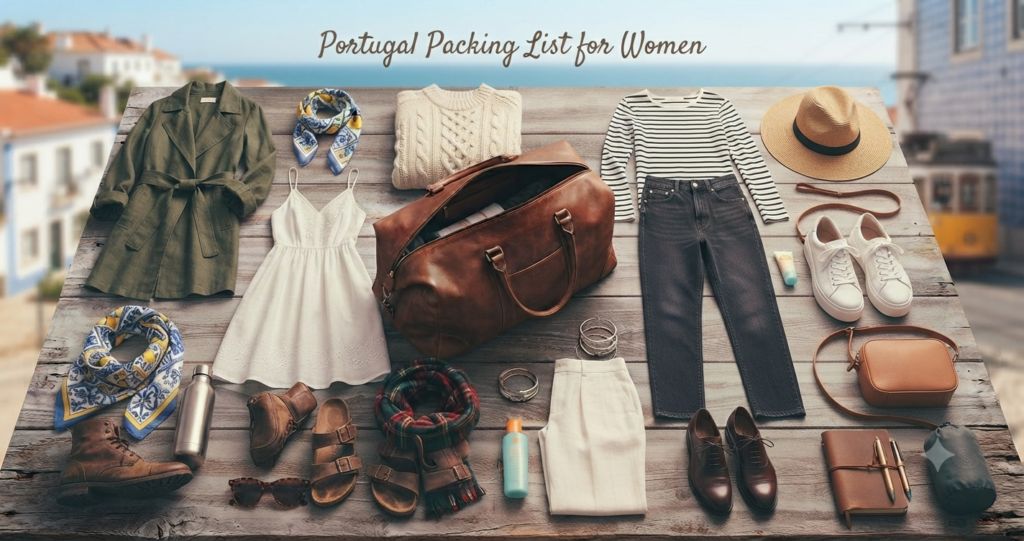
Portugal has emerged as one of Europe’s most popular travel destinations, offering a compelling mix of historic cities, dramatic Atlantic coastline, sun-drenched beaches, and rolling vineyard landscapes â all at prices that remain more reasonable than much of Western Europe. Packing for Portugal requires understanding its diverse geography and climate: coastal Algarve in summer demands beach-ready clothing, while Lisbon’s hilly streets require practical footwear, and the Douro Valley wine region rewards slightly more rural-appropriate attire. This Portugal packing list covers everything you need for a well-planned Portuguese trip.
Understanding Portugal’s Climate
Portugal has one of Europe’s most pleasant climates, with warm summers (25â35°C on the Algarve), mild winters, and a long spring-to-autumn season. The Atlantic coast brings cooling breezes even in summer, making evenings cooler than the midday heat suggests. Lisbon sits on hills â the famous seven hills â which means even a short walk involves significant climbing. Rain is possible from October through March, particularly in the north (Porto receives considerably more rainfall than Lisbon or the Algarve). Pack accordingly for your specific season and region.
Portugal Packing List Essentials
Clothing (Summer/Spring): Lightweight dresses and skirts work beautifully in Portugal â the country has a relaxed, slightly Mediterranean aesthetic. Two or three sundresses that work for both beach towns and city dining; a pair of tailored linen shorts for daytime exploration; two or three lightweight tops; a light layer (a linen shirt or lightweight cardigan) for evenings and air-conditioned interiors; and one slightly dressier option for a nicer dinner. Portugal’s restaurant culture is relaxed but appreciates an effort â smart casual rather than formal.
Footwear: This is the most important Portugal packing decision. Lisbon’s cobbled streets (particularly in the Alfama and Bairro Alto neighbourhoods) are notorious for being beautiful but brutal on feet. Comfortable, well-cushioned walking shoes that can handle uneven, sloped cobblestones are essential â avoid heels on Lisbon streets. Flat sandals work well for beach areas and Porto. Pack: comfortable walking shoes or trainers for city exploration; flat sandals for beach towns and warmer days; and one pair of slightly elevated sandals if you want to dress up for dinner.
Beach Destinations (Algarve): Two or three swimwear sets; beach cover-ups; flip-flops; a beach bag; and high-SPF sun protection. The Algarve sun is strong â sun protection is essential rather than optional.
What to Pack for Lisbon
Lisbon is an increasingly fashionable city with a growing food and design scene. The aesthetic tends toward relaxed European chic â well-cut clothing in quality fabrics, comfortable but considered footwear. Pack comfortable clothing you feel good in rather than overly casual beach wear. For the famous viewpoints (miradouros), you will be walking and climbing â comfort is essential. For Sintra day trips: comfortable walking shoes are critical, as the palaces involve significant uphill walking on uneven terrain.
What to Pack for Porto
Porto has a slightly cooler, more Atlantic climate than Lisbon, with more frequent cloud cover and rain. Pack an extra layer and a packable rain jacket for Porto trips, even in summer. The city is also hilly â comfortable footwear equally essential. Porto’s aesthetic is slightly more casual than Lisbon’s.
What to Pack for the Douro Valley
Wine country packing: comfortable but slightly more rural-appropriate clothing works well in the Douro. Long sleeves protect from sun during outdoor vineyard tours. Comfortable shoes that can handle terraced vineyard terrain. A sun hat and sunglasses are essential in this sun-exposed valley.
Portugal Packing List for Autumn/Winter
Portugal’s mild winters mean genuine winter coats are rarely needed on the Algarve, but Lisbon and Porto can be cold and rainy (10â15°C) from November through February. A medium-weight jacket or coat; a waterproof layer; jeans or warmer trousers; and layerable knitwear replace the summer packing list. Porto in winter can feel genuinely chilly and wet â plan accordingly.
Accessories for Portugal
A comfortable crossbody bag that closes securely (Lisbon’s tourist areas have pickpockets, as do all major European cities); a lightweight sun hat for outdoor areas; sunglasses; a compact umbrella or packable rain jacket; and a reusable water bottle (tap water is excellent across Portugal and significantly cheaper than bottled). A lightweight scarf works both as a sun layer and for visiting churches where modest dress is expected.
Portugal Packing List: What NOT to Pack
Heels for Lisbon streets â you will not wear them on cobbles and will damage them or yourself trying. Overly formal clothing â Portugal is relaxed and casual attire is appropriate almost everywhere. Heavy winter coats (unless visiting in January/February) â Portugal’s winters are mild by European standards. Excessive amounts of clothing â Portugal has excellent laundry facilities and is a relatively affordable destination if you need to buy anything you forgot.
Frequently Asked Questions
What should I wear in Lisbon?
Comfortable walking shoes are non-negotiable on Lisbon’s cobbled hills. For clothing: relaxed European casual â lightweight trousers or a midi dress with comfortable flat shoes works for exploring, transitioning to slightly smarter options for evening dining. Lisbon in summer is warm (28â32°C), so lightweight fabrics are important.
Do I need to dress modestly in Portugal?
Portugal is a secular, socially relaxed country and dress codes are minimal. Churches and cathedrals require covered shoulders and knees â a lightweight scarf covers this need. Beach clothing should be limited to beach areas. Otherwise, normal European casual standards apply.
What shoes are best for Portugal?
Comfortable, well-cushioned shoes with flat or low soles that can handle wet cobblestones. Trainers or walking shoes with good grip, comfortable flat sandals for beach areas, and one pair of slightly elevated sandals for dinner in beach towns where the terrain is less challenging than Lisbon’s hills.