
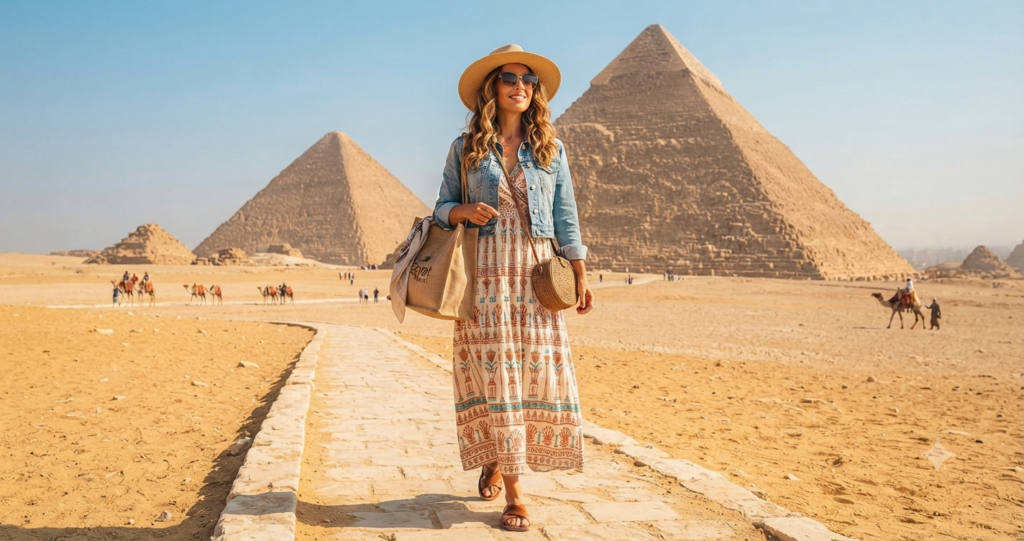
Egypt means 40°C desert heat, conservative urban culture, ancient sites that require specific clothing, and the resort beaches of the Red Sea — all in one trip. What you pack needs to work across wildly different contexts.
Egypt Dress Code: The Reality
Egypt is a Muslim-majority country. Cairo and Luxor are more conservative. Sharm el-Sheikh and Hurghada are far more liberal. The practical rule: cover shoulders and knees in cities, markets, and cultural sites. Dress can be lighter at beach resorts.
What to Wear at Major Sites
The Pyramids of Giza
- Lightweight, loose-fitting clothing that covers shoulders and knees
- Long linen trousers or maxi skirt (cooler than shorts in desert sun)
- A long-sleeve shirt in breathable fabric — covering arms in desert sun can reduce heat by blocking direct radiation
- A wide-brim hat or sun scarf
- Comfortable walking shoes with grip — not sandals
Egyptian Mosques
- Women: full coverage — shoulders, arms, and legs covered; head covering required
- Men: long trousers required
- Everyone: remove shoes before entering
Luxor and Karnak Temples
Temple complexes — not mosques — so no religious dress code. The heat at Luxor is extreme (40–45°C in summer). Long, loose, light-coloured linen is essential. A sun hat is non-negotiable.
Cairo Bazaars (Khan el-Khalili)
Cover shoulders and knees, wear a loose top rather than fitted, and bring a scarf. Practically safer for women as well as culturally appropriate.
What to Wear on a Nile Cruise
- On the ship: casual resort wear — sundress, shorts, swimwear at the pool
- Shore excursions (temple visits): cover up every time you leave the ship
- Evenings: casual smart — a simple dress or trousers with a nice top
The Nile cruise packing trick: one lightweight long dress or kaftan works as a temple cover-up, pool cover-up, and evening outfit — one piece, three uses.
What to Wear by Season
Summer (June–August)
Temperatures regularly exceed 40°C. Maximum breathability: linen, cotton, bamboo fabric. Light colours only — white, cream, pale blue. Long and loose beats short and fitted in desert sun.
Winter (December–February)
Cairo: 10–20°C — surprisingly cold evenings. Luxor: 15–25°C — ideal. Red Sea resorts: 20–25°C.
Red Sea Resorts (Sharm el-Sheikh, Hurghada)
- At the hotel: swimwear, shorts, holiday dresses — completely acceptable
- Leaving the resort to explore town: cover shoulders and knees out of respect
What Not to Wear in Egypt
Sleeveless tops, short shorts, and tight clothing outside resort areas draw more attention than they’re worth, especially for women traveling independently. Skip anything sheer or overly fitted at religious sites — mosques and some churches will turn visitors away regardless of gender. Save swimwear strictly for the pool or Red Sea beach itself, not the walk back to your room.
Cairo City Style
Cairo is more conservative day-to-day than the Red Sea resorts but more relaxed than rural areas — loose trousers or a midi skirt with a covered top works for museums, markets, and city walking. Modern, upscale Cairo neighborhoods like Zamalek see plenty of Western-style dress, but covering shoulders and knees is still the safer default outside those areas.
Complete Egypt Packing List
- 3–4 × lightweight loose linen tops (long sleeve for sun protection)
- 2 × long linen trousers or palazzo trousers
- 1–2 × maxi dresses or kaftans
- 1 × swimwear (Red Sea resort or hotel pool)
- 1 × wide-brim sun hat
- 2–3 × large lightweight scarves
- Comfortable closed-toe walking shoes
- Sandals (for hotel and beach)
- SPF 50 sunscreen (buy before you go — expensive and often unavailable in Egypt)
Luxor and Aswan: Temples and Desert Heat
Luxor and Aswan sit further south than Cairo and run noticeably hotter for most of the year, which makes lightweight, breathable fabric even more important around Karnak Temple, the Valley of the Kings, and Philae Temple. The same shoulders-and-knees coverage rules apply here as at the Pyramids, and a wide-brim hat plus a scarf that can be pulled over the back of the neck helps against sun exposure during the long, mostly shade-free walks between temple sites.
A felucca ride on the Nile around Aswan calls for slip-on sandals that can handle getting splashed and a light cover-up for when the breeze picks up on the water. Mornings and evenings in Aswan can be surprisingly cool between November and February, so packing one long-sleeve layer alongside the daytime lightweight pieces covers both ends of the day.
Shopping in Cairo’s Bazaars
Khan el-Khalili and Cairo’s other bazaars involve a lot of standing, walking on uneven stone, and bargaining conversation, so comfortable closed-toe shoes matter more than sandals here. Modest, loose clothing also tends to draw less unwanted sales pressure and blends in better with the mostly local shopping crowd outside the main tourist strip.
A crossbody bag that zips closed is a practical choice for the bazaar’s narrow, crowded lanes, and keeping a lightweight scarf on hand covers both sun protection and a quick, respectful head covering if you duck into a nearby mosque while exploring the area.
Frequently Asked Questions
Do women have to wear a hijab in Egypt?
No — non-Muslim women are not expected to wear a hijab. A lightweight scarf draped loosely over your hair before entering a mosque is sufficient.
Can you wear shorts at the Pyramids?
Yes — there is no dress code at the Pyramids. However, loose trousers protect your legs from sun and sand while remaining cooler than they sound in desert conditions.
What should I wear in Egypt as a woman traveling solo?
Loose-fitting clothing that covers shoulders and knees reduces unwanted attention significantly. The Red Sea resorts are a completely different experience and lighter clothing is fine there.
Is it safe to wear a swimsuit at Red Sea resorts?
Yes — resort areas like Sharm El-Sheikh and Hurghada operate like any international beach destination; standard swimwear is completely normal within the resort grounds.
Do men need to cover their legs in Egypt?
Shorts are generally fine for men in tourist areas and resorts, though long trousers are more common and slightly more respectful at mosques and in rural towns.
What shoes are best for exploring Egyptian temples and desert sites?
Closed-toe walking shoes with good grip handle uneven ancient stone, sand, and long walking distances far better than sandals. A broken-in pair matters — temple complexes like Karnak and the Valley of the Kings involve more walking than most visitors expect.
Is a hat or headscarf necessary in Egypt?
A wide-brim hat or scarf isn’t legally required outside mosques, but it’s one of the most practical items to pack — sun exposure at outdoor sites like the Pyramids and Luxor’s temples is intense for most of the year, and a scarf doubles as quick mosque-appropriate head coverage when needed.
🗺️ Plan Your Egypt Trip
Ready to go? Find the best tours, activities, and cheap flights below.
We may earn a commission at no extra cost to you. Disclosure
✈️ Trip Essentials
Affiliate links — we may earn a small commission at no extra cost to you.
Compare hotels near the Pyramids in Cairo, Nile cruise ships and Red Sea resorts in Hurghada and Sharm El Sheikh.
Skip the tourist traps — book top-rated tours, day trips and experiences in Egypt with instant confirmation.
Ready to start packing? See our complete Egypt packing list for women for everything you need to bring.
Exploring the Middle East? Check out our full guide on what to wear in Oman — one of the region’s most underrated and stylish destinations.
Pingback: Egypt Packing List for Women: What to Pack for Egypt - Vacation Style Guide
Pingback: What to Wear in Kenya: Safari, Nairobi & Coast Outfit Guide - Vacation Style Guide