
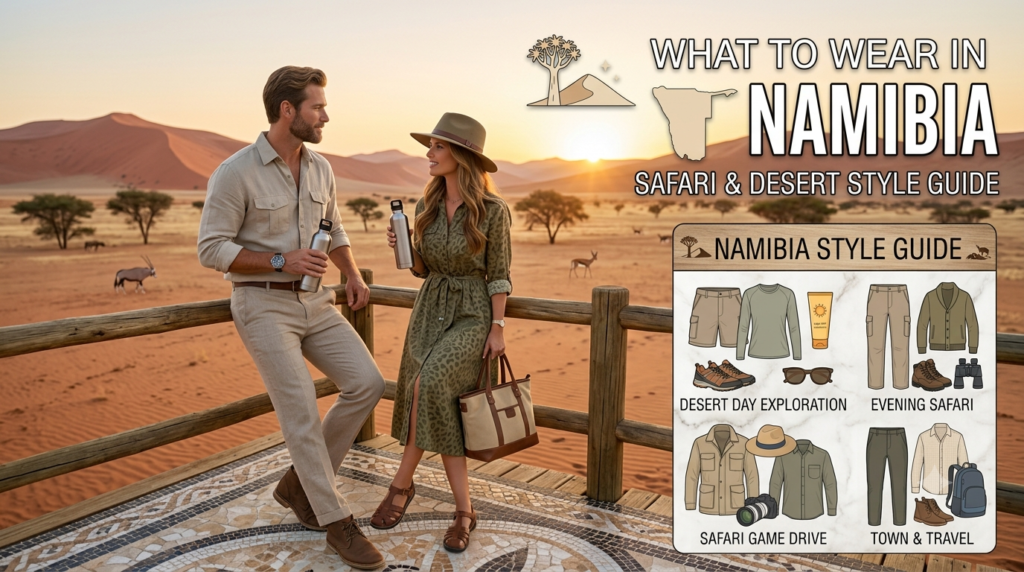
Namibia is Africa’s most spectacular wilderness destination — a vast, ancient landscape of red sand dunes at Sossusvlei, the otherworldly Skeleton Coast, the wildlife-rich plains of Etosha National Park, and the surfer’s haven of Swakopmund. Getting what you wear in Namibia right is not a style exercise — it is the difference between a transformative adventure and a miserable ordeal. This comprehensive guide tells you exactly how to dress for every Namibian environment.
Namibia’s Climate and Terrain
Namibia is primarily desert and semi-arid, one of the driest countries on earth. Temperatures vary dramatically between day and night, particularly in the desert interior. At Sossusvlei, summer days (October–April) can reach 40–45°C, while winter nights (May–August) drop below 0°C. The Skeleton Coast is perpetually cool and foggy due to the cold Benguela Current offshore, even in summer. The most important dressing lesson: the temperature range within a single 24-hour period often exceeds 25°C. Layering is essential even during hot summer months.
Safari Clothing for Etosha National Park
For safari in Namibia, the classic earth-tone palette — tan, khaki, olive, sage green, stone, and beige — blends with the brown and gold savannah landscape, reducing the risk of startling wildlife. Avoid bright colours (red, orange, yellow) that can agitate animals, and avoid black and dark navy that attracts insects. The standard game drive outfit: long-sleeved safari shirt in khaki or olive (protecting arms from sun and insects), lightweight cargo trousers or safari pants with zip-off legs, and proper closed hiking shoes. A buff worn around the neck provides face and neck protection on dusty tracks. Pack a fleece or light down jacket for early-morning and late-evening drives, even in summer.
Sossusvlei and Desert Dune Climbing
The ancient red dunes of Sossusvlei — including the iconic Dune 45 and Big Daddy — are best climbed at dawn before the heat becomes intense. Morning desert temperatures can be surprisingly cold (sometimes below 10°C at a winter dawn), rapidly transitioning to intense heat as the sun rises. Dress in layers: merino base layer, sun-protective long-sleeved top, convertible hiking trousers, and proper closed athletic or light hiking shoes. Sand gets into everything — gaiters to protect shoe tops are genuinely useful. A wide-brim hat, high-SPF sunscreen, and UV sunglasses are non-negotiable.
The red sand of Sossusvlei photographs spectacularly against contrasting clothing. White, cream, or pale blue creates beautiful contrast against the rich red-orange dunes. A flowing white linen top and wide-leg trousers against the dawn-lit dune creates one of travel photography’s most iconic images — but always prioritise practical sun protection over pure aesthetics.
Swakopmund and the Skeleton Coast
Swakopmund is the gateway to the Skeleton Coast and hub for adventure activities: sandboarding, quad biking, skydiving, and ocean kayaking with seals. Swakopmund is famously cool year-round due to the Benguela Current — pack a fleece or warm mid-layer even in summer (daytime temperatures often 15–18°C). Wind is constant and cold. Lightweight layers, jeans or cargo trousers, and a windproof jacket are appropriate for most Swakopmund days.
Namibia Complete Packing List
- 3–4 long-sleeved safari shirts in earth tones (tan, khaki, olive, stone)
- 2 pairs of convertible zip-off safari trousers
- 1 pair of lightweight cargo shorts
- Closed hiking shoes or sturdy walking shoes with grippy sole
- 1 fleece jacket (cold mornings and Swakopmund coastal cool)
- 1 lightweight down jacket (winter visits and cold desert dawns)
- Windproof/waterproof outer shell jacket (Skeleton Coast winds)
- Wide-brim sun hat (very little shade in the desert)
- Buff or neck gaiter (dust protection on game drives)
- UV-protection polarised sunglasses
- SPF 50+ sunscreen (apply generously and reapply frequently)
- Moisture-wicking merino base layer top
- Long merino base layer bottom (cold nights)
- Lightweight sandals or camp shoes (for lodge evenings)
Namibia Colour Strategy for Photography
Namibia’s palette is extraordinary: deep burgundy-red dunes, white salt pans, silver-grey Skeleton Coast fog, and golden savannah. For Sossusvlei dunes: white, cream, or pale blue creates maximum contrast against red sand. For Etosha and safari: earth tones blend naturally — choose slightly bolder earth tones (rust, mustard) if you want to appear distinctly in landscape photographs. Deadvlei’s white pan and skeletal camelthorn trees against deep blue sky create spectacular results regardless of outfit choice.
Windhoek: The Capital
Namibia’s pleasant capital has a smart, clean character. For the city, smart casual is appropriate: well-fitted jeans or chinos with a neat top, comfortable walking shoes. The downtown area is compact and walkable. For fine dining or hotel bars in the evening, a slightly more polished outfit is appropriate — nothing formally dressed, but a step up from safari gear. Windhoek is a sophisticated small city and responds to a degree of care in presentation.
Damaraland, Fish River Canyon, and Cultural Visits
Damaraland’s rugged terrain — home to desert elephants and dramatic rock formations — calls for the same earth-toned, durable clothing as Etosha, with extra emphasis on dust protection: a scarf or buff for covering your nose and mouth on gravel roads is a genuine practical addition, not just a style choice. Fish River Canyon, one of the largest canyons in the world, involves exposed rim walks with little shade, so a wide-brim hat and long sleeves for sun protection matter as much here as anywhere on a Namibia itinerary.
Visits to Himba communities are a highlight for many travelers, and modest, respectful dress — covered shoulders and knees — is appropriate out of courtesy, even though there’s no formal enforced dress code for visitors observing or participating in a guided cultural visit.
Frequently Asked Questions
Does Namibia have a specific dress code for safaris?
Not strictly enforced, but the earth-tone convention exists for practical reasons — bright colours can startle wildlife during close encounters and dark colours attract flies. Stick to tan, khaki, olive, and sage, and you will be both safe and appropriate in all Namibian game environments.
How cold does it get in the Namibian desert at night?
In winter (May–August), desert temperatures regularly drop below 0°C at night. Even in summer, desert nights are significantly cooler than days — often 15–20°C or lower. Always bring a warm layer regardless of when you visit Sossusvlei or the Namib interior.
What shoes are essential for Namibia?
Closed, grippy walking shoes or light hiking shoes for dune climbing, game drive stops, and lodge walks. Sandals or camp shoes for relaxed lodge evenings. Leave high heels and fashion trainers entirely at home — they are genuinely useless in Namibian terrain.
Do I need special clothing to visit Damaraland?
The same earth-toned, durable safari clothing used elsewhere in Namibia works well, with a scarf or buff worth adding for dust protection on Damaraland’s gravel roads.
Is there a dress code for visiting Himba communities?
No formal dress code, but modest, respectful clothing covering shoulders and knees is appropriate courtesy for a guided cultural visit.
Final Thoughts on Dressing for Namibia
Namibia demands respect for its extreme environments. The packing formula is non-negotiable: sun protection in the form of clothing, hat, and sunscreen; warmth in the form of quality layers for cold desert mornings; and earth-toned safari clothing for game viewing. Get those fundamentals right, add a white or cream outfit for the Sossusvlei photographs you will treasure for decades, and Namibia will deliver one of travel’s most breathtaking experiences.