Seoul is one of Asia’s most exciting fashion capitals — a city where K-pop aesthetics, street style, cutting-edge beauty culture, and traditional Korean hanbok coexist across a sprawling metropolis of 10 million people. South Korea’s capital is simultaneously ultramodern (Gangnam’s glass towers, Hongdae’s neon-lit streetwear boutiques, the futuristic Dongdaemun Design Plaza) and deeply traditional (Gyeongbokgung Palace’s red and green pavilions, Bukchon Hanok Village’s wooden alleyways, Insadong’s tea houses). Seoul rewards visitors who dress well and engage with the city’s extraordinary visual culture. Here’s your complete guide to what to wear in Seoul.
Seoul Weather: What to Expect by Season
Seoul has four distinct seasons with wide temperature variation — one of the most seasonal cities in Asia. Packing for Seoul demands season-specific clothing; a year-round packing list isn’t viable here.
Spring (March–May)
Seoul’s most beautiful season, with cherry blossoms typically peaking in late March to early April. Temperatures range from 8–20°C, with cool mornings and pleasant afternoons. Layering is essential — mornings can be cold enough for a light jacket while afternoons may be warm enough for just a long-sleeved top. Cherry blossom season (Yeouido Hangang Park, Seokchon Lake, Gyeongbokgung Palace grounds) is peak tourist season; book accommodation well in advance.
Summer (June–August)
Hot and humid (28–35°C) with a monsoon rainy season (jangma) typically running late June to mid-July. Post-monsoon August is Seoul’s hottest period — heavy humidity, intense heat, and frequent rain. Lightweight breathable clothing, a compact umbrella, and good waterproof sandals are summer essentials. Air conditioning in Korean shopping malls, restaurants, and subway cars is often extremely aggressive — a light cardigan or layer for indoor transitions is useful.
Autumn (September–November)
Seoul’s second-best season after spring: crisp air, spectacular autumn foliage (late October to mid-November is peak colour), and temperatures ranging 10–22°C. Autumn is ideal for exploring Seoul’s outdoor palaces and hiking routes. Layering with a medium-weight jacket works well through autumn; November can be cold, with temperatures dropping toward 5°C.
Winter (December–February)
Seoul winters are genuinely cold (−5 to 5°C) with occasional snowfall, strong winds, and low humidity creating a harsh, dry cold. A proper winter coat, thermal base layers, warm socks, and waterproof boots are non-negotiable for a winter Seoul visit. Korean winters are long and committed; lightweight “winter” outerwear won’t cut it here. The upside: winter is low-season (excluding Christmas/New Year), meaning better hotel rates and thinner crowds at palaces.
What to Wear in Seoul: Clothing Guide
Seoul’s Fashion Culture
Seoul has a serious, influential fashion culture — ranking alongside Tokyo and Hong Kong as Asia’s leading style cities. Koreans in general pay significant attention to personal presentation; Seoul’s neighborhoods like Hongdae (indie youth streetwear), Garosu-gil (luxury boutiques and European café culture), Myeongdong (mass market K-beauty and cosmetics), and Apgujeong/Cheongdam (ultra-luxury, K-pop celebrity culture) each have distinct aesthetic environments. While Seoul is not a judgmental city for visitors, dressing with care and intention will enhance your experience — you’ll feel more at ease in the upscale restaurants and the fashion districts that are worth exploring.
Spring Outfits for Seoul
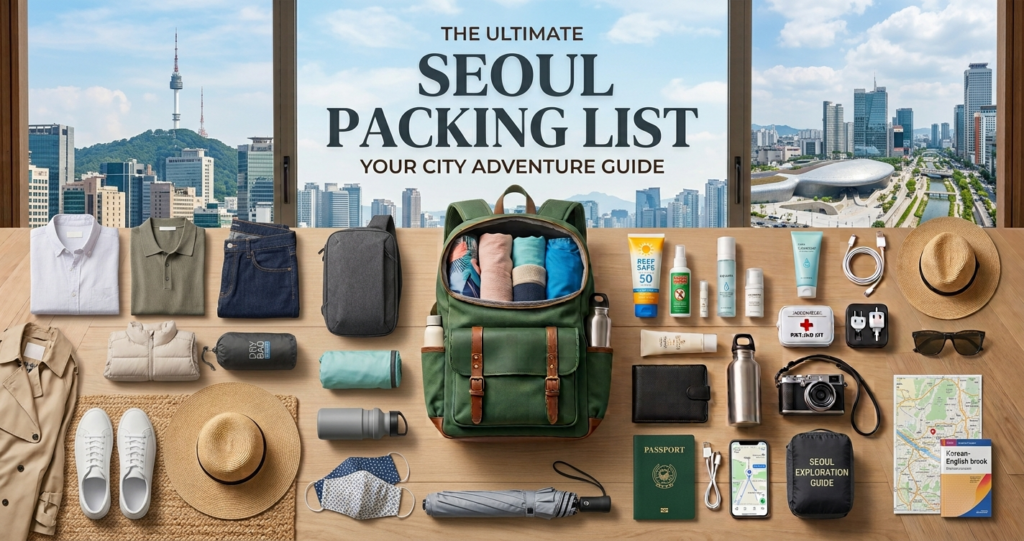
- Light-weight trench coat or structured blazer (perfect for cherry blossom season photos and the transitional temperatures)
- Long-sleeved tops or light sweaters layered under a jacket
- Straight-leg jeans or tailored trousers
- White sneakers or loafers — a Korean fashion staple across all seasons
- A light knit dress or midi skirt with tights for milder spring days
Summer Outfits for Seoul
- Lightweight cotton or linen dresses
- Breathable shorts (note: very short hemlines attract more attention in some traditional neighbourhoods)
- Moisture-wicking tops and quick-dry fabrics for the monsoon season
- A lightweight cardigan or layer for heavily air-conditioned indoor spaces (Korean air conditioning is formidable)
- Comfortable sandals for daytime city exploring
- A compact travel umbrella (essential for jangma season; summer rain in Seoul arrives suddenly and heavily)
Autumn Outfits for Seoul
- A stylish medium-weight jacket or padded vest
- Ankle boots or chunky trainers
- Knit sweaters in neutral tones (autumn fashion in Seoul skews toward warm earth tones and oversized knits)
- Straight-leg jeans or tailored wool trousers
- Layered accessories — scarves are fashionable and functional in Seoul’s cool autumn
Winter Outfits for Seoul
- A genuine winter coat — Koreans take their coats seriously, and a well-cut, warm coat is essential for Seoul’s −5°C winters and wind chill
- Thermal base layers (merino wool or high-performance synthetics are best for the dry Korean cold)
- Warm boots (waterproof and insulated for potential snow and icy pavements)
- Thick socks and good gloves
- A beanie and scarf (Seoul’s winter wind is biting, particularly near the Han River and on the exposed sections of Namsan mountain)
Temple and Palace Dress Code
Seoul’s palaces (Gyeongbokgung, Changdeokgung, Deoksugung) and Buddhist temples (Jogyesa Temple in central Seoul) welcome visitors in general casual clothing; Korea’s religious sites don’t have the strict head-covering or shoulder-covering requirements of South Asian or Middle Eastern religious sites. However, respectful, modest clothing (avoiding very short shorts or ripped or revealing clothing at temples) is appreciated. Many visitors choose to rent a hanbok (traditional Korean dress) for palace visits — rental shops surround Gyeongbokgung Palace, and visitors in hanbok typically receive free entry to the palace grounds. This is one of Seoul’s most popular and photogenic experiences.
Seoul Neighbourhood Style Guide
Hongdae: Indie & Streetwear
Hongdae (홍대) — the neighbourhood surrounding Hongik University — is Seoul’s indie arts and streetwear hub: vintage clothing stores, independent fashion boutiques, street performers, club culture, and the highest density of vintage and second-hand fashion shops in the city. Anything goes aesthetically in Hongdae — this is where Seoul’s most experimental fashion, cosplay, and K-pop-inspired streetwear culture thrives. Comfortable sneakers and layered, expressive clothing suit Hongdae perfectly.
Garosu-gil: Cafés & Designer Boutiques
Garosu-gil (가로수길, “tree-lined street”) in Apgujeong is Seoul’s most European-feeling street: gingko trees, coffee shops, independent designer boutiques, and a sophisticated, slightly older crowd. Smart-casual clothing suits Garosu-gil well; it’s a popular area for editorial-style street style photography and the aesthetic environment rewards looking polished.
Bukchon Hanok Village: Traditional Architecture
Bukchon (북촌) is Seoul’s best-preserved traditional hanok neighbourhood — 900 traditional wooden houses across a hillside between Gyeongbokgung and Changdeokgung palaces. The neighbourhood is quiet, residential, and photogenic; visitors rent hanboks here for photographs in front of the wooden gates and tiled roofs. Flat comfortable shoes are essential for Bukchon’s steep, narrow alleyways.
Seoul Packing Essentials
- T-money card: Seoul’s metro and bus network is world-class, affordable, and the best way to navigate the city; a T-money card (purchased at any convenience store or metro station) works across all transport and can also be used at convenience stores
- Comfortable walking shoes: Seoul is a walking city with extraordinary food streets, market alleyways, and palace grounds; your feet will thank you for a pair of well-cushioned trainers
- Power bank: Korean smartphone culture is intense; a power bank keeps your Naver Maps and Kakao navigation running through long city days
- Pocket WiFi or SIM card: Available for collection at Incheon Airport on arrival; essential for navigating Seoul’s complex street addresses and metro system without roaming charges
- Korean won (KRW): While cards are widely accepted in Seoul’s modern businesses, traditional markets (Gwangjang Market, Namdaemun Market) and many street food vendors are cash-only; ATMs in convenience stores (7-Eleven, CU, GS25) accept most international cards with reasonable fees
Seoul Fashion Shopping Guide
Seoul is one of the world’s great cities for fashion shopping, with price points running from extraordinarily affordable streetwear markets to high-end Korean designer boutiques. Dongdaemun (동대문) — particularly the DONGDAEMUN DESIGN PLAZA area and the surrounding 24-hour wholesale fashion markets (Doota!, Migliore) — is Asia’s largest fashion district, open until 5am and selling Korean-designed clothing at wholesale prices. Myeongdong (명동) is Seoul’s international retail hub with global fast fashion brands alongside excellent Korean cosmetics stores (Innisfree, Etude House, Olive Young). Insadong has traditional crafts, Korean textile boutiques, and beautiful traditional-design accessories. Take the empty suitcase approach: buy a light-packing suitcase and fill it in Seoul.
What to Wear at Seoul’s Top Experiences
Gyeongbokgung Palace
Gyeongbokgung (경복궁) — the main royal palace of the Joseon dynasty, built in 1395 — is Seoul’s most photographed historic site and the natural anchor of a Seoul itinerary. Hanbok rental shops line Gyeongbokgung’s north gate (Hyangwonjeong Gate); renting a hanbok (approximately 15,000–30,000 KRW per 2 hours) gets you free entry to the palace grounds and incredible photographs against the palace’s red and green buildings. Flat shoes are essential on the uneven stone courtyard surfaces. Arrive early to beat the tour groups; the changing of the royal guard ceremony runs at 10am and 2pm daily except Tuesdays.
Namsan Tower (N Seoul Tower)
N Seoul Tower sits atop 262-metre Namsan mountain at the centre of the city — reached by cable car from Myeongdong or by hiking trail. The summit provides 360-degree Seoul panoramas. Dress warmly for Namsan visits from October to March; the mountain is exposed and significantly colder than the city streets below. Spring cherry blossoms on Namsan’s slopes and autumn foliage on the hiking trails make the mountain visit particularly rewarding in those seasons.
Han River Parks
The Han River (한강) runs through central Seoul with a series of riverside parks (Yeouido, Banpo, Ttukseom) that serve as Seoul’s outdoor living room. Particularly in warm weather, Seoulites flock to the riverbanks to eat delivery chicken and Korean fried chicken from convenience stores, cycle the riverside paths, and watch the spectacular Banpo Bridge Rainbow Fountain (the world’s longest bridge fountain, active April–October at certain times). Casual, comfortable clothing and trainers suit Han River park time perfectly.
📌 Related: Tokyo and Seoul are Asia’s two biggest fashion capitals. If Tokyo is on your itinerary, our Tokyo outfit guide will help you dress for its unique style culture.