
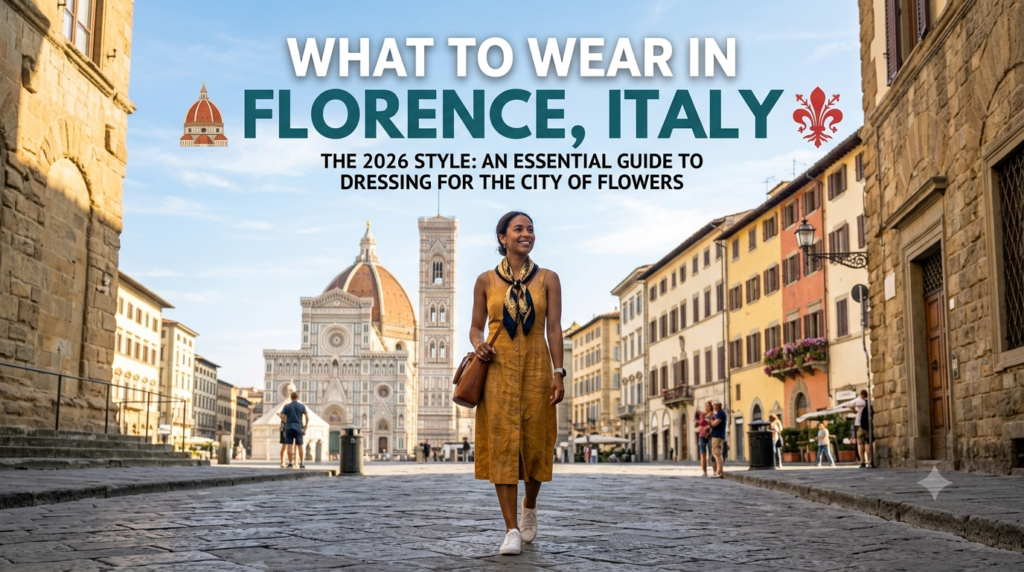
Florence is the birthplace of the Renaissance and one of the world’s great fashion cities — a place where art, history, leather goods, and impeccable Italian style intersect. Knowing what to wear in Florence means dressing with a touch of Italian elegance while still being comfortable enough to spend hours walking marble museum floors and cobblestone streets.
Florence’s Climate: What to Expect
Florence has a typical Mediterranean climate: hot, dry summers (28-35°C in July–August), mild springs and autumns, and cool winters (5-12°C). The summer heat can be intense — the city sits in a bowl surrounded by hills and can feel oppressively hot in August. Spring (April–May) and autumn (September–October) are the best times to visit for comfortable temperatures.
The Italian Style Standard: Dressing for Florence
Italians — and Florentines especially — take great pride in their appearance. La bella figura (making a beautiful impression) is a cultural value that extends to how you dress. You don’t need to be high fashion, but looking put-together and neat is appreciated. Avoid overly casual tourist looks in nicer restaurants and neighborhoods.
The key: quality over quantity, fitted over baggy, understated over loud.
What to Wear in Florence: Essentials
Breathable, Stylish Tops
In summer, prioritize breathable fabrics — linen and cotton are perfect. A linen blouse, a simple cotton tee in a quality cut, or a light sleeveless top all work well. In spring and autumn, layer a silk blouse or lightweight knit over a t-shirt for the temperature variations between outdoor piazzas and cool museum interiors.
Versatile Trousers or Midi Skirts
Well-fitted trousers or a stylish midi skirt are the classic Florence bottom. Linen trousers in summer, tailored trousers in spring/autumn, jeans (dark, well-fitted) for a smart casual look. Avoid shorts in churches — you’ll need knee coverage for the Duomo, Santa Croce, and other religious sites.
A Scarf for Church Visits
Many Florentine churches require covered shoulders. A light silk or cotton scarf is the easiest solution — drape it over your shoulders when entering and remove when you leave. The Duomo (Cathedral of Santa Maria del Fiore) strictly enforces this.
Italian Leather Shoes
Florence is the leather capital of Italy — the leather market at San Lorenzo, the artisan workshops near Santa Croce, and the boutiques along Via Tornabuoni all beckon. Italians judge footwear. Invest in comfortable, good-looking leather shoes or sandals. The cobblestones are uneven, so leave stilettos at home and opt for low-heeled leather sandals or loafers.
What to Wear in Florence: Season by Season
Summer (June–August)
Florence in summer is hot. Very hot. Dress in light, natural fabrics in light colors. A linen midi dress is the perfect all-day outfit — cool, appropriate for churches (add a scarf), and stylish enough for dinner. Sunscreen and a hat are essential.
Spring & Autumn (April–May, September–October)
The ideal seasons. Temperatures in the 18-25°C range make layering easy and comfortable. This is the best time for smart casual European outfits — trousers + blouse + light blazer or elegant midi dress + ankle boots.
Winter (November–February)
Florence winters are cool and occasionally rainy. Pack a smart wool coat, quality knitwear, and waterproof boots. Italians dress up even in winter — opt for tailored coats over puffer jackets if you want to blend in.
Church Dress Code in Florence
Florence’s major churches — the Duomo, Santa Croce, Orsanmichele, and others — require visitors to:
- Cover shoulders (no spaghetti straps or sleeveless tops without a cover)
- Cover knees (no shorts; skirts/dresses must be at least knee-length)
- Remove hats inside
Carry a light scarf in your day bag at all times to avoid being turned away at church entrances.
Florence Packing List
- Linen or cotton dresses (midi or maxi length for summer)
- Well-fitted jeans or tailored trousers
- Light blouses and quality t-shirts
- A small shoulder bag or structured handbag (Florence is known for pickpockets)
- Comfortable leather sandals or loafers (low heel)
- Light scarf for churches
- Sunglasses and sunscreen (summer)
- A light blazer or cardigan for air-conditioned restaurants and museums
Shopping in Florence
Florence is one of Europe’s best shopping destinations. San Lorenzo leather market for bags and belts (bargain!), boutiques along Via de’ Tornabuoni for luxury brands, and the artisan workshops near the Oltrarno neighborhood for handmade leather goods. Budget to buy quality Italian leather here — it’s genuinely world-class.
✈️ Trip Essentials
Affiliate links — we may earn a small commission at no extra cost to you.
Stay steps from the Uffizi, the Duomo or in the Oltrarno neighbourhood — compare boutique hotels and luxury stays in Florence.
Skip the tourist traps — book top-rated tours, day trips and experiences in Florence Italy with instant confirmation.
Florence Weather: What to Pack by Season
Florence sits in the Arno valley and has one of Italy’s most extreme climates for a cultural city. Summer (June–August) is genuinely hot — 30–38°C, with July and August seeing temperatures that make museum queuing in the sun exhausting. The city’s stone buildings and lack of sea breeze make heat particularly intense; shade, hydration, and lightweight fabrics are essential. Spring (March–May) and Autumn (September–November) are the finest seasons for Florence — mild temperatures (15–24°C), fewer crowds, and the city’s gardens and surrounding Chianti hills at their most beautiful. Winter (December–February) is cold and can be wet (4–10°C), but Florence in winter offers empty museums, no queues, and a more authentic Florentine atmosphere without tourist infrastructure. A proper warm coat and waterproof layers are necessary in winter.
Florence Packing List: Clothing
Church & Cathedral Dress Code Essentials
Florence’s most important sites — the Duomo (Cathedral of Santa Maria del Fiore), the Baptistery, Santa Croce (where Michelangelo and Galileo are buried), Santa Maria Novella, and dozens of smaller churches — all require covered shoulders and knees for entry. This is enforced by guards and volunteers at the door; non-compliance means being turned away. Given that you will visit multiple churches per day in Florence, dressing in modest, coverage-appropriate clothing from the morning is far more practical than carrying a change of clothes.
- Lightweight linen or cotton trousers that cover the knees — the most practical single item for Florence’s church culture (cooler than jeans in summer and church-appropriate)
- A lightweight cardigan or long-sleeved linen shirt for covering shoulders — pack two if visiting in summer
- A large scarf or pashmina that can cover shoulders and wrap around a short skirt if needed
- Midi dresses or skirts that fall below the knee (beautiful for Florence’s aesthetic and fully church-appropriate)
Italian Casual & City Wear
Florentines dress with understated elegance — not flashy, but put-together. The Italian casual look favours quality over quantity: well-fitted jeans, a silk top, leather sandals or loafers, and a good linen blazer goes further than a suitcase full of fast fashion. The key is looking intentional rather than touristy.
- 2–3 quality basics in neutral colours — white linen shirts, navy tops, well-fitted t-shirts
- A pair of well-fitted jeans or tailored trousers
- 1–2 linen midi dresses in neutral or muted earth tones (quintessential Florentine summer dressing)
- A lightweight blazer or structured jacket for evenings and smarter restaurants
Evening Wear
- 1–2 smarter evening outfits for Florence’s excellent restaurant scene (a silk slip dress, or tailored trousers with a blouse — Florentine restaurants expect smart casual minimum)
- A dressier pair of sandals or loafers for evening dining
Shoes
Florence is a walking city — the distances between major sights are short but the streets are stone-paved. Cobblestones dominate the historic centre; heels of any kind are painful and impractical on Florence’s Pietra Serena and brick paving. Flat shoes are not a compromise — they’re a necessity.
- Comfortable leather sandals or flat loafers — the quintessential Florence shoe; Italian leather sandals bought in the Oltrarno artisan quarter are a classic purchase
- Supportive walking trainers or leather sneakers for long museum days and hill walks up to Piazzale Michelangelo
- Dressier flat sandals or ballet flats for evening dining
- Avoid all heels on cobblestones — even low block heels catch between stones and cause ankle injuries
Florence Packing List: Essentials
Sun & Heat Protection
- SPF 50 sunscreen (Florence in July and August is genuinely hot; the marble-paved Piazza del Duomo offers little shade)
- A wide-brim sun hat for outdoor sightseeing, Boboli Gardens, and the Chianti day trips
- A high-quality reusable water bottle (Florence’s famous fontanelle — public drinking fountains — provide cold, clean, excellent municipal water throughout the city; never buy plastic water bottles)
- Sunglasses with UV protection
Museum & Sightseeing Essentials
- Pre-booked entry tickets for the Uffizi Gallery, Accademia (David), and Duomo complex (printed or on phone — queues for walk-up tickets can be 2–4 hours in peak summer)
- A small day backpack for carrying water, sunscreen, layers, and purchases
- A portable phone charger for long days of navigating and photographing
- Offline Florence map downloaded (GPS navigation is essential in the Oltrarno’s warren of medieval streets)
Documents & Money
- Passport or EU national ID card (Italy is in the Schengen Area)
- Euro cash (Italy is increasingly card-friendly, but many market stalls, smaller trattorias, and artisan shops remain cash-preferred; smaller notes — €5, €10, €20 — are far more useful than €50 notes)
- EHIC/GHIC card for EU/UK citizens (covers emergency healthcare in Italy)
- Travel insurance with medical and theft coverage
What to Pack for Florence’s Top Experiences
The Uffizi Gallery & Accademia
The Uffizi Gallery is one of the world’s great art museums — Botticelli’s Birth of Venus and Primavera, Leonardo’s Annunciation, Caravaggio, Raphael, and Titian across 45 rooms. The Accademia houses Michelangelo’s David — the most famous sculpture in the world. Both require pre-booked timed entry in peak season (April–October); walk-up queues regularly exceed 3 hours. Bring comfortable shoes (museum floors are hard marble), a light layer for the heavily air-conditioned galleries, and plenty of patience — the Uffizi alone deserves 3–4 hours. The Accademia’s David is overwhelming in person; the scale of the sculpture is far larger than most visitors expect.
The Duomo & Brunelleschi’s Dome
The Duomo complex — the Cathedral, Brunelleschi’s Dome (the largest masonry dome ever constructed), Giotto’s Campanile, the Baptistery, and the Museo dell’Opera — requires a combined ticket (Duomo Pass) booked online in advance. Climbing Brunelleschi’s Dome (463 steps, no lift, narrow passages) requires comfortable shoes, reasonable fitness, and no large bags — there are no bag storage facilities at the top entrance. The dome climb rewards with one of the finest views in Tuscany. Note: the Cathedral interior requires covered shoulders and knees; a scarf is sufficient for shoulders at the door.
Chianti Wine Country Day Trip
Florence is the gateway to Chianti — the rolling Tuscan hills, cypress avenues, terracotta-roofed medieval villages, and vineyard estates that produce some of Italy’s finest wine. Day trips to Greve in Chianti, Radda in Chianti, and the Castello di Brolio are easily arranged by rental car or organised tour. Wine estate visits (cantina tours) typically involve walking through vineyards and cellars — comfortable walking shoes and trousers (or a midi skirt) are appropriate. A light knit layer is useful for cool cantina cellar temperatures even in summer.
Oltrarno: Markets & Artisan Workshops
The Oltrarno — the neighbourhood on the south bank of the Arno across the Ponte Vecchio — is Florence’s most authentic quarter. Leather workshops hand-stitch bags and wallets using centuries-old techniques; papermarbling studios sell Florentine carta marmorizzata; jewellers work gold in tiny botteghe. The Piazza Santo Spirito hosts a daily artisan market. This is where to buy genuine Florentine souvenirs rather than mass-produced tourist items. Comfortable walking shoes and a bag with space for purchases are the practical priorities here.
Pingback: What to Wear in Amsterdam: The Complete Style Guide (2026) - Vacation Style Guide
Pingback: What to Wear in London: The Season-by-Season Style Guide (2026) - Vacation Style Guide
Pingback: Italy Outfit Ideas: Complete Packing Guide by Region - Vacation Style Guide