
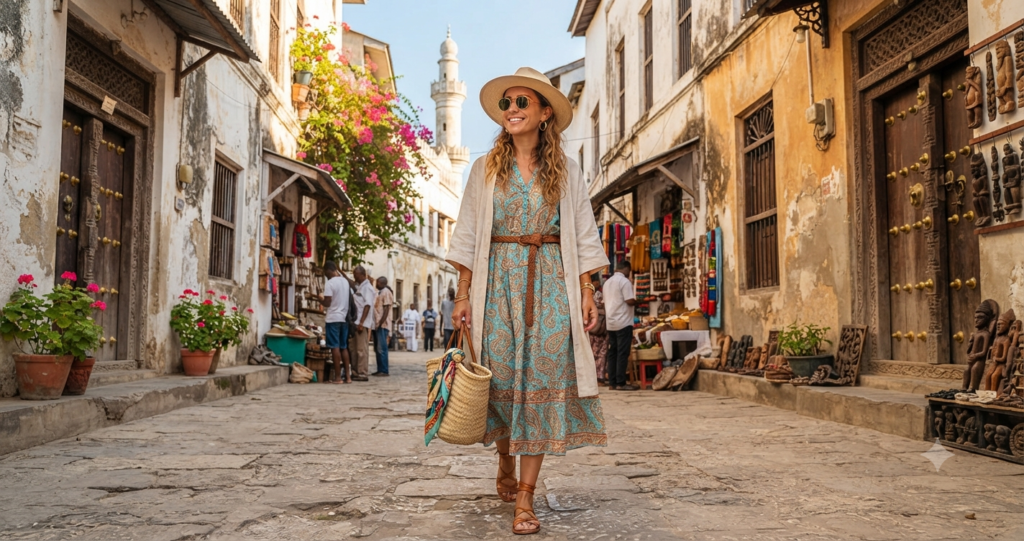
Zanzibar is one of the world’s most extraordinary island destinations — a semi-autonomous Tanzanian archipelago where the spice-scented alleyways of UNESCO-listed Stone Town give way to some of the Indian Ocean’s most pristine white sand beaches. Packing for Zanzibar requires navigating a specific cultural reality: the island is predominantly Muslim, and modest dress is expected and respected in Stone Town and local villages, while the beach resorts of the north and east coasts operate under relaxed beach norms. Here’s your complete guide to what to wear in Zanzibar.
Zanzibar Weather & When to Visit
Zanzibar has a tropical climate with two distinct seasons. Dry season (June to October): the best time for beach holidays — sunny, warm (25–30°C), low humidity, and reliable conditions for snorkelling and diving. The trade winds (kaskazi) can make the sea slightly choppier on the east coast in July and August. Short dry season (December to February): excellent conditions, warm water, and popular with European winter escapees. Long rains (March to May): heavy rains, especially April — humidity is high and some resorts close. Short rains (November): brief showers, less intense than the long rains. The water is warm year-round (26–29°C), making Zanzibar genuinely worth visiting outside peak season if you don’t mind occasional showers.
Zanzibar Packing List: Clothing
Modest Clothing for Stone Town & Local Areas
This is the most important packing consideration for Zanzibar. Stone Town and local villages are Muslim communities where women are expected to cover shoulders and knees as a sign of respect. This is not a suggestion — walking through Stone Town in a bikini top or very short shorts is deeply disrespectful to local residents and will attract unwanted attention. Pack lightweight modest clothing specifically for Stone Town visits.
- 2–3 loose, lightweight maxi dresses or midi dresses that cover knees (linen or cotton, breathable)
- 1–2 pairs of lightweight loose trousers or harem pants (perfect for Stone Town and temple visits)
- Lightweight long-sleeved tops or shirts for shoulder coverage in the old town
- A large lightweight scarf or wrap (covers shoulders and can be worn as a skirt over shorts; extremely versatile)
Beach & Resort Clothing
- 2–3 swimsuits or bikinis — Zanzibar’s beaches are among the Indian Ocean’s finest
- Crocheted or knit beach cover-up (cover up for the walk between beach and resort; don’t wear swimwear into Stone Town)
- Linen beach shorts or a sarong for beach bar and casual resort meals
- A light sundress for evening at resort restaurants
Shoes
- Flip-flops or sandals for beach and resort (you’ll remove shoes at beach, prayer areas, and some guesthouses)
- Comfortable flat walking sandals for Stone Town — the lanes are narrow and sometimes uneven
- Water shoes for snorkelling excursions from coral sand beaches (sea urchins are present)
- Closed-toe shoes are not necessary but useful if visiting spice farms or doing boat trips in wetter months
Essentials
- DEET insect repellent — malaria is present in Zanzibar; consult your doctor about antimalarial medication before travel and use repellent consistently, especially at dusk
- SPF 50 sunscreen (reef-safe formulas strongly recommended given Zanzibar’s protected marine ecosystems)
- After-sun lotion (the tropical sun is intense)
- Sunglasses and wide-brim hat
- Reusable water bottle — dehydration in tropical heat is rapid; filtered or bottled water only (tap water not potable)
- Small lightweight daypack for Stone Town excursions and spice farm tours
- Waterproof dry bag for snorkelling and dhow boat trips
- Tanzanian shillings (TZS) or USD — both widely accepted but local markets prefer shillings
- Portable power bank
- Travel insurance including medical evacuation (Zanzibar’s medical facilities are limited; evacuation to Dar es Salaam or Nairobi may be needed for serious incidents)
What to Wear in Zanzibar: By Activity
Stone Town: UNESCO World Heritage Exploration
Stone Town is one of East Africa’s most captivating cities — a labyrinth of narrow lanes, ornate carved wooden doors, Persian-influenced architecture, and a living Swahili culture that has absorbed Arab, Indian, Persian, and African influences over centuries. The Old Fort (Ngome Kongwe), the House of Wonders, the Palace Museum, and the Darajani Market are the main sites. Dress modestly throughout: covered shoulders and knees are both respectful and required at some sites. The narrow lanes provide shade, but Stone Town is genuinely hot — lightweight breathable fabrics are essential. A good guide makes Stone Town infinitely richer; book through your hotel or a reputable local operator.
Nungwi & Kendwa: Northern Beach Resorts
Nungwi and Kendwa on Zanzibar’s northern tip are the island’s most developed beach resort areas — a concentration of boutique hotels, diving schools, beach bars, and the famous Kendwa Rocks full moon parties. The water here is calmer and the beaches are swimmable even at low tide (unlike the east coast, where the tide retreats very far). This is the area where Zanzibar’s beach resort experience is most concentrated. Beach attire is normal at the resorts and beach bars. When walking into Nungwi village, cover up with a sarong or dress.
Paje & Jambiani: East Coast Beaches
Paje and Jambiani on the east coast are Zanzibar’s kite surfing capital — the consistent south-easterly trade winds make this the best kite surfing destination in East Africa. The beach here is extraordinary: pale powder sand, turquoise water, and a much more relaxed, less developed atmosphere than the north coast. The tidal variation is dramatic — the sea retreats significantly at low tide, revealing seagrass and tidal pools. The best swimming is at high tide. Wear sun protection from the waist up as kite surfers and beachgoers in the shallows can spend hours exposed to direct sun reflected off white sand and water.
Spice Farm Tours
Zanzibar earned the name “Spice Island” from its historic production of cloves, nutmeg, cinnamon, vanilla, and black pepper — spice farming that once made this archipelago one of the world’s most valuable trading posts. Spice farm tours (typically half-day from Stone Town) walk you through working plantations where guides identify, harvest, and explain each spice. Wear comfortable, modest clothing — covered shoulders and long trousers or a maxi dress work well and protect against sun on open farmland. Closed-toe shoes or sturdy sandals are better than flip-flops on uneven farm paths.
Snorkelling & Mnemba Atoll
Mnemba Atoll, off Zanzibar’s northeast coast, is one of the Indian Ocean’s finest snorkelling and diving destinations — exceptional coral coverage, turtles, dolphins, and extraordinary fish diversity. Most resorts in the north and east can organise dhow snorkelling trips to Mnemba. Wear a rashguard or UV shirt for extended snorkelling — tropical sun reflected from water causes surprisingly severe burns on your back during a long session. Reef-safe sunscreen is essential on exposed skin. Bring an underwater camera or waterproof phone case — the marine life visibility is exceptional.
Common Packing Mistakes in Zanzibar
- Wearing swimwear in Stone Town: This is the most common and most disrespectful mistake visitors make. Stone Town is a living Muslim community, not a resort. Swimwear, crop tops, and very short shorts are inappropriate and will cause genuine offence. Always change to modest clothing before leaving the beach resort for Stone Town.
- Skipping malaria prevention: Zanzibar has a real malaria risk. Consult a travel medicine doctor before departure for antimalarial medication recommendations, use DEET repellent consistently (especially at dawn and dusk), and sleep under a mosquito net if your accommodation doesn’t have air conditioning.
- Packing only dark colours: Dark fabrics absorb Zanzibar’s tropical sun and make you significantly hotter. Lightweight white, cream, and pale colours reflect heat and look beautiful against the Indian Ocean backdrop.
- Not packing reef-safe sunscreen: Zanzibar’s marine ecosystems are protected; standard chemical sunscreens damage coral reefs. Reef-safe mineral sunscreens (zinc oxide, titanium dioxide) are both ecologically responsible and required by some marine national parks.
- Forgetting a dry bag: Dhow boat trips and snorkelling excursions put your phone and valuables at serious risk of getting wet. A waterproof dry bag is inexpensive and invaluable.
Zanzibar FAQ
Is Zanzibar safe for female travellers?
Zanzibar is generally safe for female travellers, including solo travellers, but requires cultural awareness. Modest dress significantly reduces unwanted attention in Stone Town and local villages. Stick to well-lit areas at night, use hotel-recommended transport rather than unmarked taxis, and follow your accommodation’s specific advice about local safety conditions. The beach resort areas are very well-touristed and generally safe. Never walk alone on isolated beaches at night.
What language is spoken in Zanzibar?
Swahili (Kiswahili) is the primary language — Zanzibar is actually considered the heartland of Swahili culture and language. Arabic is widely spoken given the island’s historic trading connections. English is spoken in most tourist-facing businesses, hotels, and restaurants. Learning a few Swahili phrases (jambo for hello, asante for thank you, karibu for welcome) is warmly appreciated by locals.
What is the best time to visit Zanzibar for snorkelling?
June to October is the best snorkelling season — dry conditions, good visibility, and calm seas on the northern beaches. December to February also offers excellent conditions. The best snorkelling around Mnemba Atoll is consistently good from June through to mid-November. Visibility during the long rains (March to May) can be reduced by runoff sediment.
Do I need a visa for Zanzibar?
Zanzibar is part of Tanzania; most visitors require a Tanzanian visa. Many nationalities can obtain a single-entry e-visa online before travel through the Tanzania e-visa portal. Visa on arrival is also available at Zanzibar International Airport for most Western passport holders. Check current requirements for your specific nationality before travel, as policies change. The visa covers both mainland Tanzania and Zanzibar with the same entry permit.
Pingback: Zanzibar Packing List: Everything You Need for East Africa's Island Paradise - Vacation Style Guide
Pingback: What to Wear in Kenya: Safari, Nairobi & Coast Outfit Guide - Vacation Style Guide
Pingback: What to Wear in Tanzania: Safari, Zanzibar & Kilimanjaro Outfit Guide - Vacation Style Guide
Pingback: What to Wear in Mauritius: Beach Resort, Temple & Hiking Outfit Guide - Vacation Style Guide